

Dog Won't Leave Other Dogs Alone: Solving Obsessive Greeting Behavior
Understanding Obsessive Greeting Behavior
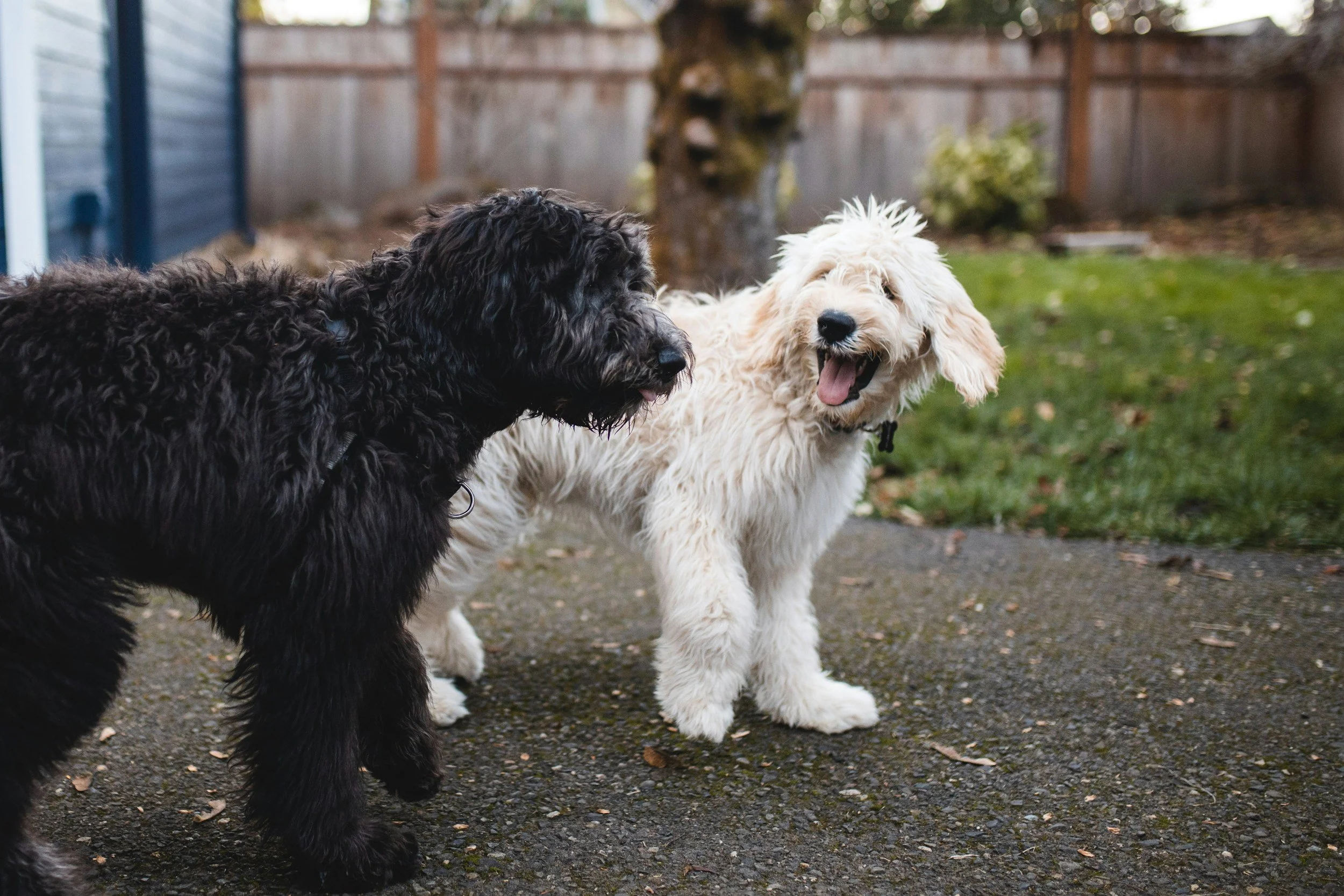
Your dog bounces from one dog to another, never settling, never giving other dogs a break. Every new arrival means another frantic rush across the park. Every dog trying to rest becomes a target for relentless attention. This isn't enthusiasm—it's obsessive greeting behavior, and it creates problems for everyone at the park.
Obsessive greeting differs fundamentally from normal social interest. Healthy dogs greet briefly, assess interest, and move on when the other dog disengages. Dogs with obsessive greeting behavior ignore these social cues entirely. They persist despite clear signals to back off, turning what should be brief hellos into sustained harassment that escalates tension throughout the park.
Why Dogs Develop Persistent Greeting Patterns
Insufficient Socialization Windows
Dogs who missed critical socialization periods (3-14 weeks) or experienced limited dog-to-dog interaction during adolescence often develop poor greeting skills. They never learned the subtle communication that says "I'm done now" or "that's too much." Without this foundation, they approach every interaction with the same intensity, unable to read or respond to feedback.
Self-Rewarding Behavior Cycles
Every greeting attempt provides stimulation, whether the other dog engages positively or not. Chase becomes its own reward. Attention—even negative attention through corrections from other dogs—reinforces the behavior. The dog's brain releases dopamine during these interactions, creating a self-perpetuating cycle where the behavior becomes increasingly compulsive.
Underlying Anxiety Mechanisms
Some dogs use constant greeting as an anxiety management strategy. The perpetual motion and social seeking provide distraction from underlying stress. These dogs never settle because stopping means confronting uncomfortable feelings. The obsessive behavior serves as emotional avoidance rather than genuine social interest.
Lack of Impulse Control Development
Puppies naturally lack impulse control—it develops through maturation and training. Dogs who never learned to "wait," "leave it," or "check in" with their owners carry this deficit into adolescence and adulthood. At the dog park, this manifests as inability to resist any movement, any play opportunity, any social possibility.
The Impact on Park Dynamics and Other Dogs
Disrupted Social Interactions
Your dog's persistent greeting behavior doesn't just affect them—it cascades through the entire park. Other dogs trying to play get interrupted. Dogs attempting to rest or decompress never get the break they need. Appropriate dog park behavior requires dogs to respect ongoing interactions and give space to those who need it.
Elevated Stress and Reactivity
Dogs who can't escape persistent greeters experience mounting stress. Their body language shows clear discomfort—turning away, lip licking, yawning, freezing—but your dog doesn't respond. Eventually, these dogs may snap or display aggression simply to create the space your dog wouldn't give them. This escalation often gets the other dog labeled "aggressive" when really they're just overwhelmed.
Owner Intervention Conflicts
When your dog won't leave theirs alone, other owners face difficult choices. Do they intervene and risk your dog redirecting? Do they leave, cutting their visit short? Do they tell you to control your dog, creating social tension? Your dog's behavior puts everyone in uncomfortable positions that erode the communal atmosphere dog parks should provide.
Assessment: Play Drive vs. Impulse Control Deficit
Characteristics of High Play Drive
Dogs with genuine high play drive show flexible behavior patterns. They invite play through clear signals—play bows, bouncy movements, taking turns in chase. They pause periodically to check if the other dog is still interested. They can redirect to toys or their owner when play ends. Most importantly, they respect dogs who decline the invitation by turning away and finding another outlet.

Signs of Impulse Control Issues
Dogs lacking impulse control display rigid, compulsive patterns. They cannot stop even when the other dog clearly signals disinterest. They show physical tension—stiff body, hard staring, single-minded focus. They don't respond to their name or any environmental cues. They escalate intensity rather than matching the other dog's energy. They cannot engage in parallel play or settle near other dogs without physical contact.
The Arousal Factor
Many dogs with obsessive greeting behavior operate in a state of chronic over-arousal at the park. Everything becomes equally stimulating—movement, sounds, smells, other dogs. They lack the ability to downregulate, to shift from high excitement to calm observation. This arousal management deficit requires specific training before greeting behavior can improve.
Foundation Training: Building Impulse Control
The "Check-In" Behavior
Before your dog can respect other dogs' boundaries, they need to check in with you reliably. Start this training at home, in low-distraction environments. Say your dog's name once. When they look at you—even briefly—mark with "yes" and reward. Practice until your dog checks in automatically every 30-60 seconds without prompting.
Gradually increase distractions: practice in the yard, then on walks, then in parking lots near the park. Your dog needs to check in reflexively before you can use it to interrupt obsessive greeting attempts. This becomes your emergency brake—the behavior that pulls your dog out of fixation before it escalates.
"Leave It" with High-Value Distractions
Traditional "leave it" teaches dogs to ignore food or toys. For obsessive greeters, you need "leave it" to work with living, moving, highly stimulating targets—other dogs. Build this skill progressively:
Stage 1: Practice with stationary dogs visible at distance (across a parking lot, through a fence). Say "leave it," immediately create distance by moving away, reward heavily when your dog looks at you instead of the other dog.
Stage 2: Practice with slow-moving dogs at distance. Your dog will orient toward movement—that's normal. The moment they look back at you (either naturally or when you say their name), mark and reward. You're building the neural pathway: see dog → check with human → receive reward.
Stage 3: Practice with faster movement at closer distances. Use a long line so your dog has no opportunity to self-reward by reaching the other dog. Every successful "leave it" strengthens impulse control. Every failed attempt (reaching the other dog) reinforces the obsessive pattern.
Duration Settling Near Distractions
Your dog needs the ability to exist near other dogs without interacting. Start by having your dog on leash while another dog plays nearby. Reward your dog for any calm behavior—sitting, lying down, watching without lunging, sniffing the ground, looking at you. Initially, reward every 2-3 seconds. Gradually extend the time between rewards as your dog learns that calm observation is the desired behavior.
This trains your dog that proximity to other dogs doesn't always mean interaction. They can exist in the same space without engaging—a critical skill for appropriate dog park socialization.
Teaching Appropriate Greeting Rituals
The Three-Second Greeting Rule
Healthy dog greetings last approximately three seconds. Dogs approach, sniff briefly (often rear-end first—this is normal canine etiquette), and then one or both dogs create distance. This pattern repeats if both dogs remain interested. Teach your dog this rhythm:
On leash, allow approach to another dog. Count to three. Say "let's go" and move away, rewarding your dog for coming with you. If your dog resists, you've identified the problem—they haven't learned that greetings end. Practice this repeatedly until your dog anticipates the three-second limit and disengages automatically.
Reading "Not Interested" Signals
Your dog needs to recognize and respond to cutoff signals—the behaviors other dogs use to say "I'm done" or "not interested":
Turning head or body away: The clearest "I'm not interested" signal
Freezing or going stiff: Stress response indicating discomfort
Lip licking, yawning, or sniffing ground: Displacement behaviors showing unease
Moving away or hiding behind owner: Obvious avoidance
Low growl or showing teeth: Final warning before defensive aggression
Practice recognizing these signals by watching videos of dog interactions with your dog on leash beside you. When you see a cutoff signal on screen, immediately call your dog's name, reward for attention. This builds the association: cutoff signals from other dogs = look to owner for guidance.
Consent-Based Greeting Protocol
Never allow your dog to approach another dog who hasn't clearly indicated interest. Interest looks like: play bow, bouncy approach, tail wagging with loose body, moving toward your dog rather than away. Lack of interest looks like: anything else.
If the other dog shows interest, allow brief greeting. If your dog tries to extend beyond appropriate greeting length, call them away. If they don't come, you've confirmed they lack impulse control and need more foundation work before off-leash park visits continue.
Space Boundary Respect Training
The "That'll Do" Release Cue

Your dog needs a cue that means "interaction time is over." Choose a phrase like "that'll do," "all done," or "let's go." This cue interrupts greeting behavior before it becomes obsessive:
Practice during positive interactions. While your dog plays appropriately, give the cue, create distance (move away, call your dog, use leash if needed), and reward heavily when your dog follows. Initially, interrupt very brief interactions to build success. Gradually extend play duration before giving the cue.
The goal: your dog learns that the cue means immediate disengagement, regardless of how much they're enjoying the interaction. This gives you control over interaction length rather than waiting until behavior escalates.
Physical Barrier Management
Use environmental features to create boundaries. If your dog fixates on a particular dog, position yourself between them. Move to a different section of the park. Create physical distance that prevents line-of-sight fixation. Your dog cannot practice obsessive behavior without visual access to targets.
At venues like Wagbar's off-leash dog park, use different zones strategically. Start visits in quieter areas. Practice recalls and engagement work. Only allow interaction when your dog shows calm, controlled behavior. Leave immediately if obsessive patterns emerge.
Parallel Activity Training
Your dog needs to learn they can be near other dogs without direct interaction. Practice parallel walking—you and another dog owner walk side by side with dogs on opposite sides. Reward both dogs for walking calmly without attempting to greet. Gradually decrease distance over multiple sessions.
Progress to parallel play—both dogs have toys, both play near each other but not together. Then parallel rest—both dogs lie down with distance between them. These exercises build the understanding that other dogs can exist in the environment without requiring immediate, sustained interaction.
Progressive Training Protocol for Park Visits
Phase 1: Managed Leash Time (2-4 Weeks)
Attend the park during quiet hours. Keep your dog on a long line (15-20 feet). Practice foundation skills—check-ins, leave it, that'll do—in the actual environment. Allow brief greetings only with dogs who clearly indicate interest and only for three seconds before calling your dog away.
Your dog earns off-leash privileges by consistently responding to cues while on long line. If they ignore you, fixate on other dogs, or can't disengage, they're not ready for off-leash freedom. This might feel restrictive, but it prevents your dog from rehearsing the problematic behavior thousands of times.
Phase 2: Structured Off-Leash Introduction (2-3 Weeks)
Start with very short off-leash periods—5-10 minutes maximum. Your dog enters the park, greets one or two dogs appropriately, then you call them for high-value rewards. Practice engagement games with toys. Do not allow sustained play or serial greeting patterns to develop.
Exit while your dog still wants to stay. This builds frustration tolerance and reinforces that coming when called earns continued park access. Dogs who associate the park with unlimited arousal and stimulation struggle to develop impulse control.
Phase 3: Extended Play with Interruptions (Ongoing)
As impulse control improves, gradually extend park duration. Every 5-10 minutes, call your dog away from play for a brief break. Practice a few cues, reward, release back to play. This rhythm prevents the obsessive pattern from developing during visits.
If your dog cannot be called away from play, exit immediately. The visit ends the moment your dog demonstrates they've exceeded their impulse control capacity. This clear consequence teaches that self-control extends park visits while obsessive behavior ends them.
Management Strategies During Park Visits
Strategic Positioning and Movement
Don't plant yourself in one spot. Move around the park, changing your location every few minutes. This gives your dog a job—staying generally near you—rather than fixating on other dogs. When you see your dog beginning to fixate, move before the behavior escalates. Prevention beats interruption.
Position yourself near exits during early training. If your dog's behavior deteriorates rapidly, you need quick access to leave. Staying deep in the park when your dog struggles sets everyone up for failure.
The 80/20 Engagement Rule
Your dog should spend roughly 80% of park time engaging with you or in independent activities, 20% in appropriate social interaction with other dogs. This ratio prevents obsessive greeting patterns by limiting social opportunities to structured, controlled interactions.
Bring high-value toys your dog loves. Play fetch, tug, or engage in chase games with you. Practice obedience in the distracting environment. Make yourself more interesting and rewarding than other dogs. Dogs who find their owners boring gravitate toward self-rewarding behaviors like serial greeting.
Recognizing and Interrupting Early Warning Signs
Learn your dog's pre-obsession behaviors. Most dogs show a pattern: hyper-focusing on another dog, body going stiff, ignoring owner completely, starting to stalk or chase. The moment you see these signs, interrupt immediately—call your dog, move away, create distance.
Waiting until your dog is fully engaged in obsessive behavior makes interruption much harder. The arousal has escalated, the dopamine is flowing, the behavior is self-perpetuating. Catching it in the preparation phase gives you a window where your dog can still respond to cues.
Exit Strategies and Timing
Every visit should have a predetermined maximum duration based on your dog's current capacity. For dogs early in training, this might be 15-20 minutes. Set a timer. When it goes off, leave—even if your dog is behaving well, even if they want to stay.
Ending visits before behavioral deterioration prevents your dog from practicing the unwanted behavior. It also builds a history of successful visits where your dog maintained impulse control the entire time, which strengthens the neural pathways for appropriate behavior.
When Professional Help Is Needed
Intensity Exceeds Normal Play Drive
If your dog's behavior includes stalking, refusing to allow other dogs any space, becoming aggressive when interrupted, or showing compulsive fixation that doesn't respond to high-value rewards, you're beyond typical impulse control issues. These patterns suggest compulsive disorder or high predatory drive requiring professional reactive dog training.
No Improvement After Consistent Training
If you've implemented structured training for 6-8 weeks with no noticeable improvement—your dog still cannot be called away from other dogs, still ignores all cutoff signals, still serial-greets obsessively—professional assessment is warranted. A Certified Applied Animal Behaviorist (CAAB) or board-certified veterinary behaviorist (DACVB) can evaluate whether underlying anxiety, compulsive disorder, or other issues contribute to the behavior.
Safety Concerns Emerging
If other dogs regularly need to correct your dog, if fights break out because your dog won't respect boundaries, if your dog pursues dogs to the point of exhaustion, safety becomes the priority. These situations require immediate intervention and often mean suspension of dog park visits until behavior improves significantly.
Owner Stress Impacts Quality of Life
If park visits cause you significant anxiety, if you can't relax because you're constantly monitoring your dog, if you avoid the park because you know you'll spend the entire time calling your dog ineffectively, consider whether parks serve your relationship well. Some dogs genuinely thrive better with individual exercise—hiking, swimming, one-on-one play dates—than in group park environments.
Alternative Exercise and Socialization Options
Structured Play Dates with Compatible Dogs
Instead of random park encounters, arrange one-on-one play dates with dogs your dog meshes well with. This controlled environment allows you to monitor and interrupt if obsessive patterns emerge, practice appropriate greeting skills, and ensure both dogs enjoy the interaction.
Look for dogs with similar play styles and energy levels. Avoid dogs who enable your dog's obsessive behavior by endlessly running. Choose dogs who naturally take breaks, respect space, and demonstrate good social skills your dog can learn from through observation.
Individual Activities That Build Impulse Control
Scent work, agility, hiking, and swimming all provide physical and mental exercise without the social stimulation that triggers obsessive greeting. These activities build focus on you rather than other dogs, strengthen the dog-owner bond, and develop impulse control through structured challenges.
Many dogs with poor park manners excel at structured activities where they have clear rules and expectations. This success builds confidence and impulse control that eventually translates to improved park behavior—but only after significant training outside the park environment.
Small Group Puppy Classes or Playgroups
If your dog struggles with impulse control, supervised play groups led by qualified trainers offer controlled socialization opportunities. These sessions include mandatory breaks, structured greeting practice, and immediate intervention when dogs display inappropriate persistence.
The trainer models and teaches appropriate interruption techniques, helps you read your dog's body language, and provides feedback on when your dog approaches overwhelm. This guided practice accelerates learning much faster than unsupervised park visits.
Prevention Strategies for Puppies and Young Dogs
Early Socialization with Variety
Puppies need exposure to many different dogs—different ages, breeds, sizes, play styles. This variety teaches them that not all dogs want to play the same way, not all dogs want to play at all, and flexibility in social approach is essential.
Avoid puppies or young dogs who only experience high-arousal play at daycare or dog parks. These dogs often develop the pattern of approaching every dog with the same manic intensity because that's all they've experienced. Balance high-energy play with calm parallel activities.
Teaching Self-Control Before Off-Leash Freedom
Puppies should learn impulse control foundations—sit/stay, down/stay, wait at doors, leave it with food—before entering off-leash dog park environments. These skills transfer to social situations, giving your puppy the capacity to pause, think, and respond to cues even when excited.
Puppies who spend months practicing serial greeting at parks without any impulse control training develop the obsessive pattern as their default. It becomes the established behavior pathway, making correction much harder than prevention.
Modeling Appropriate Behavior Through Adult Dogs
Puppies learn extensively through observation. Arranging play time with adult dogs who demonstrate good social skills—appropriate greeting length, respecting space, taking breaks naturally—teaches puppies these patterns through modeling.
Choose adult dogs who will correct puppies appropriately (brief grumbles or physical blocks, not sustained aggression) when puppies overstep boundaries. These natural consequences from other dogs teach puppies that persistence past polite greeting has social costs.
FAQ: Dog Won't Leave Other Dogs Alone
Why does my dog only have this problem at the dog park, not on leashed walks?
The off-leash environment removes physical restraint just when arousal peaks from seeing multiple dogs. On leashed walks, the leash provides external impulse control. At the park, your dog must provide internal impulse control, which requires significantly more training. Additionally, the park environment—filled with running, playing, high-energy dogs—elevates arousal to levels your dog cannot self-regulate through. This arousal amplifies any existing impulse control deficits.
Will my dog outgrow this behavior?
Not without intervention. While some puppies naturally develop better impulse control during maturation (typically 18-24 months), obsessive greeting often becomes more entrenched with age because your dog practices it repeatedly. Every repetition strengthens the neural pathways for that behavior. Dogs who serial-greet for months or years have deeply ingrained patterns requiring active retraining to change.
Should I avoid dog parks completely?
Temporarily suspending park visits during intensive training often accelerates improvement. Your dog cannot practice the unwanted behavior, which prevents further strengthening of those patterns. Many dogs successfully return to parks after 4-8 weeks of foundation training in other environments, demonstrating significantly better impulse control. However, some dogs genuinely thrive better with alternative exercise—there's no shame in choosing what works for your specific dog.
Can I use treats to distract my dog from other dogs?
Treats serve different purposes depending on timing. Using treats reactively—trying to lure your dog away during active obsessive behavior—rarely works because arousal has already exceeded your dog's ability to process cues. Using treats proactively—rewarding check-ins before fixation develops, reinforcing the moment your dog looks away from another dog, paying heavily for successful recalls—builds impulse control. The key: reward before or after problematic behavior, not during.
What if other owners get upset when I keep my dog on leash at the park?
Explain briefly: "We're working on greeting manners." Most owners respect this. Your dog's training needs supersede social pressure to let them run freely when they lack the skills for appropriate interaction. Venues like Wagbar welcome dogs at all training levels—there's no requirement that dogs must be off-leash to benefit from the facility.
My dog plays appropriately for the first 10 minutes, then becomes obsessive. Why?
This pattern suggests arousal accumulation. Your dog enters the park at baseline arousal, which they can regulate. Ten minutes of running, chasing, and intense play elevates arousal past their regulation threshold. Once past this point, impulse control collapses and obsessive behavior emerges. Solution: implement mandatory breaks every 5-7 minutes before arousal exceeds manageable levels.
Is this behavior worse in certain breeds?
Herding breeds (Border Collies, Australian Shepherds), hunting breeds (Labs, Pointers), and high-drive terriers show this pattern more frequently due to genetic predisposition toward sustained focus and high energy. However, any dog lacking impulse control training can develop obsessive greeting. Breed differences affect intensity and manifestation but don't determine whether behavior occurs.
How long does training take before I see improvement?
With consistent implementation, most owners notice some improvement within 2-3 weeks—their dog can be called away from fixation occasionally, responds to cues more reliably, shows brief pauses in obsessive behavior. Significant improvement—consistent impulse control, appropriate greeting length, respecting boundaries—typically requires 6-12 weeks of structured training. Dogs with deeply entrenched patterns (practicing obsessive greeting for years) need longer intervention periods.