

Dog Training Franchises in 2026: The Complete Comparison Guide to Building a Profitable Training Business
Professional dog training has become one of the fastest growing segments in the pet services industry, driven by record pet ownership, rising demand for behavioral solutions, and modern pet parents who view training as an essential investment rather than an optional expense. Dog training franchises give entrepreneurs a way to enter this market with proven systems, established brand recognition, and comprehensive support that independent trainers spend years building on their own.
This guide covers everything you need to evaluate dog training franchise opportunities in 2026. From investment requirements and profit potential to franchise profiles, financing strategies, and real-world case studies, the goal is to give you the full picture so you can make a confident decision about which model fits your capital, capabilities, and lifestyle.
Why the Dog Training Market Keeps Growing
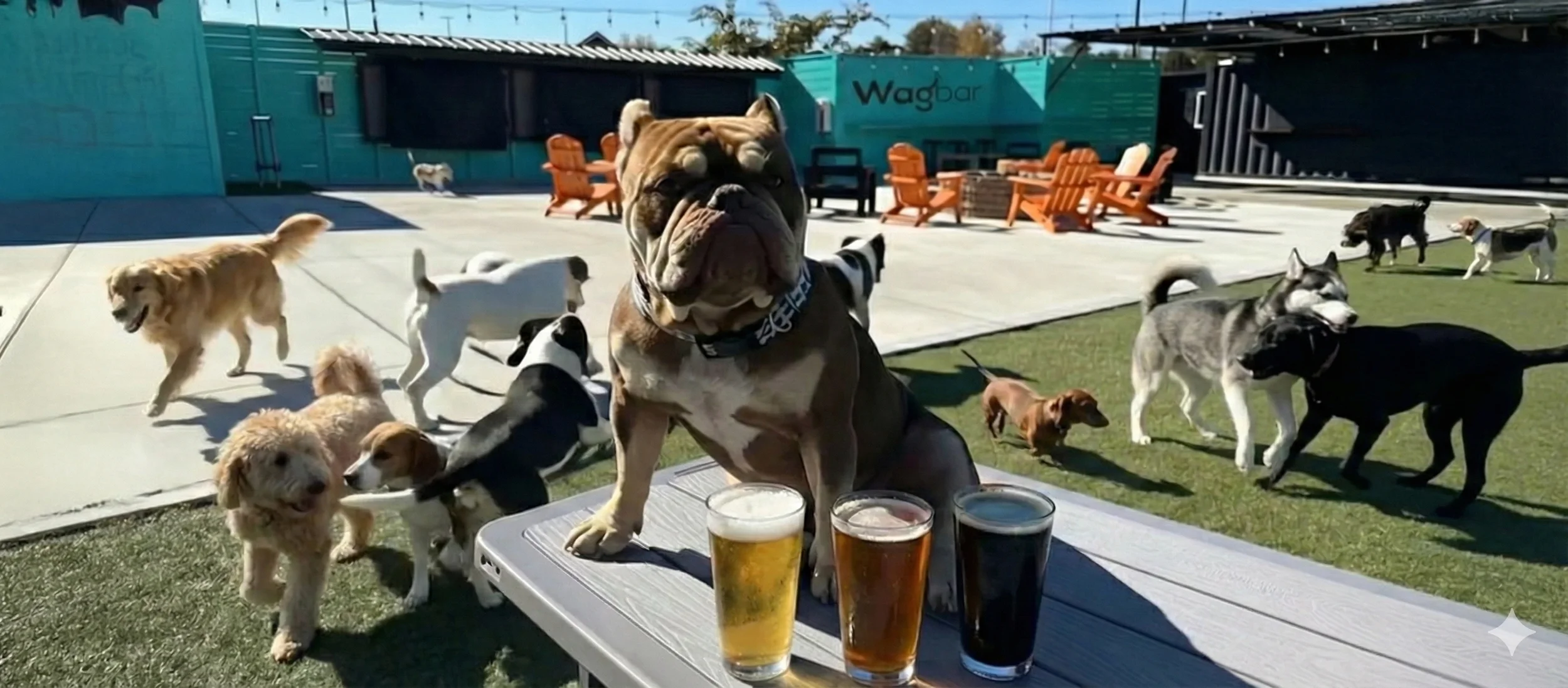
The dog training industry generates approximately $1.5 billion annually in the United States, fueled by over 90 million pet dogs and a fundamental shift in how owners think about professional training. Modern pet parents, particularly millennials and Gen Z, treat training as a core responsibility of dog ownership rather than something reserved for problem dogs.
Several forces continue accelerating demand. The pandemic drove record pet adoption and created millions of first-time dog owners who lack experience managing behavioral issues. Work-from-home arrangements made owners more aware of problem behaviors like excessive barking, separation anxiety, and destructiveness that they previously escaped during office hours. Urban and suburban density has increased conflicts between dogs and neighbors, making behavioral intervention more urgent than ever. And rising veterinary and behavioral specialist costs make preventive training far more economical than crisis management.
Dog training demand remains strong across economic cycles because pet owners prioritize their animals' wellbeing and household harmony even when cutting back on other spending. The pet industry has shown 7.2% annual growth over the past decade, and the training segment continues outpacing overall industry growth as awareness increases.
The market breaks down into distinct segments. Private in-home training addresses specific behavioral issues through one-on-one sessions. Facility-based group classes provide socialization and obedience in controlled environments. Specialized programs handle service dog preparation, competition training, therapy dog certification, and advanced behavioral modification. Puppy socialization and kindergarten programs prevent future problems before they develop. Most successful franchises offer multiple formats to capture broader market opportunity and maximize revenue per customer through progressive training packages.

Types of Dog Training Franchise Models
In-Home and Mobile Training

In-home dog training franchises bring professional instruction directly to clients' homes, addressing behavior issues in the actual environments where they occur. This model requires minimal overhead since training happens at client locations rather than dedicated facilities.
The convenience factor resonates strongly with busy pet owners who don't want to drive across town for classes. Dogs also learn faster when trained in the settings where problem behaviors actually happen, making in-home training particularly effective for issues like door aggression, counter surfing, separation anxiety, and housebreaking challenges.
Startup costs for mobile franchises typically range from $50,000 to $125,000, covering franchise fees, equipment, vehicle branding, marketing, insurance, and working capital. Monthly operating expenses run just $2,000 to $4,000, which means you can break even with as few as 10 to 15 active clients per month.
The primary limitation is that drive time between appointments caps how many clients a single trainer can serve daily. Successful franchisees address this by hiring additional certified trainers as the business grows, transitioning from working trainer into business manager overseeing multiple revenue generators.
Facility-Based Training Centers
Facility-based franchises operate from dedicated training spaces featuring group class areas, private consultation rooms, agility equipment, retail sections, and waiting areas. These locations become community hubs where dog owners gather regularly, creating strong retention through social connections that extend beyond simple training transactions.

The facility model generates revenue through multiple simultaneous channels. Group classes, private sessions, agility training, puppy programs, day training, specialized workshops, and retail sales all run under one roof. A single group class accommodating 8 to 12 dogs generates $200 to $400 in revenue for 60 minutes of instruction, significantly exceeding the $75 to $150 hourly rate of private sessions.
Investment requirements run higher at $150,000 to $500,000, reflecting costs for real estate, buildout, equipment, staffing, and working capital to sustain operations during the longer ramp period. Location matters significantly. Successful facilities occupy strip centers or standalone buildings in affluent neighborhoods with high dog ownership, strong visibility, adequate parking, and convenient access.
Monthly overhead runs $12,000 to $20,000 covering rent, utilities, insurance, and staffing even before generating revenue. This fixed cost structure creates break-even challenges during ramp periods but provides strong operating leverage once customer bases develop and classes fill consistently.
Hybrid Models
Some franchises combine facility-based and mobile services, letting franchisees serve customers who prefer different delivery methods. You might operate a small studio space for group classes while also offering in-home training for behavioral issues that need to be addressed where they occur.
Hybrid models maximize market penetration and revenue potential but require more complex operational management. They work well for franchisees who want some facility benefits without committing to the full investment of a large training center, or for those who want backup facility space while primarily delivering mobile services.
Specialized Training Services
Specialized franchises focus on niches within the broader market, offering expertise that commands premium pricing and reduces direct competition.
Service dog training represents one of the most lucrative specializations. Programs preparing psychiatric service animals, mobility assistance dogs, and medical alert dogs typically charge $5,000 to $15,000 per completed dog. Behavior modification specialists addressing serious issues like aggression, separation anxiety, and fear-based reactivity command $1,500 to $5,000 per case. Competition training for agility trials and obedience events attracts dedicated clients willing to invest heavily in their dogs' performance careers. Protection dog training serves clients seeking personal security dogs, with programs often exceeding $20,000.
Dog Training Franchise Profiles
Dog Training Elite
Dog Training Elite represents the most accessible entry into professional dog training, requiring just $50,000 to $80,000 total investment including $39,500 franchise fee, $10,000 to $25,000 for working capital and initial marketing, $2,500 to $5,000 for training equipment and supplies, and $3,000 to $8,000 for vehicle branding, insurance, and technology setup. This positions Dog Training Elite among the lowest-cost pet franchise opportunities while still providing comprehensive systems and support.
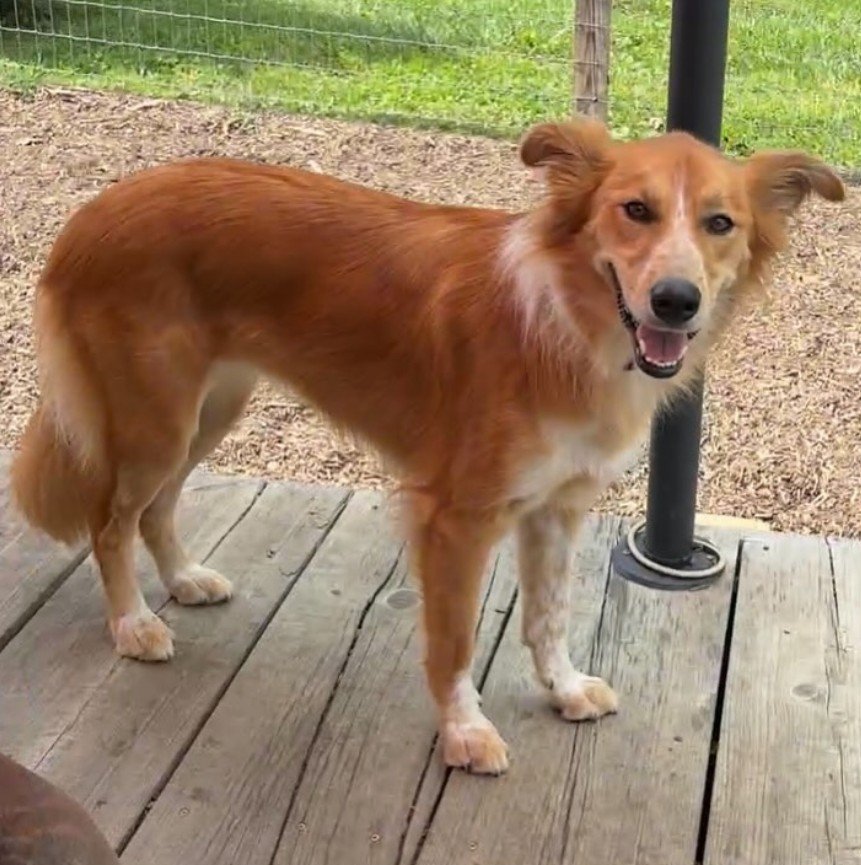
The home-based business model eliminates facility leases, buildout costs, and associated overhead. You operate from home, travel to client locations, and potentially rent park or facility space for group classes if desired. The financial risk remains manageable even if the business underperforms, unlike six-figure facility investments that create substantial exposure.
Revenue and Profitability. Established franchisees generate $75,000 to $150,000 annual revenue in their first full year, scaling to $150,000 to $300,000 as reputation builds and referrals accelerate. Revenue comes primarily from multi-session private training packages priced $500 to $2,500 depending on program complexity. Profit margins run 40 to 55% for owner-operators since the primary expense is your time rather than materials or employee wages. First-year profits typically reach $30,000 to $75,000, improving to $75,000 to $150,000 by year three for successful operators. On $65,000 average investment, this represents 46 to 115% first-year ROI and 115 to 230% year-three ROI.
Training and Support. Dog Training Elite provides comprehensive 2-week certification covering dog behavior fundamentals, learning theory, positive reinforcement techniques, behavioral modification protocols, breed-specific considerations, and client communication strategies. The proprietary curriculum emphasizes balanced training approaches combining positive reinforcement with appropriate corrections. Ongoing support includes field representatives, online franchisee community, quarterly training updates, annual conferences, and technology platforms managing scheduling and business administration.
Scaling. Growth occurs through hiring additional certified trainers, expanding service territories, or developing complementary offerings. Solo owner-operator models deliver highest ROI since you're not paying employee wages. Multi-trainer operations can generate $300,000 to $500,000 annual revenue with 2 to 4 trainers but margins compress to 25 to 35% after wages.
Zoom Room
Zoom Room requires substantially higher investment of $250,000 to $350,000 including $50,000 to $59,500 franchise fee, $80,000 to $150,000 for facility lease deposits and buildout, $25,000 to $100,000 for equipment and agility apparatus, and $15,000 to $50,000 working capital. The facility-based model trades higher investment for capacity supporting group classes, multiple simultaneous sessions, retail sales, and stronger community building.
Facilities typically occupy 2,000 to 4,000 square feet featuring training areas with agility equipment, separate space for private consultations, retail area, reception zone, and storage. Most successful Zoom Rooms sit in strip centers or standalone buildings in affluent neighborhoods with high dog ownership.
Revenue and Profitability
Mature locations generate $300,000 to $600,000 annual revenue through group training classes ($150 to $300 for 6 to 8 week series), private sessions ($75 to $150 per hour), agility training ($200 to $400 per series), puppy kindergarten ($175 to $275 per series), and retail sales. Most locations run 15 to 25 classes weekly at maturity with 6 to 12 dogs per class, plus 10 to 20 private sessions weekly. Profit margins typically run 25 to 35% once reaching mature operations, generating $75,000 to $210,000 annual profit.
Why Does Your City Need a Wagbar?
Training Approach.
Zoom Room emphasizes fun, game-based training through agility courses and interactive exercises rather than traditional correction-based obedience. The methodology appeals to modern pet parents seeking positive experiences while achieving training objectives. The facility environment supports socialization training impossible with in-home sessions, and group classes create community among participants that drives retention through social connections.
Break-even Timeline.
Most locations reach 40 to 50% capacity within 9 months, 60 to 70% within 18 months, and 70 to 85% mature capacity within 30 months. Break-even requires 12 to 24 months, demanding adequate working capital reserves.
Bark Busters

Bark Busters operates the world's largest dog training company with franchises across multiple countries. Their in-home model focuses on communication-based training that works with dogs' natural instincts rather than traditional command-based obedience. Investment runs $50,000 to $100,000 including franchise fees of $40,000 to $75,000 depending on territory size.
Revenue and Profitability
Established franchisees generate $75,000 to $175,000 annually with profit margins of 50 to 60%, producing $37,500 to $105,000 profit. Revenue comes from comprehensive training programs ranging from $500 to $2,000 per client.
Key Differentiator
Bark Busters provides lifetime support guarantees to clients, meaning free follow-up visits if issues recur. This creates strong customer satisfaction and referral rates but potentially reduces per-customer revenue compared to limited-session packages. The guarantee differentiates them competitively and requires confidence in training effectiveness and willingness to invest time in follow-up visits without additional compensation.
Sit Means Sit
Sit Means Sit has built a reputation for addressing serious behavioral issues and delivering reliable off-leash training results. Their approach combines traditional training with modern technology, including remote training collars and systematic behavior modification techniques.
Investment ranges from $75,000 to $150,000 depending on territory size and service offerings. Franchises typically operate as mobile services with the option to add facility-based programs as businesses grow. The franchise provides comprehensive training covering their specific methodology, business operations, and customer acquisition strategies.
Noble Beast Dog Training
Noble Beast operates as a mid-sized franchise requiring $125,000 to $200,000, combining elements of both mobile and facility models. Franchisees typically operate from small studio spaces of 800 to 1,500 square feet providing private training areas and limited group class capacity while also offering in-home training services.
Noble Beast emphasizes force-free, positive reinforcement training exclusively, differentiating from balanced training approaches. Revenue potential runs $150,000 to $350,000 annually depending on facility size and service mix, with profit margins of 30 to 45% generating $45,000 to $155,000 annual profit.
Camp Bow Wow
Camp Bow Wow is primarily known for doggy daycare and boarding but includes professional training as a complementary service. Training services include private sessions during daycare or boarding stays, board-and-train programs for extended boarding clients, group classes for daycare regulars, and behavioral consultations for issues emerging during facility stays.
Investment requirements run $250,000 to $500,000 for complete facilities. This is a higher-investment play but the diversified revenue model provides stability through multiple service lines. Training typically contributes 10 to 15% of total revenue but generates disproportionate value through customer retention and upselling.
Investment and ROI Comparison
Side-by-Side Breakdown
Dog Training Elite
$50,000 to $80,000 total investment. No facility costs. Break-even in 6 to 12 months. ROI of 100 to 200%+. Annual profit of $50,000 to $150,000. Business exit value of 1 to 2x annual revenue.
Bark Busters
$50,000 to $100,000 total investment. No facility costs. Break-even in 6 to 12 months. ROI of 75 to 140%. Annual profit of $37,500 to $105,000. Business exit value of 1 to 2x annual revenue.
Sit Means Sit
$75,000 to $150,000 total investment. Mobile with optional facility. Break-even in 8 to 14 months. Annual profit varies by market. Hybrid scaling potential.
Noble Beast
$125,000 to $200,000 total investment. Small studio plus mobile. Break-even in 10 to 18 months. ROI of 30 to 77%. Annual profit of $45,000 to $155,000.
Zoom Room
$250,000 to $350,000 total investment. Full facility required. Break-even in 12 to 24 months. ROI of 30 to 60%. Annual profit of $75,000 to $210,000. Business exit value of 2 to 3x annual revenue.
Camp Bow Wow
$250,000 to $500,000 total investment. Full facility required. Break-even in 18 to 30 months. Multiple revenue streams. Training is complementary to primary daycare/boarding business.
Understanding ROI vs. Absolute Profit
ROI comparisons must account for both percentage returns and absolute dollar profits. Dog Training Elite generates 100 to 200%+ ROI but $50,000 to $150,000 annual profit. Zoom Room generates 30 to 60% ROI but $75,000 to $210,000 annual profit. Neither approach is universally superior. High ROI percentages benefit limited capital but lower absolute profit may not meet income needs for full-time commitment.
Break-even timelines dramatically affect realized returns. Mobile franchises breaking even within 6 to 12 months begin generating returns relatively quickly. Facility franchises requiring 12 to 24 months expose investors to longer loss periods but build greater business equity. Facilities typically sell for 2 to 3x annual revenue compared to 1 to 2x for mobile service businesses, providing superior long-term wealth building despite lower annual ROI percentages.
Working Capital Reality
Working capital requirements vary significantly beyond initial investment. Mobile franchises need just 3 to 6 months of operating expenses since break-even occurs relatively quickly. Facility franchises require 12 to 18 months of working capital covering extended loss periods during customer base development. Many franchisees underestimate working capital needs, creating cash flow crises that force emergency capital injections or premature closures. Budget conservatively and ensure adequate reserves to reach profitability without financial stress.
Financing Your Dog Training Franchise
SBA Loans

Small Business Administration loans represent the gold standard for franchise financing. The SBA 7(a) loan program provides up to $5 million in financing with terms extending 10 to 25 years. Dog training franchises with established track records appear on the SBA Franchise Directory, streamlining the approval process.
SBA loans typically require 10 to 20% down payment, with interest rates generally running 1 to 2.5% above prime rate. Qualifying requires credit scores above 680, relevant business or management experience, and post-funding liquidity equal to 3 to 6 months of business expenses. Many franchisors have established relationships with SBA-preferred lenders familiar with their business models, resulting in faster approvals and better terms.
Rollover for Business Startups (ROBS)
ROBS programs allow entrepreneurs to fund franchise purchases using 401(k) or IRA assets without incurring early withdrawal penalties or taxes. The structure works by establishing a C-corporation that creates a 401(k) plan, then rolling existing retirement funds into the new plan, which purchases stock in the corporation. The corporation uses these funds for franchise acquisition and startup costs.
The primary advantage is accessing significant capital without debt service requirements. A franchisee with $200,000 in retirement accounts can fully fund many dog training franchise opportunities without monthly loan payments, dramatically improving cash flow during the critical startup phase. ROBS structures require careful administration to maintain IRS compliance, typically costing $5,000 to $7,000 for initial setup and $1,200 to $2,000 annually for ongoing administration.
This financing method requires ROBS-funded business owners to work full-time in their enterprises, making it less suitable for passive investors or those maintaining other employment.
Home Equity and Personal Assets
Home equity lines of credit or loans provide access to capital at favorable interest rates, typically 2 to 4% above prime rate. The tax-deductibility of home equity loan interest in many situations provides additional advantages, though borrowers should consult tax professionals.
The risk involves securing business financing with personal residence collateral. Franchisees should ensure comfortable debt service even if business revenue develops more slowly than projected. Personal savings and brokerage accounts offer the most straightforward path by eliminating debt obligations entirely, though maintaining adequate emergency reserves is essential.
Franchisor Financing Programs
Some franchisors offer direct financing or facilitate third-party lending relationships. These may include deferred franchise fee payments, equipment financing, or working capital loans. Terms generally prove less favorable than SBA loans, but simplified approval processes and integrated payment structures create operational convenience. Most franchisees combine multiple financing sources to optimize their capital structure.
Business Model and Operational Differences
Service Delivery
Mobile training franchises operate flexibly across territories, scheduling appointments at client homes, parks, or other convenient locations. This flexibility appeals to customers valuing convenience and dogs benefiting from training in their actual environments where behavioral issues occur. However, drive time between appointments limits daily capacity and weather can disrupt outdoor schedules.
Facility franchises provide controlled training environments with specialized equipment supporting group classes and multiple simultaneous sessions. The fixed location creates a destination where clients return regularly, building community among participants and driving retention through relationships that extend beyond training transactions. However, facilities require customers to travel during limited class schedules, potentially limiting reach compared to flexible mobile scheduling.
Scaling and Growth

Mobile franchise scaling happens through hiring additional certified trainers expanding capacity and territory. Managing independent trainers working at separate locations creates coordination and quality control challenges. Most successful multi-trainer operations cap at 3 to 5 trainers before operational complexity outweighs incremental revenue.
Facility franchises scale through multi-location ownership. Once initial locations reach mature operations, experienced owners open additional facilities across metro areas. The facility model more naturally supports semi-absentee ownership through strong management teams, enabling portfolio expansion. This creates different growth trajectories and wealth building potential compared to mobile operations requiring direct involvement regardless of scale.
Staffing and Management
Dog Training Elite operates initially as solo owner-operator requiring no staff. As the business grows, franchisees might hire 1 to 2 additional trainers but operations remain relatively simple. This appeals to entrepreneurs who excel at direct service delivery but are uncomfortable with HR responsibilities.
Zoom Room requires hiring 2 to 4 trainers and support staff from opening, creating immediate management demands. Franchisees must recruit qualified trainers, provide ongoing coaching, manage scheduling and performance, and maintain consistent service quality across multiple staff members. Poor hiring or inadequate training shows immediately in customer satisfaction and retention.
Daily Operations
Most successful training businesses offer services throughout the week, including evenings and weekends when working pet owners are available. Morning sessions often serve private training or specialized programs requiring focused attention. Afternoon programs feature group classes and socialization. Evening classes are the most popular time slots for working owners. Weekends include intensive workshops, specialized programs, and make-up sessions.
Marketing and Customer Acquisition
Lead Generation
Dog training franchise marketing depends heavily on local SEO, online reviews, and community relationships. Most customers search for "dog training near me" or similar queries, making Google Business Profile optimization, review generation, and local content marketing critical. Franchises typically provide website templates, SEO tools, and social media content, though franchisees must execute consistently.
Referrals provide the highest-value leads with conversion rates of 40 to 60% compared to 15 to 25% for advertising leads. Successful franchisees systematically request reviews from satisfied clients, incentivize referrals through discounts or free sessions, and maintain strong relationships with veterinarians, groomers, and pet stores who refer clients regularly.
Facility franchises benefit from physical presence creating walk-by awareness impossible with mobile operations. Mobile franchises compensate with lower overhead, allowing profitability with fewer clients while building referral momentum organically through quality service delivery.
Customer Retention and Lifetime Value
Training franchise profitability depends on extending customer value beyond initial packages. Successful franchisees design progressive programs encouraging clients to continue from basic obedience through advanced skills. Alumni programs, refresher courses, and ongoing support maintain relationships generating recurring revenue and referrals long after initial training concludes.
Zoom Room's group class format naturally creates recurring revenue as clients progress through levels and participate in ongoing agility, competition prep, and advanced development. Many clients attend weekly for years. The community aspects of group training drive retention through social connections, providing revenue stability mobile models struggle to match.
Mobile franchises create retention through relationship depth and personalized service. Clients appreciate personal attention, in-home convenience, and customized approaches. However, once training objectives are met, natural stopping points occur unless franchisees actively design continuation programs.
Community Engagement

Local marketing drives dog training success more than any national campaign. Participating in community events, partnering with veterinarians and groomers, offering demonstrations at pet stores, and teaching workshops at libraries or community centers establish you as the local expert. These activities connect with potential customers in low-pressure environments where they're more receptive than when seeing advertisements.
Educational content marketing through blog posts, videos, and social media addresses common training challenges, establishing expertise while attracting organic search traffic. Customer testimonials and before-and-after videos provide powerful social proof that influences buying decisions far more than traditional advertising.
Common Pitfalls to Avoid
Undercapitalization remains the most common cause of franchise failure. Franchisees who deplete working capital during startup can't fund marketing or cover shortfalls during the critical 6 to 12 month development period. Plan for 6 to 9 months of operating reserves.
Ignoring franchise systems in favor of personal approaches undermines the entire value proposition of franchising. You paid for proven systems. Deviating from them sacrifices competitive advantages while still paying royalty obligations.
Underinvesting in marketing during profitable periods creates feast-or-famine revenue cycles. Maintain consistent marketing regardless of current client load. Today's efforts generate next month's revenue.
Poor pricing strategies plague many service businesses. Undervaluing your services to gain clients creates businesses that generate revenue but insufficient profit. Follow franchise pricing guidance based on market research rather than racing to the bottom.
Failing to build teams limits growth and enterprise value. Owner-operators who can't delegate create jobs for themselves rather than businesses. The most valuable franchises operate effectively without daily owner involvement, achieved only through systematic team development.
The Future of Dog Training Franchises
Technology Integration
The training industry continues evolving through technology. Digital platforms supporting at-home practice, progress tracking, and communication between sessions enhance service value and customer engagement. Video analysis tools help identify areas for improvement while providing feedback to owners. Wearable activity monitors provide objective behavioral data between sessions. Virtual training sessions expand reach while providing convenient options for clients who can't attend in person.
Service Evolution
Specialized behavioral services are seeing growing demand as awareness of complex issues increases. Wellness integration combining training with health services provides comprehensive pet care. Some training businesses are developing corporate wellness programs that include pet training benefits for employees. As pet lifespans increase, programs addressing age-related behavioral and mobility challenges in senior dogs represent an emerging opportunity.
Market Expansion
Training services continue pushing into smaller communities and rural areas as awareness grows. Multi-species training for cats and other companion animals represents a small but growing segment. Increased collaboration with veterinary clinics, animal shelters, and other pet service providers creates referral pipelines and service integration opportunities that benefit everyone in the ecosystem.
How to Choose the Right Dog Training Franchise
Match the Franchise to Your Situation
Select based on available capital, income requirements, operational preferences, and management capabilities rather than brand recognition alone.
Dog Training Elite suits entrepreneurs with limited capital, preference for hands-on service delivery, desire for schedule flexibility, and comfort with $50,000 to $150,000 annual income.
Zoom Room suits well-capitalized investors comfortable with facility management, team leadership, and desire for $75,000 to $210,000+ income with long-term business equity.
Bark Busters suits trainers passionate about relationship-based approaches who are willing to provide lifetime customer support and who value global brand recognition.
Noble Beast suits franchisees seeking facility benefits without full investment requirements, particularly those aligned with exclusively positive reinforcement methodology.
Your prior experience matters. Management or retail backgrounds naturally suit facility models. Customer service or consulting backgrounds often excel at mobile models emphasizing relationship building. Technical training skills can be taught through franchise programs, but operational style preferences significantly affect satisfaction and long-term success.
Lifestyle considerations matter as much as financial projections. Mobile franchises provide scheduling flexibility but evening and weekend appointments can interfere with family time. Facility franchises operate during more predictable hours but demand consistent presence during those hours.
The Due Diligence Process
Request Franchise Disclosure Documents from all concepts you're seriously considering. Review Item 19 financial performance representations carefully when provided. Not all franchisors include Item 19 (it's optional), but those providing performance data offer invaluable insights. Prioritize franchisors with comprehensive Item 19 data over those refusing financial transparency.
Interview 10 to 15 current franchisees per concept. Deliberately include both successful operators and those struggling to understand the full performance spectrum. Ask about first-year revenue, time to break-even, current annual profit, unexpected expenses, franchisor support quality, and whether they'd invest again knowing what they know now.
Visit operating franchises unannounced to observe real customer experiences. Watch training delivery, evaluate class organization, assess facility conditions, note customer satisfaction, and compare operations against marketing materials. Direct observation reveals operational realities that interviews and documents cannot fully convey.
Engage qualified professionals. Franchise attorneys should review agreements, identifying obligations, restrictions, and potential concerns (typically $1,500 to $3,000). Accountants should review financial projections, stress-test assumptions, and advise on entity structure (LLC, S-corp, C-corp) for tax and liability optimization.
Attend Discovery Day. This on-site visit to franchise headquarters lets you meet corporate teams, tour facilities, observe operations, and assess cultural fit. Treat it as a two-way evaluation. While they assess your fit, you're determining whether their support structure and communication style work for you.
Frequently Asked Questions
How much can I realistically earn owning a dog training franchise?
Income varies widely based on model, market, and execution. Solo mobile trainers typically generate $75,000 to $150,000 annually with strong profit margins. Facility-based franchises with multiple trainers can produce $300,000 to $800,000+ revenue, though operating expenses reduce net owner income to $60,000 to $210,000. Multi-unit owners generating combined income across locations often reach $200,000 to $500,000 while working less directly in daily operations. Review Item 19 data in FDDs and validate with current franchisees.
Do I need dog training experience?
No. Most franchises provide comprehensive certification regardless of prior experience. Business acumen, customer relationship skills, and marketing discipline typically matter more than existing training credentials. Many successful franchisees transition from corporate jobs, teaching, sales, and retail management. Technical training ability can be taught. Business instinct is harder to develop.
What's better. Mobile or facility-based?
Neither is universally superior. Mobile requires lower investment ($50,000 to $125,000), breaks even faster (6 to 12 months), and delivers higher ROI percentages but lower absolute income. Facility-based demands higher investment ($150,000 to $500,000), takes longer to break even (12 to 24 months), but generates higher absolute profits and builds greater business equity for eventual exit. Choose based on your capital, whether you want to deliver training or manage operations, and your income needs.
How long until I'm profitable?
Mobile franchises typically break even within 6 to 12 months. Facility franchises require 12 to 24 months. Full payback of initial investment takes 1 to 2 years for mobile and 2 to 4 years for facility-based operations. Having adequate working capital to sustain operations during the development period is critical.
Can I start part-time while keeping my job?
In-home franchises offer the most flexibility for part-time operation. Many successful franchisees started part-time and transitioned to full-time once revenue justified leaving other employment. Facility franchises typically require full-time commitment. Note that SBA loans and some franchise agreements require full-time involvement, so confirm with your lender and franchisor before assuming part-time is permitted.
Are dog training franchises recession-proof?
No business is completely recession-proof, but training demonstrates strong resilience. Pet owners prioritize pet care even when cutting other spending, and training that addresses safety issues (aggression, reactivity) is viewed as necessary rather than optional. The COVID-19 pandemic actually increased demand as behavioral issues emerged in pets whose owners spent more time at home.
What happens when I want to sell?
Franchise agreements include provisions governing resale, typically requiring franchisor approval of buyers, training for new owners, and transfer fees of $5,000 to $15,000. Well-established franchises with strong financials sell for 1.5 to 3x annual revenue. Build transferable business assets and documented systems from day one to maximize exit value and reduce dependence on your personal involvement.
How do dog training franchises compare to other pet business models?
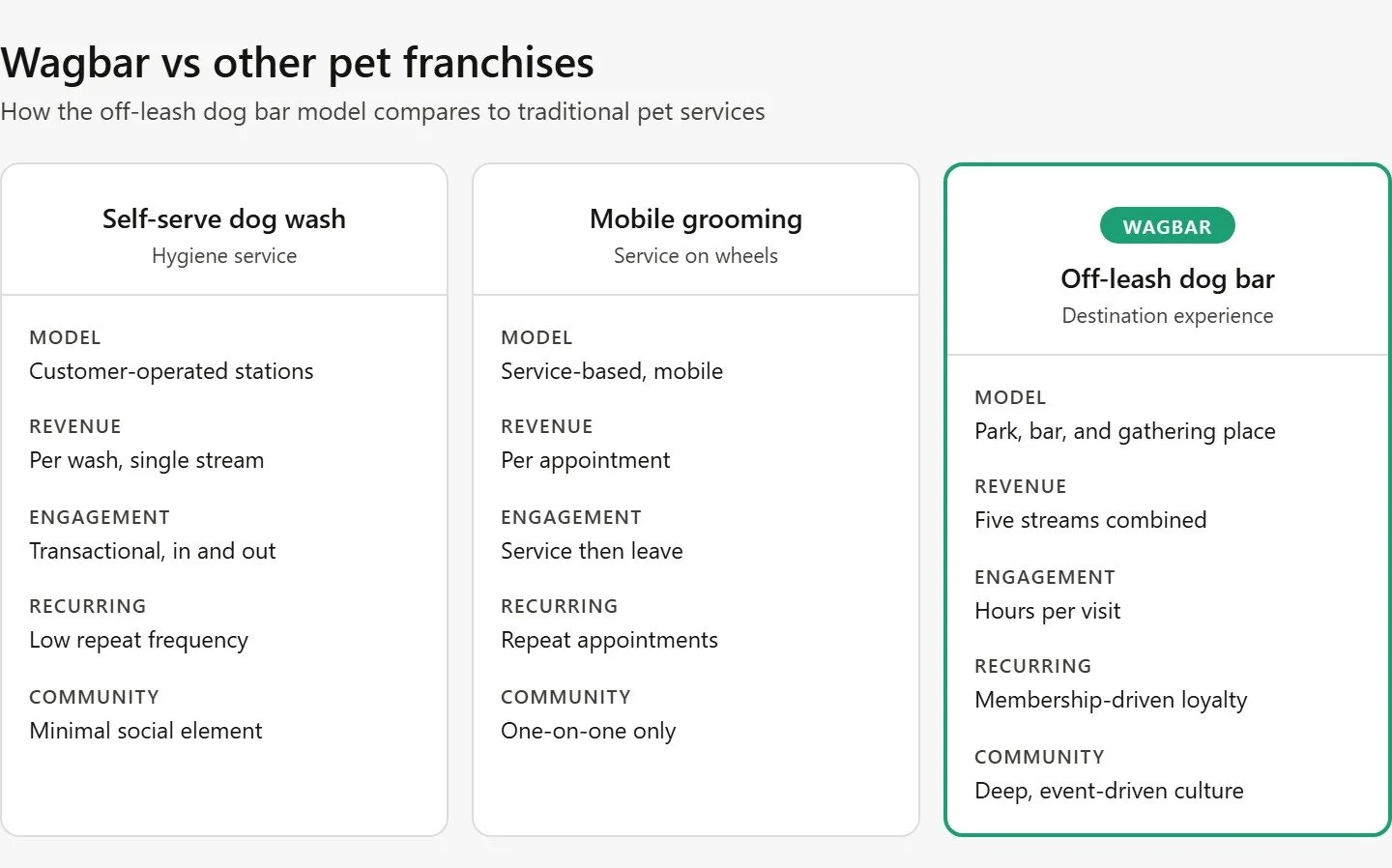
Training requires lower initial investment than comprehensive facilities but produces lower revenue ceilings unless you scale to multiple trainers and locations. Compare training's $50,000 to $150,000 investment against facility-based concepts like off-leash dog bars or full-service pet care facilities requiring $300,000 to $1,000,000+. Training generates project-based income requiring constant customer acquisition, while membership-based models like off-leash dog park bars create recurring revenue streams from existing customers.
Find the Right Franchise Path for You
The dog training industry in 2026 offers proven paths to business ownership whether you have $50,000 or $500,000 to invest. The key is matching the right franchise model to your capital, skills, and lifestyle goals, then executing with discipline and patience through the critical first 12 to 18 months.
Explore Wagbar's franchise opportunity to see how the off-leash dog bar model creates a different kind of pet business with membership-driven recurring revenue and strong community engagement. Or learn more about dog franchise opportunities across the full spectrum of pet industry business models to find your best fit.