
Dog Training & Enrichment in Knoxville: Building Better Canine Citizens
Finding the right training and enrichment opportunities for your dog in Knoxville can feel overwhelming. Between traditional obedience classes, specialized behavioral training, and socialization opportunities, how do you know what your pup really needs? The answer isn't one-size-fits-all—great dog training combines structured learning with real-world practice, positive reinforcement with genuine socialization, and professional guidance with everyday experiences that help your dog become a confident, well-adjusted companion.
Knoxville's dog training landscape offers everything from puppy kindergarten classes to advanced agility courses, but the most successful approach often combines formal training with enriching social experiences. That's where places like Wagbar Knoxville come in—not as a replacement for professional training, but as the perfect complement. Think of it this way: training classes teach your dog the skills, while supervised off-leash environments like Wagbar give them the opportunity to practice those skills in real-world situations with other dogs and distractions.
Whether you're raising a puppy who needs early socialization, working with a reactive dog who struggles with other canines, or simply want to give your well-behaved companion more mental stimulation, Knoxville's training and enrichment resources can help. This guide explores everything from finding qualified trainers to understanding how off-leash socialization spaces support your training goals, giving you the complete picture of what it takes to raise a balanced, happy dog in East Tennessee.
Understanding Dog Training Approaches in Knoxville
The dog training world has evolved dramatically over the past two decades. Walk into any Knoxville training facility today and you'll likely hear terms like "positive reinforcement," "force-free methods," and "science-based training"—a far cry from the dominance-focused approaches that were common a generation ago. Understanding these different philosophies helps you choose trainers and programs that align with your values and your dog's needs.
Modern Training Philosophy
Today's most effective dog training recognizes what science has taught us about how dogs actually learn. Positive reinforcement training—rewarding behaviors you want to see more of—consistently produces better results than punishment-based methods. This doesn't mean dogs never hear "no" or face boundaries; it means the foundation of learning comes from helping dogs understand what earns rewards rather than focusing on what earns corrections.
Research from veterinary behaviorists shows that punishment-based training can increase anxiety, create fear-based aggression, and damage the human-dog bond. Meanwhile, positive reinforcement training builds confidence, strengthens your relationship, and creates dogs who actually want to work with you rather than dogs who comply out of fear. For Knoxville dog owners, this matters because you're not just training behaviors—you're shaping your dog's entire relationship with the world.
The best trainers understand that every dog is an individual. A training approach that works beautifully for a confident Golden Retriever might overwhelm a sensitive Border Collie. Great trainers assess each dog's temperament, learning style, and specific challenges before recommending a training plan. They also recognize that training happens in context—what works in a quiet training room needs to transfer to real life, whether that's walking through Market Square or playing at an off-leash park.
Finding Qualified Trainers
Knoxville offers dozens of dog trainers, but credentials matter more than many people realize. Unlike fields such as veterinary medicine, dog training isn't regulated—anyone can hang out a shingle and call themselves a trainer. That's why looking for professional certifications helps you separate qualified professionals from well-meaning amateurs.
The Certification Council for Professional Dog Trainers (CCPDT) offers credentials including Certified Professional Dog Trainer-Knowledge Assessed (CPDT-KA) and Certified Professional Dog Trainer-Knowledge and Skills Assessed (CPDT-KSA). These certifications require extensive education, documented training hours, and passing rigorous exams. The International Association of Animal Behavior Consultants (IAABC) certifies behavior consultants who work with more complex behavioral issues. Karen Pryor Academy Certified Training Partners (KPA-CTP) have completed intensive coursework in clicker training and positive reinforcement methods.
When interviewing trainers, ask about their education, certification, and continuing education. Great trainers constantly update their knowledge as new research emerges. Ask about their training philosophy—if they use terms like "alpha," "dominance," or "pack leader," or recommend tools like prong collars, choke chains, or shock collars, keep looking. Ask if you can observe a class before enrolling. Watch how the trainer interacts with dogs and handlers—do dogs look happy and engaged, or stressed and confused?
Training Beyond Basic Obedience
While every dog benefits from basic manners training—sit, stay, come, loose-leash walking—don't stop there. Knoxville offers specialized training opportunities that provide mental stimulation, build specific skills, and address particular challenges. Understanding dog body language becomes especially important when you move beyond basic obedience into more complex training scenarios.
Reactive dog training helps dogs who bark, lunge, or show fear or aggression toward other dogs, people, or stimuli. Qualified behavior consultants use systematic desensitization and counterconditioning to change your dog's emotional response to triggers. This work requires patience and expertise—it's not just about stopping the behavior, but changing how your dog feels about what triggers them.
Agility training offers incredible mental and physical enrichment. Dogs learn to navigate obstacle courses including jumps, tunnels, weave poles, and contact obstacles. While competitive agility requires significant training, recreational agility provides fun exercise and bonding for any dog-owner team. Several Knoxville facilities offer agility classes for beginners through advanced competitors.
Nose work and scent detection tap into dogs' natural scenting abilities. Dogs learn to search for specific scents in various environments—a mentally exhausting activity that's perfect for high-energy dogs or those who need confidence-building. Even older dogs or those with physical limitations excel at nose work since it doesn't require athleticism, just a good nose and willingness to search.
How Off-Leash Socialization Supports Training Goals
Training happens in a classroom, but real learning happens when dogs apply those skills in everyday situations. That's why off-leash socialization environments play such a crucial role in creating well-adjusted dogs. When managed properly with appropriate supervision and safety protocols, these spaces give dogs something formal training alone can't provide—the opportunity to practice social skills, self-regulation, and appropriate play with members of their own species.
The Socialization Window
Puppies experience a critical socialization period between roughly 3 and 14 weeks of age. During this window, positive experiences with other dogs, people, environments, and situations shape how they'll respond to the world for the rest of their lives. Miss this window or fill it with frightening experiences, and you may spend years working to overcome fear, anxiety, or reactivity.
But socialization doesn't end when puppies hit four months old. Adolescent and adult dogs continue learning from social experiences throughout their lives. Regular, positive interactions with other dogs help maintain social skills and prevent the isolation that can lead to reactivity or fear. Think of it like human social skills—we don't stop needing practice just because we learned the basics as children.
The challenge lies in finding appropriate socialization opportunities. Dog parks can be wonderful or terrible depending on management, supervision, and the mix of dogs present on any given day. Traditional dog daycare works well for some dogs but overwhelms others. Structured socialization opportunities that balance freedom with supervision give dogs the best of both worlds—chances to interact naturally while ensuring play stays appropriate.
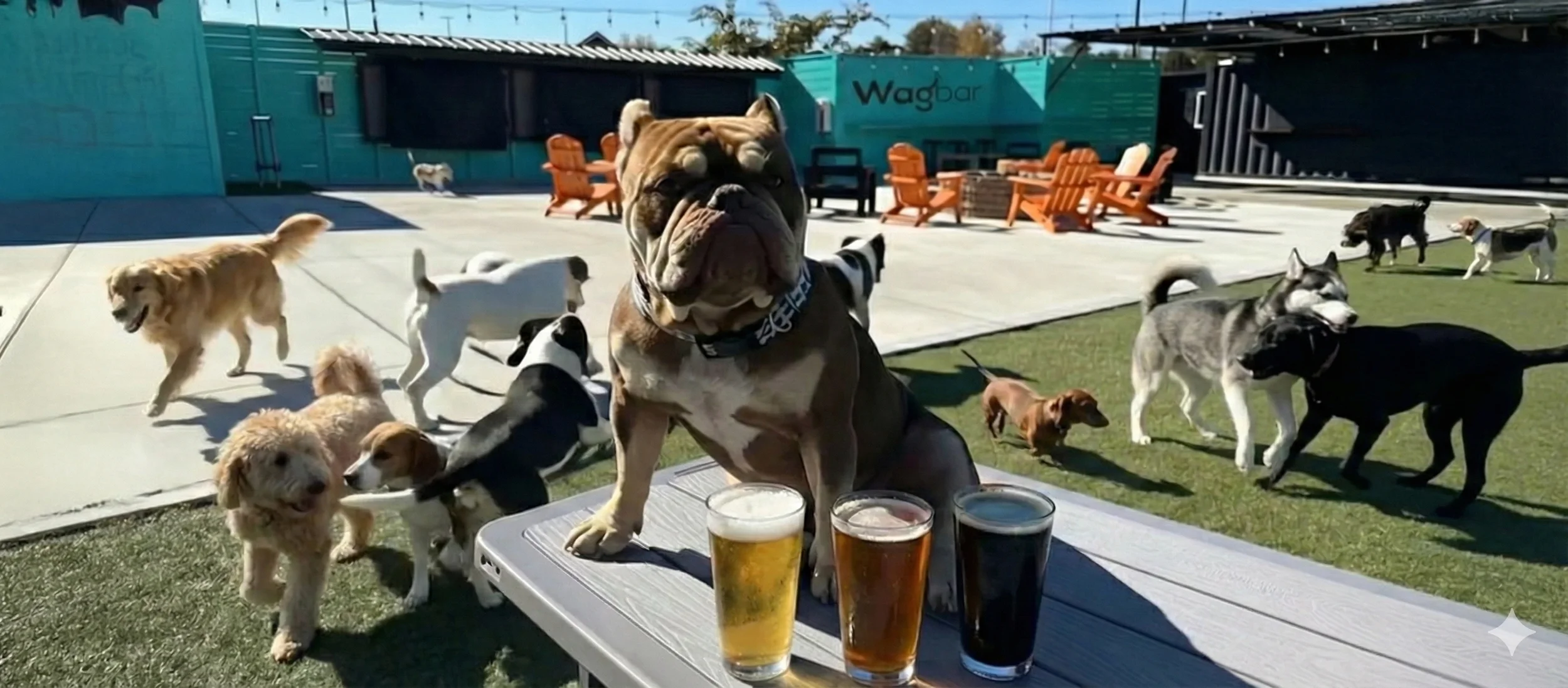
Wagbar Knoxville opening in October 2025 will provide exactly this type of environment. Unlike typical dog parks where supervision varies and off-leash play sometimes spirals into chaos, Wagbar employs trained staff who understand canine body language and play styles. They intervene before play becomes too rough, help shy dogs gain confidence, and ensure high-energy dogs don't overwhelm more reserved playmates. This supervised freedom teaches dogs to read other dogs' signals, regulate their own arousal levels, and develop the social skills that make them pleasant companions everywhere.
Teaching Self-Regulation Through Play
One of the most valuable skills dogs learn in well-managed off-leash environments is self-regulation—the ability to control their own excitement, energy, and impulses. This isn't something you can easily teach in a training class; it emerges through repeated experience with other dogs who communicate boundaries and through supervised play that stops before it escalates.
Watch dogs playing at a well-run facility and you'll notice patterns. Two dogs wrestle intensely, then one signals "that's enough" by turning away or play-bowing to restart on calmer terms. A dog gets overstimulated and zooms around the space, burning off excess energy before returning to calmer interaction. A bold dog approaches a nervous one, gets clearly told to back off, and respects that boundary. These micro-interactions teach skills that no amount of human training can replicate.
Self-regulation transfers to other areas of life. Dogs who've learned to manage their excitement around other dogs often show better impulse control at home—they're less likely to jump on guests, more able to settle when asked, and better at handling frustration when they can't get what they want immediately. These aren't separate skills; they're all part of learning to exist in a social world with rules and boundaries.
The magic happens when formal training and social experience work together. Your dog learns "wait" in training class, then practices waiting for appropriate moments to approach other dogs at Wagbar. They learn "leave it" with treats, then apply that skill to ignoring a toy another dog is playing with. They master recall in your backyard, then generalize it to coming when called even when playing with friends. Training gives them the vocabulary; experience gives them the wisdom to apply it.
Reading and Responding to Canine Communication
Understanding dog body language transforms from academic knowledge to practical skill when dogs spend time in social situations. Books and videos teach you what a play bow looks like, what pinned ears mean, or how to spot stress signals. But actually seeing these signals in context—noticing the subtle tension before a snap, recognizing the invitation to play versus the warning to back off—requires real-world observation.
Wagbar's staff expertise includes reading these subtle signals and helping owners learn to spot them too. When they point out that your dog is signaling stress by whale-eyeing another dog, or explain that what looks like aggression is actually over-aroused play, they're teaching you skills that improve your relationship with your dog everywhere. You'll spot these signals on leashed walks, at the vet's office, or when friends bring their dogs over for a visit.
Dogs also learn from each other's communication. A puppy who comes on too strong with play invitations learns from older dogs who clearly communicate "not interested." A dog who doesn't understand appropriate greeting behavior gets feedback from well-socialized dogs who teach them the rules. A shy dog watches confident dogs and slowly learns that new situations aren't necessarily scary. This peer-to-peer learning happens naturally in well-supervised groups where dogs of various ages, temperaments, and play styles interact.
The key is supervision by people who understand the difference between appropriate correction and bullying, between healthy wrestling and concerning aggression, between a dog who needs a break and a dog who's building confidence. Without this expertise, off-leash play can reinforce bad habits or create fear. With it, these spaces become classrooms where dogs learn the social skills that make them welcome wherever they go.
Puppy Training and Early Socialization in Knoxville
Getting your puppy's first year right sets the foundation for a lifetime of good behavior and positive experiences. Knoxville offers various puppy training programs, but understanding what puppies actually need during different developmental stages helps you choose the right combination of formal classes and real-world experiences.
Puppy Kindergarten Classes
Most puppy kindergarten classes accept puppies starting around 8-10 weeks old, after they've had at least one set of vaccinations. These classes typically run 4-6 weeks and focus on basic manners, bite inhibition, and controlled socialization with other puppies. Great puppy classes include equal parts training and play—puppies need both structure and the chance to be puppies together.
What to look for in a puppy class: small class sizes (usually 6-8 puppies maximum) so each puppy gets individual attention, age-appropriate groupings so tiny puppies aren't overwhelmed by adolescent Labs, emphasis on positive experiences rather than perfect performance, and opportunities for appropriate puppy play under supervision. Instructors should intervene if play gets too rough, help shy puppies gain confidence, and teach owners to read their puppies' stress signals.
Good puppy classes also cover house training, preventing resource guarding, handling exercises so puppies accept grooming and vet care, introduction to basic cues like sit and down, and the all-important skill of settling and calmness. That last one often surprises new puppy owners—teaching your puppy to be calm is just as important as teaching them to come when called. Puppies who only learn to be "on" all the time often become hyperactive adolescents and adults.
Many Knoxville training facilities offer puppy socials in addition to or separate from formal classes. These supervised play sessions let puppies interact while trainers ensure play stays appropriate. For puppies who aren't quite ready for the structure of a formal class, or for owners who want additional socialization opportunities beyond their weekly class, puppy socials fill an important gap.
The Puppy Socialization Challenge
Here's the puppy owner's dilemma: the most critical socialization period happens before puppies are fully vaccinated. Veterinarians understandably emphasize disease prevention, which leads many to advise keeping puppies isolated until 16 weeks old. But by then, you've missed most of the primary socialization window. The solution lies in thoughtful socialization that minimizes disease risk while maximizing positive experiences.
The American Veterinary Society of Animal Behavior states that incomplete vaccination shouldn't prevent puppies from attending socialization classes and experiences, as behavioral issues—not infectious diseases—are the leading cause of death for dogs under three years old. Work with your vet to find the right balance for your puppy's situation, considering factors like local disease prevalence and your puppy's vaccination status.
Safe early socialization includes: puppy classes in facilities that require vaccination records and sanitize between classes, play dates with known vaccinated dogs in private yards, carrying your puppy to expose them to various environments without paw contact with public areas, and inviting vaccinated, dog-friendly adult dogs to meet your puppy at home. Avoid areas with high dog traffic from unknown dogs—dog parks, pet store floors, busy trails—until vaccination is complete.
Puppy socialization goes far beyond dog-dog interaction. Expose your puppy to various sounds (traffic, thunderstorms, children playing), surfaces (metal grates, wobbly bridges, slippery floors), people (men with beards, people in hats, children of various ages), and situations (car rides, vet visits, grooming). Each positive exposure builds confidence and prevents fear later. The goal isn't just tolerance but creating a puppy who approaches new experiences with curiosity rather than fear.
Preventing Problem Behaviors
Many "problem behaviors" in adult dogs start as normal puppy behavior that either wasn't addressed or was inadvertently reinforced. Jumping becomes harder to manage when your 70-pound dog does it instead of your 20-pound puppy. Mouthing and biting become concerning when adult teeth replace puppy teeth. Pulling on leash becomes exhausting when your dog is strong enough to drag you down the street.
The good news? Preventing these behaviors is easier than fixing them later. Teach your puppy that sitting earns attention, so jumping doesn't. Redirect mouthing to appropriate toys while teaching bite inhibition through play with other puppies who yelp when play gets too rough. Practice loose-leash walking from day one, rewarding checking in and walking beside you rather than pulling ahead.
Separation anxiety prevention often gets overlooked in puppy training but becomes crucial during adolescence. Start immediately teaching your puppy that being alone is normal and safe. Practice short departures, reward calmness, and avoid making leaving and returning a big deal. Puppies who never learn to be alone often develop anxiety that's much harder to resolve in adult dogs.
Resource guarding—growling or snapping when people approach food, toys, or other valued items—also starts in puppyhood. Prevent it by teaching your puppy that people approaching their resources is good news. While they're eating, drop extra treats in their bowl. Trade toys for other toys or treats. Never punish guarding behavior, which only teaches puppies to guard more subtly until they feel they must escalate to biting. Professional training for behavioral issues becomes important if you see early signs of guarding or other concerning behaviors.
Building Confidence in Shy Puppies
Some puppies enter the world confident and bold, ready to tackle any new experience. Others need more support building confidence. Shy or fearful puppies aren't doomed to lives of anxiety, but they need thoughtful socialization that respects their temperament rather than forcing them into situations they're not ready to handle.
Never flood a fearful puppy—forcing them into scary situations hoping they'll "get over it." This typically backfires, increasing fear rather than resolving it. Instead, use systematic desensitization and counterconditioning. Let your puppy observe whatever scares them from a distance where they're alert but not panicked. Pair that observation with amazing treats or play. Gradually decrease distance as your puppy's confidence grows, always working at their pace rather than pushing them faster than they're ready to handle.
Confidence-building exercises help shy puppies learn they can handle new situations. Teach your puppy to navigate small obstacles like low platforms, tunnels, and balance equipment. These physical challenges build confidence that transfers to emotional resilience. Trick training—teaching fun behaviors like spin, crawl, or play dead—gives shy puppies successful learning experiences in low-pressure situations. Success breeds confidence.
The right socialization environment matters enormously for shy puppies. Overwhelming them with chaotic dog parks full of bold, pushy dogs can increase rather than decrease fear. Instead, seek situations with appropriate playmates—calm, well-socialized adult dogs who communicate clearly or similarly-aged puppies with gentle play styles. Wagbar's trained staff will be able to facilitate appropriate matches when the Knoxville location opens, ensuring shy dogs aren't overwhelmed while still getting valuable social experience.

Adult Dog Training and Behavior Modification
Many people assume training is just for puppies, but adult dogs can absolutely learn new behaviors, overcome behavioral challenges, and become better companions at any age. Whether you adopted an adult dog with an unknown history, your adolescent dog is going through a challenging developmental phase, or you simply want to teach your older dog new skills, Knoxville's training resources can help.
Addressing Reactivity and Fear-Based Behaviors
Reactivity—barking, lunging, or showing aggression toward other dogs, people, or stimuli while on leash—is one of the most common and frustrating behavioral challenges. Reactive dogs often seem fine in the house but transform into unmanageable terrors the moment they spot another dog on a walk. Understanding reactivity helps you address it effectively rather than simply trying to suppress the symptoms.
Most reactivity stems from fear, frustration, or overarousal rather than genuine aggression. Your dog might bark and lunge because they're scared and trying to create distance, because they want to greet but can't reach the other dog (barrier frustration), or because they become so aroused by seeing another dog that they can't think clearly. The solution differs depending on the underlying cause, which is why working with a qualified behavior consultant matters.
Treatment typically involves management to prevent practice (you can't fix reactivity while your dog repeatedly rehearses the behavior) combined with systematic desensitization and counterconditioning. Your dog learns to notice triggers from a distance that doesn't provoke reaction, receives amazing rewards for calm behavior, and gradually builds new associations—other dogs predict good things rather than triggering panic or frustration.
This work requires patience and expertise. Many Knoxville trainers offer reactive dog classes where dogs work under threshold (below their reaction point) with gradually decreasing distance between dogs as confidence builds. Private training lets you work one-on-one without the pressure of a class environment. Either way, expect months of consistent work rather than a quick fix. The good news? Most reactive dogs improve dramatically with appropriate training, becoming pleasant walking companions rather than embarrassing liabilities.
Muzzle training often helps reactive dogs. Many people resist muzzles, feeling they make their dog look dangerous, but a properly fitted basket muzzle allows panting, drinking, and taking treats while preventing bites. This safety net reduces your stress, which your dog feels through the leash, and allows you to practice training without worrying about worst-case scenarios. Muzzle-conditioned dogs learn to love their muzzles when you pair wearing them with amazing experiences.
Improving Recall and Off-Leash Reliability
Coming when called might be the most important cue you teach your dog—it can literally save their life if they bolt toward traffic or head toward danger. Yet recall is also one of the hardest behaviors to train because it asks dogs to abandon whatever they're doing (which is often more interesting than you) and return to you. Building bombproof recall takes time and strategic training.
Start training recall in low-distraction environments like your living room. Use an enthusiastic tone, amazing treats or play as rewards, and make it a game rather than a demand. Practice frequently but keep sessions short—five perfect recalls are better than 20 mediocre ones. Gradually increase difficulty by practicing in the yard, then on a long line in more distracting environments.
The cardinal rule of recall training: never call your dog for something they perceive as negative. Don't call them to end fun playtime, to give medication, or to leave the dog park unless you pair the recall with something equally rewarding. When it's time to leave a fun situation, walk over and leash them rather than using your recall cue. This preserves the cue's meaning—coming when called always predicts good things.
Off-leash training becomes easier when your dog has opportunities to practice in appropriate environments. Wagbar's supervised off-leash space lets you work on recall around major distractions (other dogs playing) with the safety net of a fenced environment and trained staff who can help if needed. This bridges the gap between practicing at home and fully off-leash in uncontrolled environments.
Emergency recall deserves special attention—a separate cue that means "drop everything and come NOW" that you save for genuine emergencies. Condition this cue with the most amazing rewards your dog has ever received, practice it sparingly so it never loses its power, and use it only when you really need instant response. Many trainers recommend a whistle for emergency recall since the sound carries far and stays consistent regardless of your emotional state.
Managing Multi-Dog Households
Living with multiple dogs brings wonderful companionship but also unique challenges. Dogs in the same household might compete for resources, form alliances that exclude other dogs, or develop conflicts that escalate over time. Understanding the dynamics of multi-dog households helps you prevent problems and maintain harmony.
Resource guarding becomes more complex in multi-dog homes. Even dogs who show no guarding toward humans might guard from other dogs. Prevent conflicts by feeding dogs separately, providing multiple water bowls and beds so dogs needn't share, supervising high-value items like chews and toys, and teaching dogs that good things happen when other dogs are around rather than scarce resources creating competition.
Adding a new dog to an established household requires thoughtful introduction. Meeting on neutral territory first, keeping interactions short and positive initially, supervising closely for weeks before leaving dogs alone together, and maintaining the existing dog's routine while the newcomer settles in all help dogs adjust. Some dogs welcome new companions immediately; others need weeks or months to fully accept a new pack member.
Pay attention to breed-specific needs and compatibility when building your pack. High-prey-drive terriers might struggle living with small, fluffy breeds they perceive as prey-like. Herding breeds might nip and chase other dogs in their household. Dogs with similar energy levels and play styles often do best together, though an energetic young dog paired with a calm, confident older dog can work beautifully if the senior dog clearly communicates boundaries.
Enrichment Beyond Formal Training
Training classes provide structure and learning, but dogs need enrichment that engages their natural instincts and provides mental stimulation beyond basic obedience. Knoxville offers various enrichment opportunities that tire your dog's brain as effectively as physical exercise tires their body—and a mentally tired dog is usually a well-behaved dog.
Mental Stimulation Activities
Mental exercise exhausts dogs faster than physical exercise alone. Twenty minutes of training or puzzle-solving can tire a dog as much as an hour-long walk. For high-energy breeds or dogs with physical limitations that prevent extensive exercise, mental stimulation becomes especially important.
Nose work taps into dogs' incredible scenting abilities. While competitive nose work involves searching for specific essential oils, recreational nose work can be as simple as hiding treats around your house for your dog to find. Start easy with treats in plain sight, gradually increasing difficulty by hiding them in boxes, under towels, or in challenging locations. Most dogs love this activity regardless of age, breed, or physical ability.
Puzzle toys and feeders turn mealtime into mental exercise. Instead of eating from a bowl, dogs work for their food by solving puzzles, manipulating toys, or searching for hidden kibble. This mimics the natural foraging behavior dogs' wild ancestors performed daily. Rotate puzzle toys to maintain novelty and gradually increase difficulty as your dog masters easier challenges.
Training new tricks provides mental stimulation even if the tricks themselves have no practical purpose. Teaching your dog to spin, weave through your legs, or balance treats on their nose challenges their brain and builds your bond. Trick training also builds body awareness and coordination, which particularly benefits growing puppies and older dogs maintaining mobility.
Novel experiences offer enrichment without requiring training. Taking your dog to new locations (different parks, pet-friendly stores, outdoor cafes), introducing new toys or objects to investigate, or changing walking routes all provide mental stimulation through novelty. Just ensure new experiences stay positive—forcing nervous dogs into overwhelming situations creates stress rather than enrichment.
The Role of Social Play
While training and puzzle-solving provide valuable enrichment, nothing replaces the joy and exhaustion that comes from dogs playing together. Social play meets needs that solitary activities can't—the thrill of chase, the physical contact of wrestling, the communication challenges of reading other dogs' signals and adjusting play styles to match.
Quality matters more than quantity in dog play. Thirty minutes of appropriate, well-matched play tires dogs more thoroughly than hours of inappropriate interaction that creates stress rather than enjoyment. Signs of healthy play include role reversals (dogs take turns being chaser and chased), play bows and self-handicapping (larger dogs play gently with smaller ones), and natural breaks where dogs pause before resuming play.
Not all dogs enjoy dog-dog play, and that's okay. Some dogs prefer human interaction, solo activities like fetch or swimming, or calm companionship with other dogs without active play. Don't force dogs who show no interest in playing with others—they're not missing out if they're getting enrichment through other activities they enjoy. The goal is a fulfilled dog, not necessarily a dog who plays with others.
For dogs who do love social play, supervised off-leash environments like Wagbar provide opportunities that most owners can't create at home. Carefully matched playgroups ensure dogs play with appropriate partners. Trained staff intervene before play escalates inappropriately. The space and equipment (pools, agility equipment, various surfaces) offer enrichment beyond what most backyards provide. Regular play dates with the same dogs also let friendships develop, which often leads to even more satisfying play as dogs learn each other's styles and preferences.
Structured Activities and Dog Sports
Knoxville's dog training community offers various structured activities beyond basic obedience. These sports provide physical exercise, mental stimulation, and bonding opportunities while giving you and your dog shared goals to work toward.
Agility involves dogs navigating obstacle courses including jumps, tunnels, weave poles, A-frames, and dog walks. While competitive agility requires significant training and handler skill, recreational agility welcomes all dogs and handlers regardless of athletic ability. Many dogs who seem uninterested in traditional obedience training love agility because it's active, varied, and fun. The sport also builds confidence—shy dogs gain courage from mastering physical challenges, while reactive dogs learn impulse control and focus despite distractions.
Rally obedience combines the precision of traditional obedience with the continuous movement of agility. Dog and handler teams navigate courses with signs indicating various exercises—turns, changes of pace, position changes, and more. Rally tends to be less formal than competition obedience while still requiring teamwork and communication. It's particularly good for dogs and handlers who want structure but find traditional obedience too static.
Barn hunt satisfies dogs' natural prey drive safely. Dogs search for rats (safely secured in aerated tubes) hidden in hay bales. This sport welcomes all breeds and sizes—small dogs can tunnel through the hay, while larger dogs climb over. Dogs who love to sniff, dig, and hunt find barn hunt incredibly satisfying. Several Knoxville-area facilities offer barn hunt training and trials.
Dock diving lets water-loving dogs launch themselves off a dock into a pool, with distance or height competitions depending on the discipline. While this requires access to specialized equipment, several facilities within driving distance of Knoxville offer dock diving. High-energy retrievers and other water breeds often excel at and adore this activity.
The beauty of dog sports lies not in winning competitions (though that's fun too) but in the shared activity and goal-directed training they provide. Working toward something with your dog strengthens your bond, gives your dog's energy and intelligence productive outlets, and creates a social community of like-minded dog people who become friends and support systems.
Wagbar Knoxville's Approach to Enrichment and Socialization
When Wagbar opens in Knoxville in October 2025 at the former Creekside location, it won't just be another dog park—it will be a thoughtfully designed socialization and enrichment environment where dogs can be dogs while learning valuable social skills under expert supervision.
Supervised Off-Leash Environment
The difference between Wagbar and traditional dog parks starts with staffing. While many dog parks are unstaffed and rely on owners to manage their dogs (with varying success), Wagbar employs trained staff who understand canine body language, play styles, and group dynamics. These aren't simply people who like dogs—they're educated in dog behavior and trained to recognize subtle signs of stress, overarousal, or conflict before situations escalate.
Staff intervention happens proactively rather than reactively. When a dog shows early stress signals—lip licking, yawning, moving away from play—staff redirect other dogs' attention to give the stressed dog a break. When play becomes too rough or one-sided, they interrupt and reset the interaction. When a new dog enters who seems nervous, they facilitate appropriate introductions rather than letting confident dogs mob the newcomer.
This supervision creates an environment where dogs can genuinely relax and be themselves. Owners don't need to hover anxiously, prepared to intervene. Instead, they can trust that knowledgeable staff are watching the whole group, allowing them to enjoy their drink, socialize with other owners, and watch their dog have a blast. This balance of freedom and safety creates better experiences for everyone—dogs, owners, and the community as a whole.
The physical environment supports positive interaction. Multiple play areas allow dogs to be grouped by size, play style, or temperament. Equipment like agility obstacles and pools provides enrichment beyond simple chase-and-wrestle. Shaded areas and water stations ensure comfort. The design prevents blind corners where conflicts might escalate unseen and provides multiple exit routes so no dog feels trapped if they need space.
Building Social Skills Through Regular Visits
Consistency matters in developing social skills. Dogs who visit Wagbar regularly rather than occasionally gain much more from the experience. They learn which other dogs they enjoy playing with and develop friendships. They grow accustomed to the environment so they're not stressed by novelty each visit. They learn the routine—how to enter calmly, where water and rest areas are located, when play is appropriate and when to settle.
Regular members often become the "mentor dogs" who help new dogs learn the ropes. These confident, well-socialized dogs communicate clearly with newcomers, teaching them the rules of appropriate play. They demonstrate calmness and provide models of good behavior for less experienced dogs. Staff recognize these dogs and use them strategically in introductions and playgroups.
The social learning that happens through regular attendance extends far beyond dog-dog interaction. Dogs learn to navigate excitement without becoming out of control. They practice patience when they must wait for their turn or can't immediately get what they want. They experience appropriate boundaries—from other dogs who communicate "I don't want to play right now" and from staff who interrupt when behavior crosses lines. These lessons in self-regulation and social awareness transfer to every area of life.
Tracking your dog's progress becomes easier with regular visits. Staff who know your dog can tell you when they notice improvements—the reactive dog who now ignores triggers, the shy dog who initiated play for the first time, the overexcited dog who's learning to take breaks before becoming overstimulated. This feedback helps you understand how your dog is developing and identifies areas where additional training might help.
Complementing Professional Training
Wagbar doesn't replace professional training—it complements it beautifully. Think of training classes as your dog's classroom, where they learn skills in a controlled environment with minimal distractions. Wagbar is where they apply those skills in the real world, surrounded by major distractions (other dogs!) that test their learning.
Work with your trainer to identify specific skills to practice at Wagbar. If you're working on recall, use Wagbar's space to practice calling your dog away from play (with staff help if needed). If you're building impulse control, practice waiting at the entrance before entering, or sitting before being released to greet favorite dog friends. If you're working on reactivity, having your dog around other dogs while remaining calm and focused on you provides the exact scenario you need to practice.
Many trainers actually recommend facilities like Wagbar to their clients. They understand that dogs need opportunities to generalize their training—applying skills learned in one environment to new situations. They also recognize that some skills, particularly social ones, can't be taught through human-dog interaction alone. Dogs learn dog language from other dogs, and they learn it best in supervised environments where interactions stay appropriate.
Some trainers might even use Wagbar for training sessions with clients. The controlled but real-world environment provides the perfect difficulty level for many dogs—more challenging than a training room, but more manageable than a completely uncontrolled dog park. Training in these environments teaches dogs to focus despite distractions, a crucial skill for everyday life.
Success Stories and Progress Tracking
One of the joys of managing a dog socialization facility comes from watching dogs transform over time. The reactive dog who could barely enter without losing their mind eventually plays calmly with others. The shut-down rescue who cowered in corners gradually gains confidence and initiates play. The obnoxiously pushy adolescent learns to read signals and become a considerate playmate. These transformations happen through consistent positive experiences over weeks and months.
While Wagbar Knoxville hasn't opened yet, success stories from other Wagbar locations demonstrate what's possible. Dogs who'd been banned from other facilities for behavioral issues learn appropriate interaction through careful management and thoughtful playgroup assignments. Dogs recovering from negative experiences with other dogs rebuild their confidence through positive interactions with carefully chosen playmates. Even dogs with good social skills often improve—becoming more fluent in dog language, more flexible in play styles, and more confident navigating complex social situations.
Progress often happens in stages. Initially, dogs might be overwhelmed or overly excited. With repeated visits, they settle into the routine and their true personality emerges. As they develop relationships with regular attendees (both dogs and staff), they become increasingly comfortable. Eventually, for many dogs, Wagbar becomes their favorite place—somewhere they can fully be themselves, exercise their bodies and minds, and enjoy the company of their own species in a way that's rare in our human-dominated world.
For owners, watching this progress is deeply satisfying. You see your dog's social skills improve. You notice them becoming more confident or better regulated. You watch them develop genuine friendships with other dogs. And you benefit from having a happier, better-exercised, more fulfilled companion at home—a dog who's tired in the best way and content in their life.
Creating a Complete Enrichment Plan
Your dog's enrichment needs are unique, depending on breed characteristics, individual personality, age, physical ability, and life circumstances. Creating a complete enrichment plan means thinking holistically about your dog's needs and how different activities work together to create a balanced, fulfilled companion.
Assessing Your Dog's Needs
Start by honestly evaluating what your dog needs. High-energy herding breeds require significantly more exercise and mental stimulation than lower-energy companion breeds. Young dogs need more activity than seniors. Dogs bred for specific jobs (hunting, retrieving, herding, guarding) need outlets for those instincts. A Border Collie who gets only 30-minute walks twice daily will likely develop problem behaviors from unmet needs, while that same schedule might perfectly suit a senior Cavalier King Charles Spaniel.
Consider your dog's play style and preferences. Some dogs adore dog-dog play and will never tire of wrestling with friends. Others prefer fetch or swimming with you. Some dogs live for nose work and puzzle-solving. Others want nothing more than to snuggle on the couch after a moderate walk. There's no right answer—the goal is meeting your individual dog's needs rather than following generic advice about what dogs "should" enjoy.
Physical limitations matter too. Older dogs with arthritis can't handle impact activities like agility but might love swimming or nose work. Brachycephalic breeds (flat-faced dogs like Bulldogs) need careful management in warm weather but can enjoy many activities in cooler conditions. Dogs recovering from injuries need appropriate exercise that won't compromise healing. Work with your vet to understand your dog's physical capabilities and limitations.
Your own circumstances play a role. Honest assessment of your available time, energy, and resources helps you create sustainable routines rather than ambitious plans that collapse after two weeks. Can you realistically attend training classes weekly? Do you have time for daily training sessions? Can you afford activities with associated costs? There's no shame in working within your constraints—a simple but consistent routine beats elaborate plans that don't actually happen.
Balancing Physical and Mental Exercise
Dogs need both physical and mental exercise, but the ideal ratio varies. Many people over-emphasize physical exercise, creating incredibly fit but still under-stimulated dogs who can run for hours but don't know how to settle. Others provide mental stimulation but inadequate physical activity, leading to pent-up energy that emerges as hyperactivity or destructive behavior.
For most dogs, a combination works best. Morning might include a walk that provides physical exercise plus mental stimulation from exploring new scents. Afternoon could involve training sessions or puzzle toys for mental engagement. Evening might offer social play at Wagbar or roughhousing in the backyard for both physical and social enrichment. This variety prevents boredom while meeting multiple needs.
High-energy breeds typically need both substantial physical exercise and significant mental challenge. These dogs often excel at dog sports that combine both—agility, barn hunt, nose work. They're the dogs who benefit most from multiple types of enrichment daily rather than relying on one activity to meet all needs. Herding breeds particularly need jobs or activities that engage their brains; purely physical exercise rarely satisfies them.
Lower-energy or older dogs might need relatively little physical exercise but still benefit from mental stimulation. Short walks plus puzzle feeding and trick training might perfectly meet their needs. For these dogs, forcing extensive physical activity when they're content with less can actually create stress rather than benefit.
Incorporating Training into Daily Life
The most effective training doesn't happen only in formal sessions—it's woven into everyday life. This "lifestyle training" approach means your dog practices good behavior constantly rather than just during training time, and it prevents the frustration of dogs who sit beautifully in class but never at home.
Use life rewards for training. Your dog must sit before you open the door to go outside. They wait calmly before being released to greet visitors. They make eye contact before getting their dinner bowl. These everyday moments become training opportunities that reinforce good behavior without requiring dedicated training sessions. Since the rewards are things your dog wants anyway (going outside, greeting people, eating dinner), they're highly motivating.
Take training on the road. Practice skills in various locations—hardware stores, outdoor malls, parks, friends' homes. This generalization helps dogs understand that "sit" means sit everywhere, not just in your living room or at training class. It also provides mental stimulation through novelty while reinforcing training.
Real-life scenarios become advanced training. Walking politely past other dogs on leashed walks applies everything you've taught about impulse control and attention. Staying in a down-stay while you chat with a neighbor tests duration and distraction work. Coming when called at Wagbar despite wanting to keep playing challenges your recall training. These applications of skills in contexts where your dog really wants to do something else build genuine reliability.
Building Community Through Shared Activities
One underappreciated benefit of activities like training classes, dog sports, and regular Wagbar visits is the community they create. You meet other dog people who understand that dog hair on your clothes isn't a problem, it's a lifestyle. You find friends whose idea of a great Saturday involves activities with your dogs. You build a support network of people who can recommend vets, trainers, or pet sitters, or who'll watch your dog in an emergency.
These communities often become important social networks for both dogs and humans. Your dog develops friendships with other dogs they see regularly. You develop friendships with their owners. Plans emerge around dog-friendly activities—group hikes, trips to dog-friendly breweries, beach days where dogs can swim. Many people find that their closest friends came from dog-related activities and communities.
The expertise within these communities is valuable too. Experienced dog people can help troubleshoot behavior issues, recommend training approaches, or simply commiserate when you're struggling with a challenging developmental stage. They've been there—through puppyhood chaos, adolescent rebellion, senior health challenges—and can offer both practical advice and emotional support.
For dogs, having a consistent social group provides stability and deeper relationships. Dogs who see the same friends regularly develop more sophisticated play patterns and better communication. They navigate conflicts more smoothly because they understand each other. The shy dog who's terrified of new dogs might play confidently with familiar friends. The social benefits compound over time as relationships deepen.
Preparing Your Dog for Success at Wagbar Knoxville
If you're planning to bring your dog to Wagbar Knoxville when it opens in October 2025, preparing them now sets you up for a positive first visit. While Wagbar's trained staff will help facilitate good experiences, dogs who arrive with certain skills and experiences settle in faster and enjoy themselves more from the start.
Foundational Skills to Practice
Strong basic obedience makes everything easier. Your dog doesn't need perfect competition-level obedience, but reliable responses to sit, stay, come, and leave it help you manage excitement and keep your dog under control when needed. Practice these skills in distracting environments, not just at home, so your dog can respond even when excited.
Door manners prevent chaos at entrances. Teach your dog to wait calmly at doors until released rather than bolting through. Practice at home—your dog must sit and wait before going outside into the yard, before entering the house, before exiting the car. This translates directly to waiting calmly before entering the Wagbar space rather than dragging you through the gate.
Recall under distraction might be the single most valuable skill. Your dog should come when called even when they'd rather do something else—even when they're playing with other dogs. Build this skill gradually using high-value rewards and practicing in increasingly distracting situations. Start in your living room, progress to your yard, then to long-line work in parks or training facilities, and finally to off-leash work in safe enclosed areas.
Accepting handling and being touched by strangers helps during check-in and interaction with staff. Your dog should allow unfamiliar people to touch them, look at them, and handle them without stress. This is also crucial for vet visits and grooming, making it a valuable life skill beyond Wagbar visits.
Impulse control exercises teach your dog to wait for permission before getting what they want. Practice "wait" at feeding time before your dog can eat. Play "it's your choice" by offering treats in your closed fist—your dog only gets the treat when they stop pawing/nosing and wait politely. Have your dog sit and wait before throwing toys. These exercises build general impulse control that applies to waiting before entering Wagbar, not rushing other dogs, and other situations where patience is required.
Socialization Preparation
If your dog hasn't had much experience with other dogs, preparing them now prevents them from being overwhelmed. Arrange supervised play dates with known friendly dogs. Walk your dog in areas where you can see other dogs at a distance and practice calm behavior around them. If your dog struggles around other dogs, work with a trainer now rather than hoping Wagbar will magically solve the problem—staff can help dogs with minor issues, but dogs with significant reactivity or aggression need professional intervention first.
Exposure to various environments helps dogs generalize their social skills. Dogs who've only met other dogs at the local park might behave differently in a different space. Take your dog to various dog-friendly locations—different parks, training facilities, pet stores—so they learn appropriate behavior transfers across environments. The more variety they experience, the more smoothly they'll adapt to Wagbar.
Meeting dogs of different sizes, ages, and breeds prepares your dog for the variety they'll encounter. Puppies who've only played with littermates might be surprised by adult dogs. Small dogs who've only met other small dogs might find large dogs intimidating. Gentle exposure to diversity before your first Wagbar visit helps your dog feel comfortable with the variety of playmates they'll encounter.
Learning to read other dogs' signals is crucial. While this happens naturally through dog-dog interaction, you can help by observing your dog's play dates and intervening when play gets too rough or one-sided. Point out signals even though your dog can't understand your words—the act of observing teaches you what to watch for, and your intervention teaches your dog that play has boundaries.
What to Expect on Your First Visit
First visits to any new environment can be overwhelming. Your dog might be overstimulated by the novelty—all these dogs! new smells! exciting sights!—or might feel hesitant about entering an unfamiliar space. Both reactions are normal. Wagbar staff are experienced with first-time visitors and will help your dog settle in at their own pace.
Arrive with realistic expectations. Your dog probably won't immediately play perfectly with everyone. They might need time to decompress and get their bearings. Some dogs jump right into play; others hang back and observe for 15-20 minutes before joining. Neither approach is wrong—dogs have different comfort levels with novelty and need to settle in at their own pace.
Be prepared to advocate for your dog if needed. While staff monitor play, you know your dog best. If your dog seems stressed and needs a break, take one. If your dog is getting overaroused and needs to settle before rejoining play, give them that time. There's no pressure to stay if your dog isn't ready—sometimes leaving and trying again later works better than forcing a dog who's not having fun.
Subsequent visits typically go more smoothly than first ones. Once your dog knows what to expect, they relax and enjoy themselves more fully. They recognize the place, remember their friends, understand the routine. What feels overwhelming initially becomes comfortable through repetition. Many dogs who are hesitant on first visits become enthusiastic regulars who can't wait to return.
Troubleshooting Common First-Visit Challenges
Some dogs become so overstimulated on first visits that they can't think clearly. They zoom frantically, bark constantly, or play too roughly. This overarousal usually settles as dogs get used to the environment. In the meantime, taking breaks helps—periodically calling your dog away from play for a few minutes of calmness before releasing them again teaches them to self-regulate.
Other dogs shut down when overwhelmed—they freeze, hide, or refuse to interact. Forcing these dogs rarely helps. Instead, let them observe from a distance or quiet corner until they're ready to investigate. Staff might facilitate introductions with calm, confident dogs who can help nervous dogs gain courage. Going slowly and following your dog's lead rather than pushing them creates better outcomes than forcing interaction.
Some dogs try to dominate initial encounters—they're pushy, get in other dogs' faces, don't respect boundaries. Well-socialized dogs usually correct this behavior themselves through clear communication, teaching the pushy dog that other dogs don't appreciate that approach. Staff also intervene when dogs don't read signals or back off when asked. Most pushy dogs learn quickly with appropriate feedback.
Occasionally, dogs simply aren't a good fit for off-leash group play. Dogs with high prey drive who view small dogs as prey, dogs with serious fear or aggression issues, dogs who don't enjoy the company of other dogs—these dogs might be happier with other types of enrichment. That's okay. Wagbar isn't for every dog, just as not every dog enjoys hiking or swimming. The goal is finding activities your individual dog loves, whatever those may be.
Resources and Next Steps
Building your dog's skills, finding appropriate training resources, and creating an enrichment plan that meets your dog's unique needs takes time and ongoing education. Fortunately, Knoxville offers strong resources for dog owners at every stage of the journey.
Finding Professional Help When You Need It
Sometimes DIY training isn't enough. Working with professional trainers or behavior consultants accelerates progress, ensures you're not inadvertently making problems worse, and provides expertise for complex issues. Knowing when to seek professional help prevents small problems from becoming major ones.
Consider professional training if your dog shows aggression toward people or other dogs, if fear or anxiety significantly impacts their quality of life, if problem behaviors aren't responding to your training efforts, if you're preparing for a major life change (new baby, move, additional pets), or if you simply want expert guidance even without specific problems. There's no shame in getting help—it shows you care about doing right by your dog.
Choosing the right professional matters. Interview potential trainers about their education, certification, methods, and experience with issues similar to yours. Ask to observe classes or review videos of their training. Check reviews and ask for references from past clients. Trust your instincts—if something feels wrong or you're uncomfortable with methods suggested, find a different trainer.
Understand that behavior modification takes time. Reactivity, fear, anxiety, and aggression typically require months of consistent work, not quick fixes. Beware of anyone promising fast results or using methods that seem harsh. The most effective behavior modification changes how dogs feel about triggers, not just suppressing visible symptoms, and emotional change happens gradually through positive experiences.
Continuing Education for Dog Owners
Your education about dogs doesn't end when you complete puppy class or basic obedience. The field of dog training and behavior constantly evolves as new research emerges. Continuing your education makes you a better advocate for your dog and helps you make informed decisions about training, enrichment, and care.
Books by respected trainers and behaviorists provide deep dives into specific topics. Authors like Patricia McConnell, Karen Pryor, Jean Donaldson, and Suzanne Clothier have written excellent books about training, behavior, and the human-dog relationship. Look for books based on current scientific understanding of learning theory and behavior rather than outdated dominance-based approaches.
Online resources include webinars, podcasts, and training courses from certified professionals. Many organizations offer continuing education opportunities for both professionals and dedicated pet owners. Social media, while sometimes problematic, also includes groups run by qualified trainers where you can learn from others' questions and experiences.
Attending seminars and workshops when experts visit Knoxville provides concentrated learning opportunities. These events often cover specific topics in depth—aggression, fear and anxiety, specific training sports, behavior science. While sometimes pricey, the education can be invaluable, especially for complex issues.
Working toward certifications or titles through organizations like the AKC's Canine Good Citizen program or trick dog titles gives you structured goals to work toward while building skills. Even if you're not interested in competition, the process of training for titles provides framework and milestones that make training feel purposeful.
Connecting with Knoxville's Dog Community
Building connections within Knoxville's dog community enriches both your life and your dog's. These relationships provide support, resources, friendship, and opportunities for shared activities that benefit everyone involved.
Training facilities and dog sports clubs offer built-in communities. When you take classes or participate in sports, you automatically meet people with similar interests. Many lifelong friendships start in puppy kindergarten or agility class. These connections often extend beyond dog activities into other areas of life.
Social media groups specific to Knoxville dog owners provide online community. Local Facebook groups, Nextdoor discussions, and other platforms let you ask questions, get recommendations, learn about events, and connect with nearby dog owners. While online interaction doesn't replace face-to-face community, it supplements it and can help you find local resources and activities.
Dog-friendly establishments throughout Knoxville create opportunities for socializing with your dog in public. Many breweries, restaurants with patios, and retail stores welcome well-behaved dogs. These outings provide training practice, socialization for your dog, and chances to meet other dog people. When Wagbar opens, it will become another hub for this community, combining social opportunities for both species.
Volunteer opportunities with rescue organizations or shelter programs let you give back while connecting with like-minded people. Walking shelter dogs, fostering, or helping with adoption events contributes to the broader dog community while building your skills and relationships. Many rescue volunteers develop close friendships through shared passion for helping dogs in need.
Planning for Wagbar Knoxville's October 2025 Opening
Wagbar Knoxville's opening at the former Creekside location represents an exciting addition to the area's dog resources. Planning now ensures you and your dog are ready to take full advantage when doors open.
Watch for announcements about membership options and pricing. Like other Wagbar locations, Knoxville will likely offer various membership levels from day passes for occasional visitors to annual memberships for regulars. Early member perks might be available, so following Wagbar's social media or email list keeps you informed about special offers.
Complete vaccination requirements before your first visit. All Wagbar locations require proof of rabies, distemper/parvo, and bordetella vaccinations. Ensure your dog is current on these vaccines—if vaccinations are nearly due, schedule them ahead of time so you're ready from opening day.
Consider what membership level fits your needs and budget. If you plan to visit multiple times weekly, an annual or monthly membership likely offers better value than day passes. If you're not sure how often you'll visit or want to try it before committing, start with day passes or a punch card. You can always upgrade later if you become regulars.
Join the community from the start. Early adopters often form the core of Wagbar's community at each location. You'll make friends, your dog will develop relationships with other regulars' dogs, and you'll help shape the culture of this new space. Being part of something from the beginning creates special bonds and memorable experiences.
Conclusion: Creating Well-Rounded, Happy Dogs
The work of training and enriching your dog never really ends—it evolves as your dog matures, as your life circumstances change, and as you both grow together. But this ongoing process isn't a burden; it's part of the joy of living with dogs. Each new skill learned, each behavioral challenge overcome, each moment of watching your dog play joyfully with friends represents progress in your shared journey.
Knoxville offers everything you need to raise well-adjusted, happy dogs: qualified trainers using modern, science-based methods; enrichment opportunities from agility to nose work; social venues where dogs can interact appropriately; and a community of fellow dog lovers who understand that dogs aren't just pets, they're family members deserving of investment in their well-being.
Training creates the foundation—teaching skills, building communication, establishing routines. Enrichment fills in the rest—mental stimulation that prevents boredom, physical activity that maintains health, social experiences that teach your dog to navigate the world confidently. When combined thoughtfully, these elements create dogs who are pleasant companions, welcome in various settings, and genuinely fulfilled by their lives.
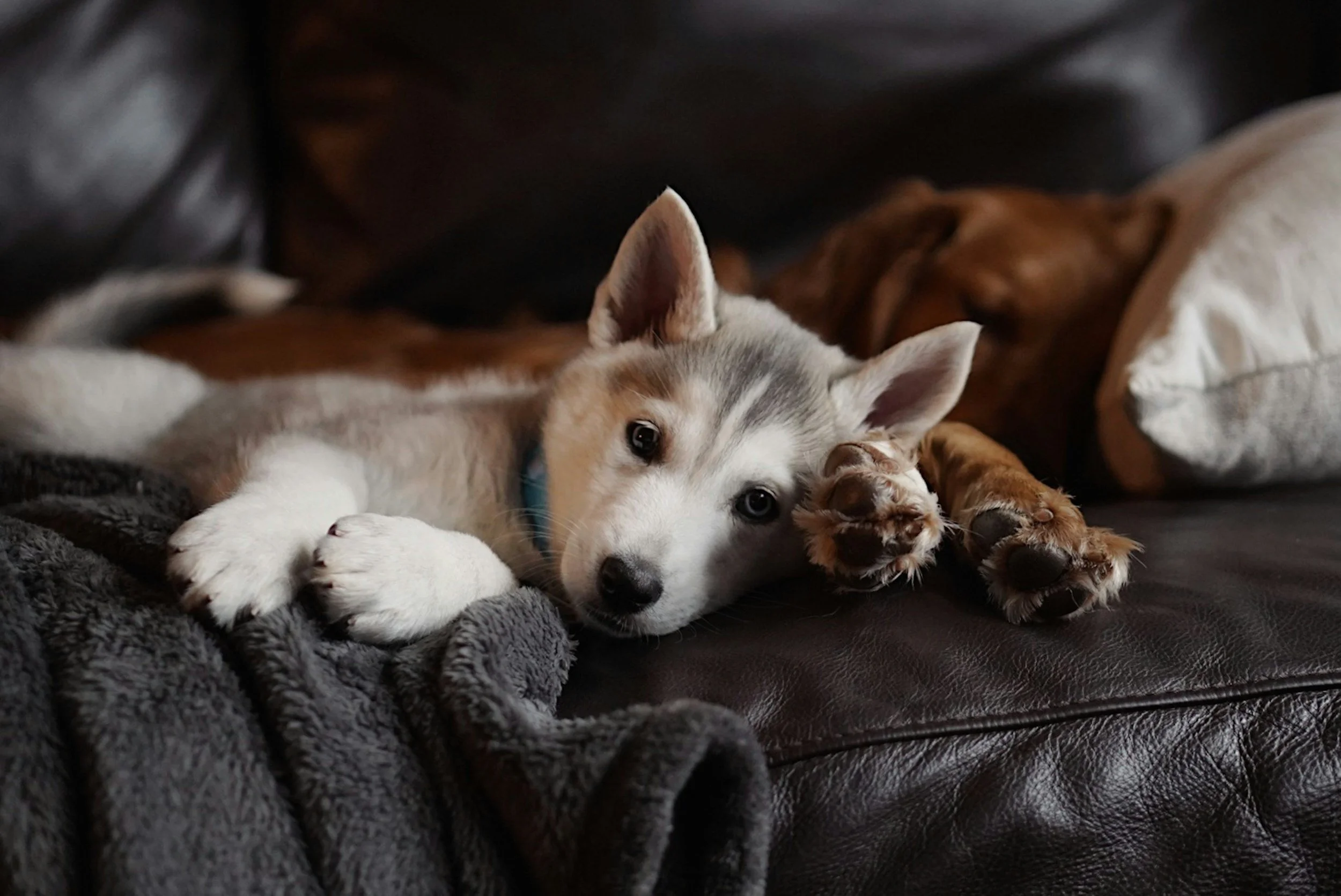
Husky puppy resting on couch with toy
Wagbar Knoxville's October 2025 opening adds an important piece to this puzzle. While not a replacement for training, veterinary care, or other essentials, it provides something many Knoxville dogs currently lack—safe, supervised space to simply be dogs with other dogs, to run and play and socialize in ways that apartment living and leashed walks can't provide. Combined with good training, appropriate enrichment, and your continued education as a dog owner, Wagbar helps create the well-rounded, behaviorally sound, genuinely happy dogs we all want.
The dogs who'll benefit most from Wagbar are those whose owners understand that this is one tool in a larger toolkit. They're working on training at home and in classes. They're providing various types of enrichment suited to their dog's needs and preferences. They're learning to read their dog's signals and advocate for their needs. They're part of Knoxville's broader dog community, benefiting from shared knowledge and support while contributing their own experiences and expertise.
Whether you're raising a puppy, training an adolescent, or enriching your adult dog's life, Knoxville's resources—and soon, Wagbar—can help. The key lies not in doing everything perfectly but in consistently doing your best, learning from both successes and challenges, and always keeping your dog's well-being at the center of your decisions. With that approach, you can't help but create the kind of dog we all aspire to have: confident, well-mannered, socially skilled, and genuinely happy with their life.
Frequently Asked Questions About Dog Training in Knoxville
What's the difference between dog training and behavior modification?
Dog training teaches new skills and behaviors—sit, stay, heel, tricks. Behavior modification addresses existing problem behaviors by changing the underlying emotional response that drives them. Training uses positive reinforcement to teach what you want; modification uses desensitization and counterconditioning to change how your dog feels about triggers. Many behavioral issues need modification rather than just training, which is why working with qualified behavior consultants matters for problems like reactivity, aggression, or fear.
How do I know if my dog is ready for off-leash socialization?
Your dog should have basic obedience skills, especially reliable recall, be current on all vaccinations, be comfortable around other dogs without showing fear or aggression, and have at least minimal experience socializing with other dogs successfully. Puppies can start in controlled environments after their initial vaccination series. Dogs with significant reactivity or aggression need professional help before joining off-leash groups. When in doubt, consult with trainers or Wagbar staff about whether your dog is a good candidate.
What should I look for in a puppy socialization class?
Quality puppy classes maintain small sizes (6-8 puppies maximum), group puppies appropriately by age and size, balance structured training with supervised play time, use only positive reinforcement methods, teach owners to read puppy body language, address common puppy issues like biting and house training, and create positive experiences rather than demanding perfect performance. The instructor should intervene if play becomes inappropriate and help shy puppies gain confidence without overwhelming them.
How long does it take to train a reactive dog?
There's no universal timeline—some dogs show improvement in weeks, while others need months or years of consistent work. Success depends on the severity and cause of reactivity, how long the behavior has been practiced, the quality of training and management, consistency of practice, and the individual dog's temperament and learning speed. Most reactive dogs improve significantly with appropriate training, but expecting quick fixes leads to disappointment. Focus on gradual progress rather than immediate results, celebrate small victories, and be patient with the process.
Can older dogs learn new behaviors and overcome problem behaviors?
Absolutely. The saying "you can't teach an old dog new tricks" is completely false. While puppies may learn faster due to their developmental stage, adult and senior dogs can absolutely learn new behaviors, overcome bad habits, and adapt to changes. In some ways, adult dogs are easier to train—they have longer attention spans, less distraction by novelty, and more impulse control than puppies. Age-related physical or cognitive decline can slow learning in very elderly dogs, but most adult dogs remain excellent students throughout their lives.
How do off-leash parks differ from traditional dog parks?
The primary differences are supervision, management, and environment design. Traditional dog parks are typically unstaffed—owners supervise their own dogs with varying effectiveness. Off-leash facilities like Wagbar employ trained staff who monitor all interactions, intervene proactively rather than reactively, facilitate appropriate groupings and introductions, and maintain cleanliness and safety standards. The physical environment is designed to promote positive interaction with multiple play areas, enrichment features beyond empty grass, and layout that prevents conflicts. This creates safer, more educational social experiences.
What if my dog doesn't enjoy playing with other dogs?
Not all dogs are social butterflies, and that's perfectly fine. Some dogs prefer human interaction to dog interaction, some enjoy calm companionship without active play, and some are simply not interested in other dogs. Don't force dogs who consistently show they don't enjoy dog-dog play—they're not missing out if they're getting fulfillment through other activities they actually enjoy. Focus on enrichment activities your individual dog loves, whether that's fetch, swimming, hiking, nose work, or simply hanging out with you.
How often should my dog visit off-leash socialization facilities?
This depends on your dog's individual needs, energy level, and social preferences. High-energy social dogs might benefit from daily or several-times-weekly visits. Moderate-energy dogs might do well with once or twice weekly visits. Lower-energy or less social dogs might prefer occasional visits or none at all. Watch your dog's behavior—if they're excited to go, play appropriately, and come home happily tired, you've found the right frequency. If they seem stressed, overaroused, or reluctant to go, you might be visiting too often or the environment might not suit them.
What training credentials should I look for in a dog trainer?
Look for certification from recognized organizations: CPDT-KA or CPDT-KSA (Certified Professional Dog Trainer) from the Certification Council for Professional Dog Trainers, CBCC-KA (Certified Behavior Consultant Canine) for behavior specialists, IAABC membership for behavior consultants, or KPA-CTP (Karen Pryor Academy Certified Training Partner) for positive reinforcement trainers. Membership in professional organizations like the Pet Professional Guild or the Association of Professional Dog Trainers indicates commitment to ongoing education. Ask about their education, training philosophy, methods used, and experience with issues similar to yours.
How can I help my shy or fearful dog build confidence?
Build confidence through gradual exposure to new experiences at your dog's pace, never forcing them into situations that overwhelm them. Success in small challenges transfers to general confidence—teach simple tricks, practice basic obedience, and create opportunities for your dog to succeed. Pair potentially scary situations with amazing rewards so your dog learns new things predict good stuff. Avoid coddling fearful behavior (petting and soothing when scared can reinforce fear), but also never punish it. Consider working with a trainer specializing in fearful dogs for guidance. Understanding socialization principles helps create appropriate confidence-building experiences.
What's the best age to start training my puppy?
Start immediately—from the day your puppy comes home. While formal classes typically begin around 8-10 weeks after initial vaccinations, training at home starts right away. Puppies are learning constantly whether you're actively teaching or not, so intentional training from day one prevents bad habits from forming. Early learning happens through play and daily interactions rather than formal training sessions. Focus on house training, bite inhibition, handling and grooming acceptance, and basic manners. Formal classes supplement rather than replace this early home training.
How do I choose between group classes and private training?
Group classes work well for basic obedience, puppy socialization, and dog sports where working around distractions helps dogs learn. They're more affordable than private training and provide built-in socialization opportunities. Private training better suits serious behavioral issues, dogs who are too reactive or fearful for group classes, customized training plans for specific situations, and owners who need flexible scheduling or prefer one-on-one attention. Many people benefit from combining both—group classes for structure and socialization, with occasional private sessions for specific challenges.