

Dog Park Franchise vs. Dog Daycare Franchise: Why Outdoor Models Win in the Right Market
Top TLDR: A dog park franchise and a dog daycare franchise both serve dog owners, but they operate on fundamentally different business models with different staffing demands, revenue structures, and customer relationships. Outdoor dog park franchises generate income while owners are present and engaged, making them better suited for community-oriented markets. Before comparing options, request a Franchise Disclosure Document from any franchisor you're seriously considering.
Two categories of pet franchise get the most attention from investors researching the dog business space: dog daycare and dog park concepts. On the surface, both seem to serve the same customer. Dog owner needs somewhere for their dog. Business provides it. Simple enough.
But the operational reality, the financial structure, and the kind of community each concept builds are quite different. If you're seriously evaluating where to put your investment, understanding that difference is the right starting point.
What Each Model Actually Does
A dog daycare franchise is built around the owner's absence. The dog is dropped off in the morning and picked up in the evening. The business is responsible for the animal's care, supervision, feeding, exercise, and in many cases grooming and training. Staff-to-dog ratios drive costs, and the service window is limited to business hours that align with the owner's work schedule.
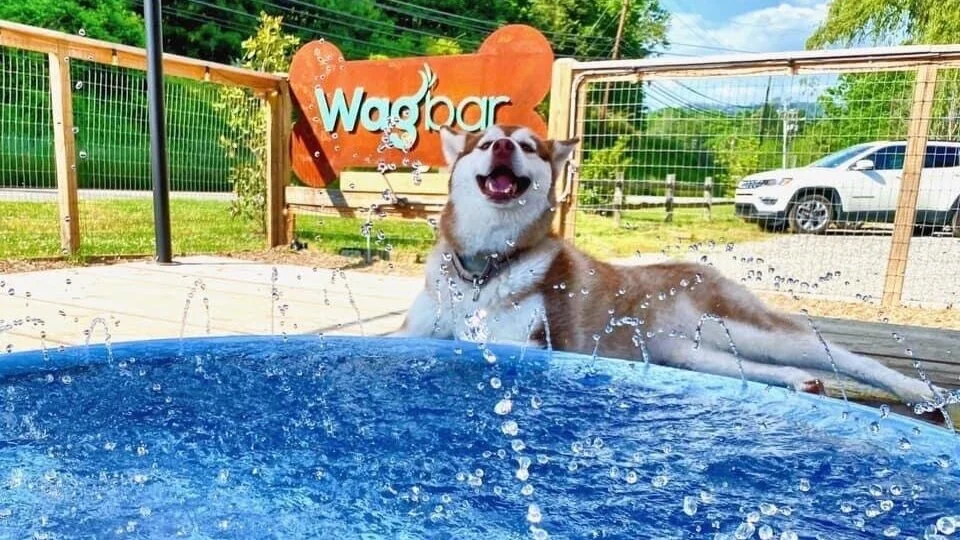
A dog park franchise is built around the owner's presence. The owner comes with their dog, stays, and participates in the experience alongside them. In the Wagbar model, that means an off-leash, fully fenced play area where dogs run freely while their humans relax with a drink, watch the action, and talk to other regulars. The business generates revenue from dog admission fees, memberships, and beverage sales, all while the owner is actively on-site.
That structural difference matters enormously for how each business operates day to day and how each one grows.

Revenue Structure: Single Stream vs. Multiple Channels
Dog daycare franchises primarily collect revenue from boarding and daycare fees. Some locations add grooming, training, or retail, but the core income driver is daily care. Revenue is largely tied to how many dogs the facility can physically accommodate at one time, which is a function of space and staff.
Outdoor dog park franchises run a layered model. At Wagbar, revenue comes from dog day passes, monthly and annual memberships, beverage sales, private event rentals, and community events. Each of those channels is independent but mutually reinforcing. A customer who buys a membership visits more often. More frequent visits mean more beverage purchases. Events bring in guests who may not yet be members. The model generates returns on multiple fronts during a single customer visit.
Memberships in particular create the kind of predictable recurring revenue that investors in any business category find attractive. When a customer commits to an annual membership, that income is booked regardless of how many times they actually visit in a given month. It's a very different financial profile than a daycare that only earns money when a dog actually shows up that day.
For a closer look at how the revenue channels interact, Wagbar's revenue streams overview for off-leash dog bars breaks down each component.
Staffing: Complexity and Cost
Dog daycare is staffing-intensive by design. Animals in the operator's care must be supervised constantly, and state and local regulations often specify minimum staff ratios. Staff must be trained in animal behavior, first aid for dogs, sanitation, and facility protocols. Turnover in pet care roles is historically high because the work is physically demanding and the pay is modest in most markets. Managing that staffing structure is one of the primary operational challenges daycare operators report.
Outdoor dog park franchises require trained, attentive staff as well, particularly for monitoring group play dynamics and ensuring the park rules are being followed. But the supervision burden is shared with the owners, who are present and responsible for their own dogs at all times. Wagbar's safety standards require all dogs to be up to date on vaccinations, at least six months old, and spayed or neutered. Staff screen entries, monitor the park, and intervene when needed. Owners handle the rest.
The result is a staffing model that's demanding but structurally lighter than full-care boarding. Combined with bar service, staff roles at an outdoor dog park franchise span both pet management and hospitality, which creates scheduling flexibility that boarding operations typically can't offer.
The Owner Relationship: Transaction vs. Community
This is where the two models diverge most clearly, and where the outdoor concept has a specific advantage in the right market.
A dog daycare relationship is transactional at its core. Owner drops off dog. Pays fee. Picks up dog. That transaction can be pleasant and even emotional, but it doesn't create a social experience for the owner. They're not there. The business is providing a service in their absence.
A dog park franchise, done well, builds a community. Owners come in, see the same faces they saw last week, watch their dog play with a dog they've been coming to know over months of visits. They meet friends. They attend events. They feel invested in the place in a way that goes beyond "I pay for a service here."
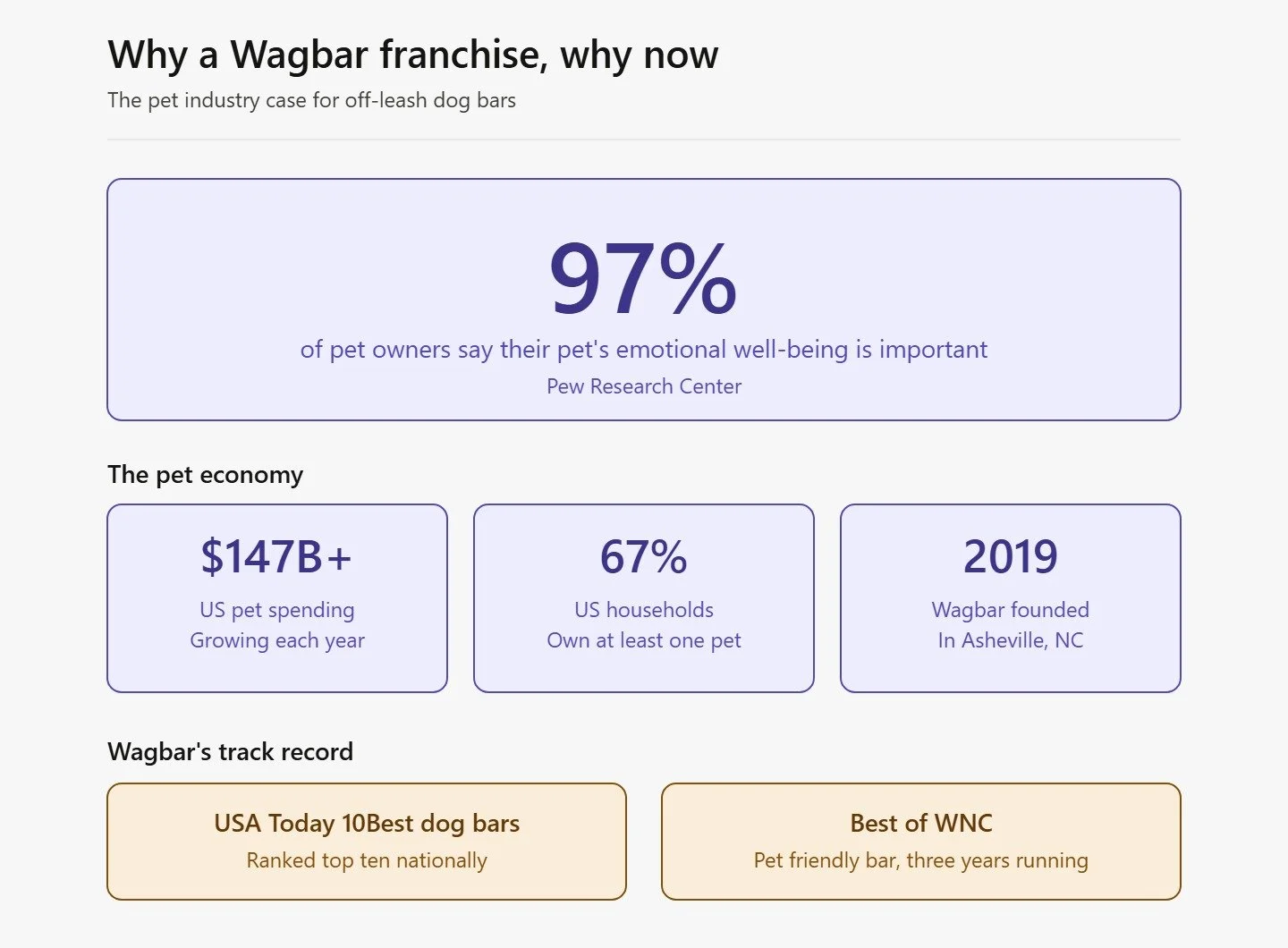
That community identity drives retention in ways that transactional models struggle to replicate. When someone has built friendships, when they know the staff by name, when their dog has a regular pack of friends, canceling a membership carries a social cost that canceling a subscription service does not. Wagbar was founded on this principle in Asheville, North Carolina, and it has become the core of how every location builds its customer base.
The community building guide for dog-focused businesses on Wagbar's site goes deeper on why the relational model outperforms the transactional one over time.
Where Each Model Performs Best
Neither model works everywhere. The honest comparison includes a market context.
Dog daycare performs well in dense commuter markets where working professionals need reliable weekday care. Urban cores with long work commutes, high household incomes, and small apartments are classic daycare markets. The demand is functional: people need somewhere for their dog to go.
Outdoor dog park franchises perform best in markets where people have outdoor culture, discretionary time on weekends, and a social orientation toward local businesses. Markets with active populations, a strong craft beverage scene, significant dog ownership, and community identity align closely with what Wagbar looks for in a potential location. Cities like Asheville, Richmond, Denver, Phoenix, and Los Angeles share characteristics that support the model: vibrant local culture, outdoor preference, and populations that treat their dogs as social companions rather than dependents to be managed.
Wagbar's market demographics guide for dog franchise success covers what makes a specific market well-suited for the concept.
Investment Profile and Operational Scale
Dog daycare franchises vary significantly in investment requirements, but major brands in the space typically require buildouts in the $500,000 to $1.5 million range once leasehold improvements, equipment, and working capital are factored in. Operating costs are substantial because of staffing ratios and the requirement for around-the-clock or extended-hours operations in many markets.
Wagbar's total initial investment range is $470,300 to $1,145,900, which includes the $50,000 franchise fee, buildout, equipment, and launch costs. Wagbar has also developed a turnkey build-out solution using converted shipping containers for the bar structure, which reduces construction complexity and helps keep the lower end of that range achievable. The royalty structure is 6% of adjusted gross sales, plus 1% to the Wagbar marketing fund. Franchisees committing to three or more units receive a 50% discount on the franchise fee for each additional location.
All investment figures are informational. Prospective franchisees should consult the official Franchise Disclosure Document for complete details.
What Wagbar Franchisees Actually Look Like
One of the clearest ways to understand whether a franchise model fits you is to look at who is already running it successfully.
Wagbar's franchisee network includes people from financial services, IT sales, and corporate backgrounds, not hospitality veterans. AJ Sanborn in Richmond, Virginia spent twenty years in financial services before opening his Wagbar location. Dianna in Phoenix came from IT sales and a restaurant background. Jennifer in Los Angeles worked in corporate management before opening her location. A mother-daughter team in Knoxville, Tennessee, whose backgrounds span finance, sales, and animal behavior, represents the most recent expansion of the network.
None of them came in as experienced bar operators or pet care professionals. What they shared was a genuine connection to dogs and community, the capacity to follow a proven system, and a market that fit the concept. Wagbar's training program, which includes intensive hands-on instruction at the Asheville headquarters followed by on-site opening support, is designed to get people from that starting point to a confident operation.
More on what to look for before investing is covered in the off-leash dog bar franchise investment guide.
Frequently Asked Questions
Is a dog park franchise less profitable than a dog daycare franchise?
Not necessarily, and the comparison depends heavily on market and execution. Dog daycare can generate strong per-day revenue but carries higher labor costs and is limited by physical capacity. An outdoor dog park franchise with a beverage component generates revenue from multiple simultaneous channels and benefits from recurring membership income. The models have different financial profiles, not a simple hierarchy.
Do I need hospitality experience to open a dog park bar franchise?
No. Wagbar's training program is designed for franchisees who may not have a bar or pet care background. The week-long intensive training at Wagbar's Asheville headquarters covers dog behavior management, bar operations, staff training, marketing, and daily operations. On-site opening support is included.
Which model requires more staff?
Dog daycare franchises typically require higher staff-to-dog ratios because animals are in full-time care without owners present. Outdoor dog park franchises share supervision responsibility with owners on-site, which supports a different staffing structure. Both require trained, attentive staff, but the staffing complexity and associated cost are generally lower in the park model.
Can an outdoor dog park franchise operate year-round in colder climates?
Yes. Wagbar locations operate in markets with genuine winters through a combination of structural accommodations, heating, appropriate programming, and seasonal event calendars that maintain visit frequency regardless of temperature. The franchise support system specifically addresses cold-climate operations.
What makes a market better suited for a dog park franchise than a daycare?
Markets with active outdoor culture, strong local social scenes, craft beverage appreciation, higher household incomes, and significant dog ownership rates align well with the outdoor park model. Dense commuter markets where owners primarily need weekday care coverage may lean more toward traditional daycare demand. Wagbar's site selection process evaluates these factors in detail.
How does the Wagbar franchise fee compare to other dog-related franchises?
Wagbar's franchise fee is $50,000 with a total initial investment range of $470,300 to $1,145,900. Multi-unit franchisees committing to three or more locations receive a 50% discount on the franchise fee for additional units. These figures are informational; consult the Franchise Disclosure Document for binding investment details.
The Right Fit Depends on the Right Market
Both dog park and dog daycare franchises serve a real need in the pet industry. The question isn't which model is objectively better; it's which model fits the market you're in and the kind of business you want to build.
If you want to build something that functions primarily as a service delivery operation, daycare may fit. If you want to build a place that becomes genuinely embedded in your community, where your customers become regulars and your business becomes a local institution, the outdoor dog park model has structural advantages that are hard to replicate in a drop-off service.
Wagbar has built that kind of institution in Asheville and is replicating it across markets nationwide. If you're researching pet franchise options and want to understand how the model works in your specific market, the Wagbar franchising page is the right place to start. You can also explore the full range of pet franchise opportunities Wagbar offers and what current owners looked for when they made their decision.
Bottom TLDR: A dog park franchise and a dog daycare franchise differ most in who is present during the visit: daycare earns revenue while owners are away, while the outdoor dog park model generates memberships, day passes, and beverage sales while owners stay and participate. In the right market, that presence-based model builds stronger community retention. Visit wagbar.com/franchising to review the investment details and request a discovery call.