

Dog Park Franchise Legal Guide: Compliance, Contracts, and Regulations

Top TLDR: Opening a dog park franchise requires navigating franchise disclosure documents, multi-layered animal care regulations, liquor licensing, and liability insurance before you serve your first pint. This dog park franchise legal guide breaks down every compliance layer you'll face so you can open with confidence and stay protected long-term. Start by consulting a franchise attorney before signing anything.
Anyone who has looked seriously at opening a dog park franchise quickly learns the same thing: the business model is genuinely fun, but the legal paperwork is not. Between the Franchise Disclosure Document, local zoning approvals, state liquor licensing, vaccination enforcement policies, and general liability coverage, there's a real compliance stack to work through before you open your doors.
The good news is that none of this is mysterious. Each requirement has a clear purpose, and a quality franchise system will walk you through most of it. This guide covers what to expect at every stage so you can move through the process without surprises.
What Is a Franchise Disclosure Document and Why It Matters
The Franchise Disclosure Document, commonly called the FDD, is the legal foundation of any franchise relationship. Under the Federal Trade Commission's Franchise Rule, franchisors in the United States must provide a complete FDD to any prospective franchisee at least 14 calendar days before any agreement is signed or money changes hands. That waiting period is not a formality; it exists so you have real time to review a complex document.
The FDD contains 23 required items. For a dog park bar concept, the sections you'll spend the most time in include the franchisor's business history and litigation record, the financial performance representations (Item 19), the complete list of current and former franchisees (Item 20), and the audited financial statements. Item 19 is particularly important because it's where a franchisor can share actual or projected revenue figures. Not every franchisor includes financial performance data, and if yours does, read it carefully alongside an accountant.
Fourteen states require franchisors to register their FDD with a state agency before offering franchises there. California, Hawaii, Illinois, Indiana, Maryland, Michigan, Minnesota, New York, North Dakota, Oregon, Rhode Island, South Dakota, Virginia, and Washington all have registration requirements. Wagbar's franchise disclosure includes explicit language about this, noting that offers cannot be made in these states until pre-sale registration and disclosure requirements are met. If you're in one of those states, confirm that the franchisor is properly registered before your conversations get too far along.
Hire a franchise attorney to review the FDD before you sign anything. This is one area where the expense is worth every dollar.
Key Terms Inside the Franchise Agreement
The franchise agreement is the binding contract that follows the FDD. Where the FDD informs, the agreement commits. These are the terms that have the most practical impact on your day-to-day operation and long-term investment.
Territory rights define the geographic area where you have protected or exclusive rights to operate. Understand exactly what "protected" means in your agreement. Some franchisors grant exclusive territories where they won't open competing units; others grant only a right of first refusal for nearby locations.
Royalty and marketing fees establish your ongoing financial obligations to the franchisor. Wagbar's structure sets royalties at 6% of adjusted gross sales plus a 1% contribution to the brand marketing fund. These percentages apply to your revenue before expenses, so build them into your financial projections from the beginning.
Approved suppliers and operating standards determine how much latitude you have in sourcing equipment, food, beverages, and supplies. Most franchise agreements require adherence to approved vendor lists and operational specifications. For a dog park bar, this can touch everything from the fencing materials used in the off-leash area to the point-of-sale system behind the bar.
Transfer provisions govern what happens if you want to sell your franchise location. Most agreements require franchisor approval of the buyer, impose a transfer fee, and require the new owner to complete the standard training program.
Dispute resolution clauses specify how conflicts between you and the franchisor are handled, including whether disputes go to arbitration and in which state that arbitration takes place.
If you're considering a dog franchise opportunity, review these terms with your attorney before the 14-day waiting period ends.
Federal and State Regulations Affecting Dog Park Businesses
Dog park bar franchises operate at the intersection of several regulatory regimes that don't always communicate with each other. Federal requirements set a baseline, state laws layer on top, and local ordinances add the final detail.
At the federal level, the FTC Franchise Rule governs the disclosure process described above. The Americans with Disabilities Act applies to your physical facility's accessibility requirements. The Fair Labor Standards Act governs your wage and hour obligations. If you're serving alcohol, the federal Alcohol and Tobacco Tax and Trade Bureau (TTB) establishes regulations that apply alongside state licensing.
State-level requirements vary significantly. Every state with a dog park business will have its own:
Business entity registration requirements
Sales tax and occupational tax obligations
Alcohol beverage control (ABC) licensing
Animal control or kennel licensing requirements
Employment law requirements including state minimum wage and leave laws
Before signing a lease, spend time understanding the specific state requirements for your target market. The compliance burden in California looks very different from the compliance burden in Tennessee, where Wagbar's Knoxville location operates. Local governments in Tennessee generally take a more streamlined approach to small business licensing, though that varies county by county.
The pet business legal guide on wagbar.com covers additional licensing and compliance considerations specific to pet-focused businesses.

Animal Care Compliance Requirements
Running a dog park is not the same as running a kennel, but regulators don't always draw that line clearly. Your state's department of agriculture or department of health may have specific requirements for any business that regularly handles animals, even on an owner-supervised basis.
Vaccination requirements are the most universal form of animal care compliance in off-leash dog park operations. Wagbar requires all dogs to be current on vaccinations and to be at least six months old and spayed or neutered before entering the park. These standards exist for legitimate health and safety reasons, not just liability management. Enforcing them consistently is both a regulatory requirement and an operational best practice.
You'll need a clear intake process for verifying vaccination records. Most locations require documentation on the first visit, with membership programs building the verification into the enrollment process. Your franchise agreement and operations manual will specify the required vaccination schedule and documentation standards.
Beyond vaccinations, some jurisdictions require dog parks to maintain specific staff-to-dog ratios, submit to periodic inspections, or obtain a separate animal facility permit. Check with your county or city's animal control office before opening. Zoning approvals may also carry conditions related to animal density or operating hours.
For a deeper look at the regulatory landscape across different states and cities, the zoning and regulations guide for pet businesses on wagbar.com breaks this down by region.
Health Department Regulations for Food and Beverage Service
Operating a bar inside a dog park creates a unique inspection challenge: your local health department will care about both the food and beverage service and the proximity of animals to that service. How those two things get reconciled depends heavily on your local jurisdiction.
In most markets, you'll need a separate food service establishment permit or liquor license for the bar portion of the facility. Health inspectors will typically require physical separation between the area where beverages are prepared and poured and the area where dogs are present. A dedicated container bar setup, like the shipping container conversion model Wagbar uses, often simplifies this by creating a clear physical boundary between the bar operation and the dog play area.
Alcohol licensing is its own process that runs through your state's alcohol beverage control authority. The timeline for obtaining a liquor license varies widely by state, from a few weeks in some markets to six months or more in others. Start this process early. Many franchisees are surprised to discover that their liquor license timeline is the critical path item for their opening date.
Requirements you should expect to address during the health department permitting process include food handler certifications for bar staff, handwashing station placement and accessibility, waste management plans for both bar waste and animal waste, and pest control protocols.
Animal waste management is a common health department concern that catches some operators off guard. Have a written sanitation plan ready that covers frequency of waste removal, cleaning product standards for the play area, and drainage or disposal methods.
Insurance Requirements and Risk Management
A dog park bar franchise carries a risk profile that most standard business insurance policies aren't designed to handle on their own. You're combining general liability exposure from the bar operation with animal-related liability from the off-leash park, and each requires specific coverage.
The core insurance requirements for most dog park franchise operations include:
General liability insurance covering bodily injury and property damage claims from customers and visitors. Policy minimums vary by franchise agreement and state, but $1 million per occurrence and $2 million aggregate is a common starting point for food and beverage operations.
Animal-related liability coverage for claims arising from dog bites, dog-on-dog aggression, or other incidents involving animals on the premises. Standard general liability policies often exclude or severely limit coverage for animal incidents, so this typically requires either a rider or a separate policy. The dog park industry has seen this coverage become more specialized as the category has grown.
Liquor liability insurance (also called dram shop coverage) protects against claims arising from serving alcohol to customers who later cause injury or property damage. This is required by law in many states and strongly advisable everywhere else. Your state's dram shop laws determine the extent of your exposure.
Property insurance covering your physical location, equipment, and improvements. Given the outdoor nature of most dog park operations and the investment in fencing, play structures, and bar infrastructure, make sure your coverage adequately reflects replacement cost.
Workers' compensation insurance is required in virtually every state once you hire employees. Given that your staff will be working around animals all day, injury exposure is real and workers' comp isn't optional.
Business interruption insurance covers lost revenue if your facility has to close temporarily due to a covered event. For a membership-based business where customers pay recurring fees, this coverage can be particularly valuable.
Work with a commercial insurance broker who has experience placing coverage for food and beverage operations, ideally one familiar with the pet care or animal services sector. Your franchise system should have preferred carrier relationships and minimum coverage requirements specified in the franchise agreement.
The pet business legal guide contains additional detail on coverage types and minimum requirements.
Intellectual Property Protections
When you sign a franchise agreement, you're licensing the right to use the franchisor's intellectual property: trademarks, trade dress, operating systems, training materials, and proprietary technology. You don't own these elements; you have a licensed right to use them during the term of your agreement.
Understanding what that means in practice matters for a few reasons.
Trademark usage requirements are usually detailed in the franchise operations manual and the agreement itself. You'll be required to use the brand's name, logo, signage, and marketing materials according to specific standards. Deviations, even well-intentioned ones, can create trademark infringement exposure and franchise agreement violations.
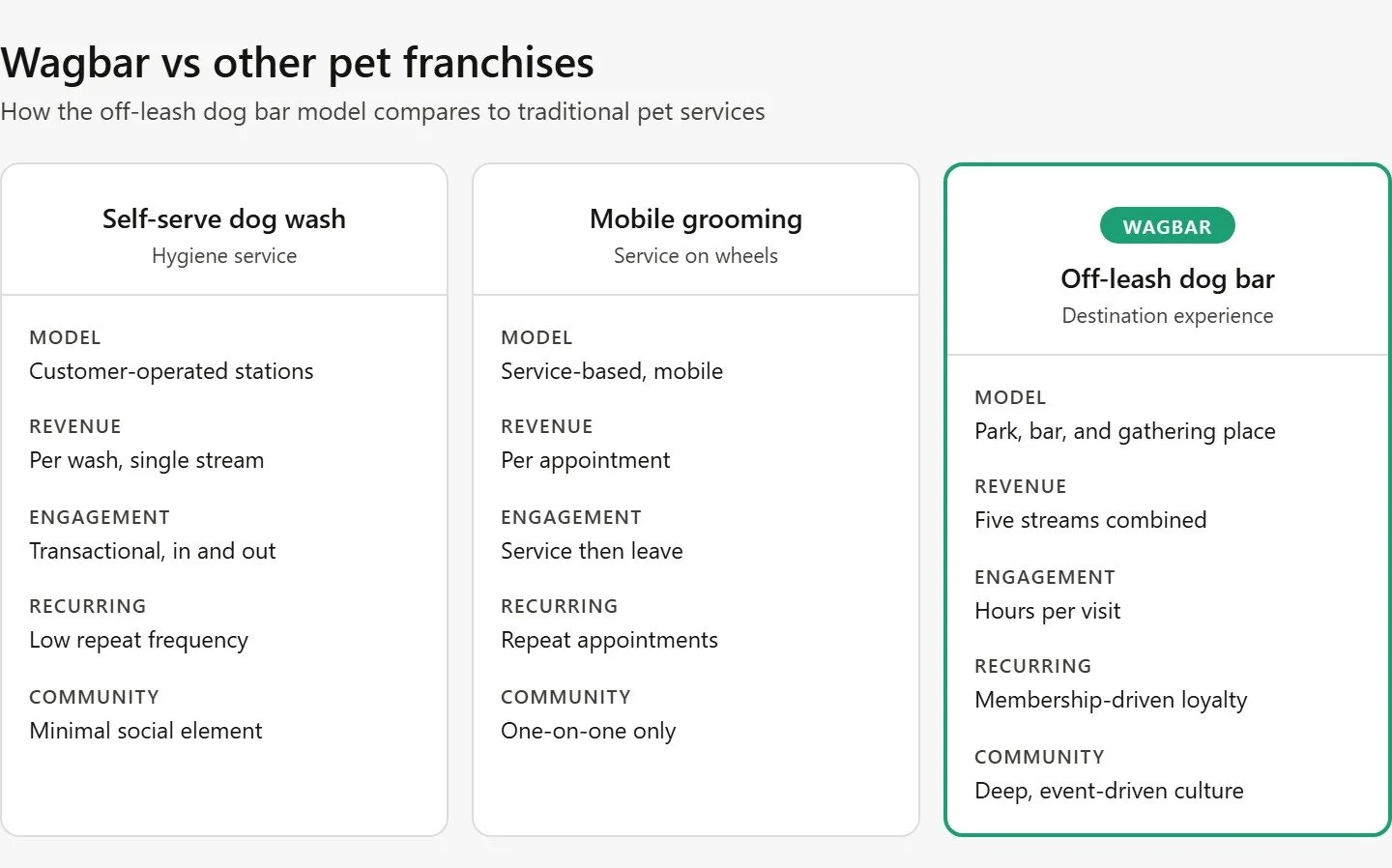
Confidential operating systems including staff training protocols, proprietary software, and operational procedures are typically protected as trade secrets. Your franchise agreement will include confidentiality obligations that survive the termination of the agreement. You and your employees can't take those systems and use them to operate a competing business.
Technology systems deserve specific attention in dog park franchise contexts. Wagbar uses a proprietary app called "Opener" in its pre-opening process, and franchise systems increasingly rely on proprietary software for membership management, vaccination record tracking, and operations. Understanding what you're licensing versus what you're purchasing outright affects your long-term obligations.
If you have prior business experience in a related field, be particularly careful about confidentiality and non-compete obligations. The franchise agreement will specify geographic and time-based restrictions on your ability to operate competing businesses after the franchise relationship ends.
Exit Terms and Renewal Options
Most franchise agreements run for an initial term of 10 years, though terms vary. Understanding what happens at the end of that term, and how you can exit before it ends, is just as important as understanding what you're getting into.
Renewal rights typically allow the franchisee to renew for additional terms if certain conditions are met: maintaining good standing throughout the initial term, paying a renewal fee, signing the then-current form of franchise agreement (which may differ significantly from your original agreement), and completing any updated training requirements. The renewal agreement is often the most overlooked provision when franchisees evaluate an investment, since it's a decade away at signing.
Transfer rights govern your ability to sell your franchise location. Franchisors almost universally retain the right to approve the buyer, and many hold a right of first refusal to purchase the franchise themselves at the offered price. Transfer fees typically range from a few thousand dollars to a percentage of the sale price.
Termination clauses specify what events allow the franchisor to terminate your agreement. Curable defaults (things you can fix if given notice) and non-curable defaults (things that terminate the agreement immediately) are both worth understanding before you sign.
Post-termination obligations are often as important as the termination triggers themselves. After your franchise ends, you'll typically be required to stop using all brand elements, return or destroy proprietary materials, comply with non-compete restrictions for a specified period, and potentially transfer your location's phone numbers or online presence to the franchisor.
If you're comparing franchise opportunities, reviewing exit terms across different systems is a useful way to assess how founder-friendly or operator-friendly each agreement actually is. The guide to investing in an off-leash dog bar franchise covers other evaluation criteria worth considering alongside the legal review.
Putting It All Together Before You Open
The legal compliance picture for a dog park franchise is genuinely manageable, but it requires starting early and working through each layer systematically. The FDD review and franchise agreement negotiation happen first. Licensing applications for your business entity, liquor license, animal facility permits, and health department approvals happen in parallel with your build-out. Insurance placement should be finalized before you open, not after.
Build a team that includes a franchise attorney, a commercial insurance broker, and an accountant familiar with franchise financial structures. The cost of that professional support is small relative to the investment you're protecting.
Wagbar's training program, which includes a week of hands-on training at the Asheville headquarters covering everything from dog behavior management to bar operations, is designed to prepare you for the operational reality of running the business. The legal and compliance groundwork covered in this guide is what you're responsible for getting right before that training week begins.
For prospective franchisees doing early-stage research, the Wagbar franchising page is the right starting point to understand the investment structure and get the conversation started.
Frequently Asked Questions
What is included in a franchise disclosure document for a dog park?
An FDD for a dog park franchise must include 23 items mandated by the FTC, covering the franchisor's business history, fees, your territorial rights, current franchisee contact information, litigation history, audited financials, and financial performance data (if disclosed). You must receive it at least 14 days before signing any agreement.
Do I need a separate license to operate a dog park?
In most jurisdictions, yes. Dog park operations may require a general business license, an animal facility permit, and potentially a kennel license depending on how your local government categorizes supervised off-leash parks. Requirements vary significantly by state and county, so verify with your local animal control authority before opening.
What type of insurance does a dog park franchise need?
A dog park franchise typically needs general liability insurance, animal-related liability coverage, liquor liability insurance, property insurance, workers' compensation, and business interruption coverage. Standard general liability policies often exclude or limit animal-related claims, so work with a broker experienced in food and beverage and animal services coverage.
How long is a typical dog park franchise agreement?
Most franchise agreements run for an initial term of 10 years. Renewal options vary by franchisor but typically require good standing, payment of a renewal fee, and signing the then-current franchise agreement, which may differ from your original terms.
What happens if I want to sell my dog park franchise?
Most franchise agreements require franchisor approval of any buyer, impose a transfer fee, and require the new owner to complete the standard training program. Many franchisors also hold a right of first refusal to purchase the franchise themselves at the price you've negotiated with a third-party buyer.
How do state registration requirements affect my franchise application?
Fourteen states require franchisors to register their FDD before offering franchises to residents or for locations in those states. If you're in California, Hawaii, Illinois, Indiana, Maryland, Michigan, Minnesota, New York, North Dakota, Oregon, Rhode Island, South Dakota, Virginia, or Washington, confirm that your franchisor is properly registered in your state before proceeding.
What vaccination requirements apply to dogs at a franchise location?
Specific requirements vary by jurisdiction, but most responsible off-leash dog park operators require proof of current vaccinations including rabies, bordetella, and DHPP. Wagbar requires dogs to be up-to-date on vaccinations and to be at least six months old and spayed or neutered before entering the park.
Bottom TLDR: Dog park franchise legal compliance covers franchise disclosure requirements, multi-state animal care regulations, alcohol licensing, liability insurance for both bar and off-leash operations, and clearly defined exit terms. This dog park franchise legal guide gives you a complete map of each compliance layer so you can budget for professional support and sequence your approvals correctly. Hire a franchise attorney before you sign the FDD and start your liquor license application as early as possible.