

Dog Franchise: Unleash Your Entrepreneurial Spirit

Top TLDR: Dog franchises offer entrepreneurs opportunities in the recession-resistant pet industry, with Americans spending over $147 billion annually on their pets and 67% of households owning animals. Models range from traditional grooming and training facilities to innovative concepts like off-leash dog park bars that combine secure play areas with social bar environments for owners. Investment requirements typically range from $100,000 for mobile services to over $1 million for comprehensive facilities, with Wagbar's off-leash dog park bar franchise requiring $470,300-$1,145,900 total investment. Start by evaluating your local market demographics, existing competition, and whether you prefer transaction-based services or experience-driven business models that build recurring membership revenue.
The pet industry's explosive growth creates genuine opportunities for entrepreneurs passionate about dogs and business. Dog franchises let you channel that passion into profitable ventures backed by proven systems, comprehensive training, and ongoing support. Whether you're leaving corporate life, seeking your first business, or adding to an existing portfolio, dog franchises offer paths to ownership in a market showing no signs of slowing.
Why Dog Franchises Make Business Sense
Dogs hold a special place in American culture—they're family members deserving premium care and experiences. This emotional connection creates spending patterns that remain stable through economic downturns. Pet owners prioritize their dogs' wellbeing, making the dog service industry remarkably recession-resistant compared to discretionary spending categories.
The numbers tell a compelling story. Pet owners spent over $147 billion in 2023, with substantial portions dedicated to services rather than just food and supplies. Dog ownership continues trending upward, particularly among millennials and younger generations who view pets as starter families and companions worth investing in. This demographic shift supports premium pricing for quality services and experiences.
Dog franchise opportunities span traditional services like grooming and training alongside innovative concepts creating new market categories. This diversity lets you choose business models matching your interests, skills, and local market conditions rather than forcing you into one-size-fits-all approaches that might not suit your situation.
The Evolution of Dog Franchise Models
Traditional dog franchises built success on essential services owners needed regularly. Grooming salons, training facilities, and daycare centers provided quality services at convenient locations with reliable execution. These models still work effectively in markets with sufficient population density and demographics supporting regular service usage.
Mobile grooming franchises emerged as convenient alternatives to traditional salons. By bringing services to customers' homes, these franchises eliminate the hassle of transportation while commanding premium prices for convenience. The model requires lower real estate investment than brick-and-mortar locations but demands efficient routing and scheduling to maximize revenue per day.
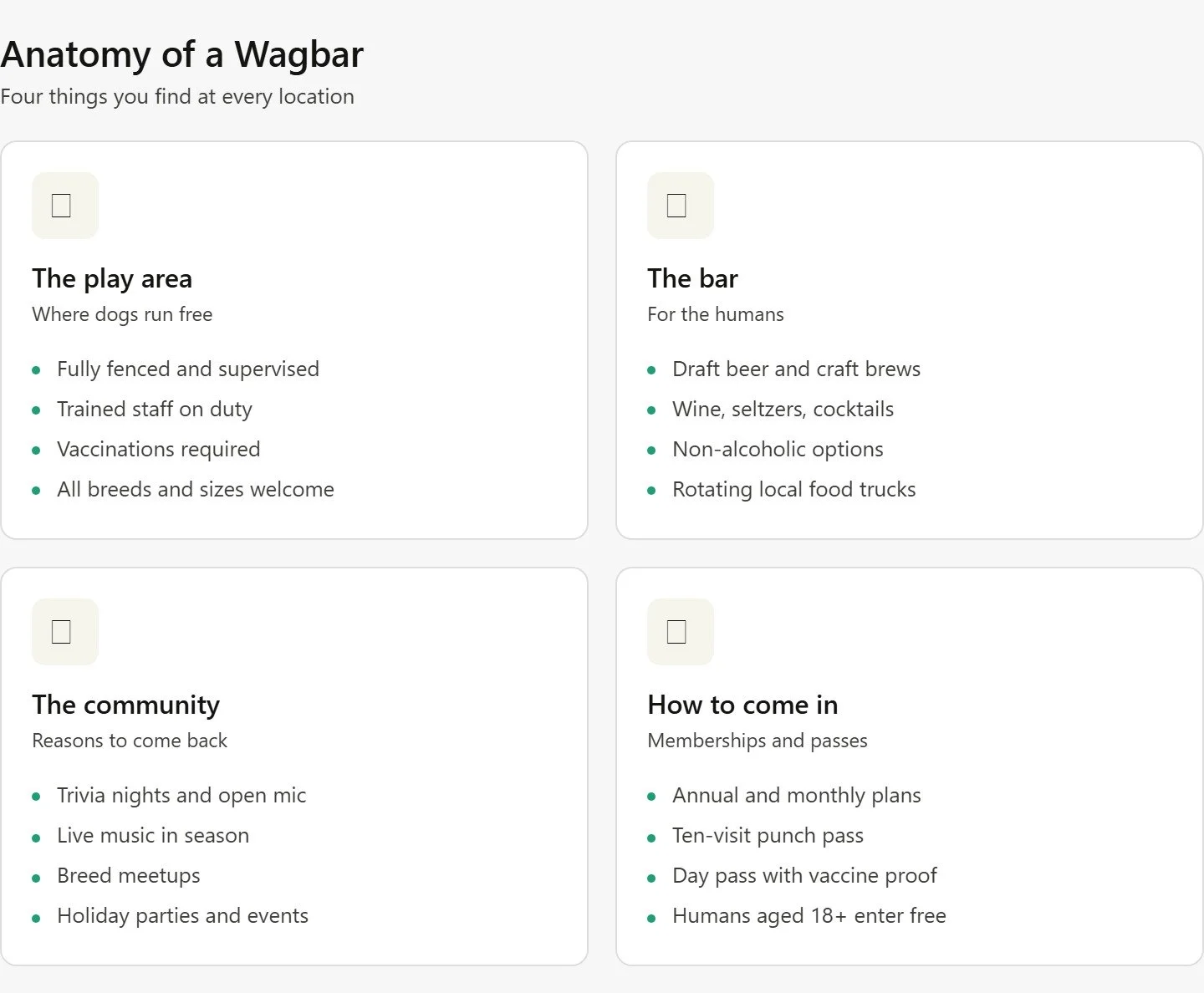
Experience-based dog franchises represent the newest category, transforming dog care from chore into enjoyable social activity. Off-leash dog park bars like Wagbar combine secure play areas where dogs socialize and exercise with bar environments where owners relax and connect. This dual-appeal creates higher per-visit revenue than traditional dog parks while building community that drives membership retention and word-of-mouth growth.
Understanding Investment Requirements
Dog franchise investments vary dramatically based on business model, location requirements, and scale. Mobile grooming operations might start around $100,000-$150,000 covering vehicle, equipment, initial marketing, and working capital. Traditional brick-and-mortar grooming or training facilities typically require $150,000-$300,000 including leasehold improvements, equipment, inventory, and operating reserves.
Comprehensive facilities combining multiple services or creating destination experiences demand larger investments. Dog park bar franchises require investments between $470,300-$1,145,900 covering franchise fees ($50,000), real estate, construction, equipment, bar setup, initial inventory, and substantial working capital for the first 6-12 months of operations.
Don't underestimate working capital requirements. Many new franchisees focus solely on getting doors open, leaving insufficient reserves for the challenging early months when revenue rarely covers all expenses. Plan for 6-12 months of operating costs beyond your opening investment—payroll, rent, utilities, marketing, insurance, and supplies all demand cash flow before your customer base generates sustainable revenue.

Revenue Models That Drive Profitability
Transaction-based dog franchises generate revenue by maximizing daily customer volume. Grooming salons, training sessions, and daycare all depend on filling appointment schedules efficiently. This model can produce strong revenue but faces margin pressure from rising labor costs and competition. Success requires excellent location, operational efficiency, and pricing that balances competitiveness with profitability.
Membership and subscription models create more predictable revenue and better customer retention. Monthly or annual memberships generate recurring income while reducing marketing costs for constant customer acquisition. Membership revenue models combined with additional income streams like day passes, retail sales, and food/beverage revenue maximize financial performance while building sustainable businesses.
Product sales supplement service revenue in many dog franchises. Retail items like treats, toys, grooming supplies, and accessories create additional margin opportunities without corresponding labor costs. The key is curating product selections that align with your services and customer preferences rather than trying to compete with big-box retailers on extensive inventory.
Location Selection Makes or Breaks Franchises
Real estate decisions determine much of your franchise's success potential. Poor locations doom even the strongest franchise systems while excellent locations help mediocre concepts survive. Demographics matter more than raw population—you need sufficient numbers of the right customers, not just any customers.
Urban locations offer population density supporting high daily traffic but come with premium real estate costs and zoning challenges. Competition tends to be more intense in urban markets, requiring differentiation through superior service, innovative concepts, or community building. Parking and accessibility concerns affect urban locations more than suburban alternatives.
Suburban markets provide more space at lower costs with easier parking and access. Markets like Atlanta demonstrate ideal suburban conditions—median household incomes around $77,655, strong pet ownership culture, and demographics supporting premium pet services. Look for growing suburbs with young families, high education levels, and lifestyle preferences aligning with premium dog services.
Training and Support Systems
Comprehensive training programs separate professional franchisors from those simply selling territories. Quality training covers operations, customer service, marketing, financial management, and dog behavior—everything you need to operate successfully even without prior pet industry experience. Effective training programs include both classroom instruction and hands-on experience at operating locations.
Pre-opening support should guide you through site selection, lease negotiation, permitting, construction, equipment installation, hiring, and marketing. This structured process prevents the overwhelming feeling that accompanies opening businesses without clear roadmaps. Expect franchisors to provide detailed checklists, templates, and direct assistance during this critical phase.
Ongoing support determines your long-term success more than initial training. Look for franchisors offering regular business reviews, marketing campaigns, technology updates, operational guidance, and peer networking with fellow franchisees. The strongest franchise systems function as true partnerships where corporate success depends on franchisee profitability, creating aligned incentives for providing meaningful support.
Market Trends Driving Dog Franchise Growth
Premiumization continues accelerating across the pet industry. Dog owners increasingly demand organic foods, specialized training, enrichment activities, and social experiences rather than settling for basic services. This willingness to pay for quality creates opportunities for franchises positioned to deliver premium experiences with justified pricing.
Convenience drives purchasing decisions more than ever. Time-starved dog owners pay premium prices for services that simplify pet ownership responsibilities. Mobile grooming, extended hours, online scheduling, and streamlined processes all attract customers willing to pay more to save time and hassle. Franchises making life easier for busy owners find receptive markets across demographics.
Community building has emerged as a competitive advantage beyond traditional service delivery. Dog owners seek belonging and connection with fellow animal lovers. Franchises creating spaces and events where these relationships form generate loyalty transcending transactional relationships, turning customers into passionate advocates who recruit new members organically.
Evaluating Your Fit for Dog Franchise Ownership
Honest self-assessment prevents mismatched franchise investments. Consider your preferred involvement level—will you work in the business daily as owner-operator, hire managers to oversee operations while you maintain strategic oversight, or function primarily as investor with minimal daily involvement? Different franchises suit different involvement levels, and misalignment creates dissatisfaction regardless of profitability.
Your skills influence which dog franchises you'll operate successfully. Customer service experience, management capabilities, sales skills, and marketing knowledge all matter differently across franchise types. Prior dog industry experience helps but matters less than many assume—strong franchisors train you on dog-specific knowledge while building on your existing business skills and capabilities.
Lifestyle considerations affect franchise satisfaction as much as financial returns. Dog franchises often require weekend and evening work during peak customer hours when working professionals bring their dogs. Seasonal fluctuations impact income and workload, particularly for outdoor concepts in regions with extreme weather. Understanding what dog franchise ownership actually involves prevents buyer's remorse from unrealistic expectations.

Competition Analysis and Market Positioning
Research existing competitors before committing to dog franchises. Visit local grooming salons, training facilities, daycare centers, and dog parks to evaluate service quality, pricing, customer satisfaction, and market gaps. Talk with dog owners in your target market about their current solutions, frustrations, and unmet needs.
Differentiation determines success in markets with established competitors. Understand what makes your potential franchise unique—superior service quality, innovative technology, better facilities, stronger community building, or novel concepts competitors don't match. Clear differentiation justifies premium pricing while attracting customers away from established alternatives.
First-mover advantages benefit franchises entering markets with limited direct competition. Innovative concepts like dog park bars often operate as category creators rather than competing in crowded markets. You'll invest more effort educating customers about new concepts, but you also capture market share before competitors enter and dilute your positioning.
Regional Market Considerations
Dog franchise success varies significantly by region based on demographics, climate, culture, and regulatory environments. Understanding regional variations helps you set realistic projections and adapt franchise concepts to local preferences rather than assuming national averages apply uniformly.
Climate affects certain franchise types more than others. Outdoor dog parks and mobile services face seasonal challenges in regions with extreme weather, requiring business models accounting for reduced winter revenue. Indoor facilities and all-weather concepts maintain more consistent revenue year-round but often require higher initial investments for climate-controlled spaces.
Cultural attitudes toward dogs and pet spending differ across regions. Some areas view dogs primarily as outdoor animals requiring minimal investment, while others treat them as family members deserving premium care. Research local pet spending patterns and service utilization before committing to franchise concepts requiring premium pricing to achieve profitability.
Legal and Regulatory Compliance
Dog franchise operations face numerous legal and regulatory requirements beyond general business licensing. Understanding legal requirements prevents operational disruptions and legal liability. Animal welfare laws, health department regulations, zoning ordinances, and insurance requirements vary by jurisdiction and business type.
Liability insurance protects you from claims arising from dog bites, injuries, property damage, or illness. Standard business insurance often excludes or limits animal-related claims, requiring specialized coverage designed for pet businesses. Discuss insurance requirements with your franchisor and independent brokers to ensure adequate protection without overpaying for unnecessary coverage.
Zoning and regulatory compliance can eliminate otherwise perfect locations. Research local ordinances early in site selection rather than discovering deal-breaking restrictions after signing leases. Some municipalities actively recruit pet businesses while others create regulatory obstacles making operations impractical or impossible.
Building Your Entrepreneurial Journey
Beginning your dog franchise journey starts with thorough self-assessment and market research. Clarify your goals, evaluate your financial capacity, research your target market, and identify franchise categories matching your interests. This preliminary work might take several months but prevents expensive mistakes from premature commitments.
Request information from multiple franchise systems and compare their offerings systematically. Attend franchise expos and discovery days to meet representatives and current franchisees. Review Franchise Disclosure Documents with your attorney, interview current franchisees about their experiences, and visit operating locations unannounced to observe real customer experiences.
Make decisions based on data and objective evaluation rather than emotional connection to franchise concepts. The strongest franchises might not be the flashiest or most exciting but those offering comprehensive support, proven business models, and franchisee communities succeeding in markets similar to yours. What to look for when investing includes assessing all these factors systematically.
Success Stories and Market Validation
Real franchisee success stories provide validation that business models work beyond theoretical projections. New franchise announcements across different markets demonstrate growing interest and market validation for innovative concepts. Look for patterns in successful franchisees—what backgrounds do they come from, what markets are they entering, and what factors contribute to their success?
Awards and recognition signal market acceptance and competitive differentiation. When franchises win industry awards or community recognition, it validates their concept's appeal and execution quality. These accolades also provide marketing advantages that benefit all franchisees through enhanced brand reputation and credibility.
Geographic expansion patterns reveal franchise system health and growth trajectory. Franchises growing steadily into new markets demonstrate concept viability and franchisor capability to support expansion. Rapid expansion without adequate support infrastructure raises concerns about franchisee success rates and long-term sustainability.
Taking Your First Steps
Start by requesting information from dog franchises that interest you. Complete inquiry forms on franchise websites, attend virtual discovery sessions, and have initial conversations with franchise development representatives. These early interactions help you understand franchise cultures and whether they align with your values and communication preferences.
Schedule calls with current franchisees to learn about their experiences. Ask about training quality, ongoing support, profitability timelines, biggest challenges faced, and whether they'd choose the same franchise again. Contact both successful franchisees and those who've struggled if possible to understand the full range of experiences within franchise systems.
Attend a discovery day when you've narrowed options to serious candidates. These in-person events let you meet the corporate team, tour operating locations, experience franchise culture, and ask detailed questions about operations, support, and growth opportunities. Discovery days help you evaluate whether you can work effectively with the franchise team for the long term.
FAQ
How much money do I need to open a dog franchise? Dog franchise investments range from $100,000 for mobile services to over $1 million for comprehensive facilities. Total investment includes franchise fees ($25,000-$50,000), real estate costs (lease deposits and improvements), equipment, initial inventory, working capital (6-12 months operating expenses), and professional fees for attorneys and accountants. Secure adequate working capital beyond opening costs to sustain operations during the first year while building customer base.
Do I need dog training or pet industry experience? Dog training or pet industry experience helps but isn't required for most dog franchises. Strong franchisors provide comprehensive training covering dog behavior, service delivery, customer relations, and business operations. Your business management skills, customer service abilities, and genuine passion for dogs matter more than prior industry involvement. Many successful franchisees transition from corporate careers, retail management, and other service industries.
What's the difference between dog grooming franchises and dog park bar franchises? Dog grooming franchises focus on transaction-based services where revenue depends on maximizing daily appointments and operational efficiency. Dog park bar franchises create experience-based environments combining off-leash play areas with bar atmospheres where owners socialize, generating recurring membership revenue plus day passes and beverage sales. Grooming franchises typically require lower initial investment ($150,000-$300,000) while dog park bars need larger investments ($470,300-$1,145,900) but often produce higher revenue through multiple income streams.
How long does it take to become profitable? Profitability timelines vary dramatically by franchise type, location quality, management execution, and local market conditions. Mobile franchises often reach profitability within 6-12 months due to lower fixed costs. Traditional brick-and-mortar locations typically require 12-24 months to achieve consistent profitability as they build customer base and optimize operations. Comprehensive facilities with higher fixed costs might need 18-36 months to reach sustainable profitability despite higher revenue potential.
What markets are best for dog franchises? Best markets for dog franchises combine high population density, favorable demographics (median household income above $75,000, strong pet ownership rates), limited direct competition, and appropriate zoning for your franchise type. Urban and affluent suburban areas typically support premium dog services better than rural markets or lower-income communities. Evaluate existing pet service providers, talk with local dog owners about their needs, and research zoning regulations before committing to specific territories.
Dog franchises offer entrepreneurs paths to ownership in the recession-resistant pet industry, combining passion for dogs with proven business models and comprehensive support systems. Whether you choose traditional services, mobile concepts, or innovative experience-based franchises, success depends on thorough research, realistic planning, and careful selection of franchise systems aligned with your goals and local market conditions.
Bottom TLDR
Dog franchises let entrepreneurs channel their passion for dogs into profitable businesses backed by proven systems in the $147 billion pet industry, with models ranging from mobile grooming requiring $100,000-$150,000 investment to comprehensive off-leash dog park bars requiring $470,300-$1,145,900. Success depends on matching franchise models to your involvement preferences, skills, and local market demographics while selecting franchisors offering comprehensive training, meaningful ongoing support, and franchisee communities succeeding in similar markets. Start by requesting information from multiple franchise systems, interviewing current franchisees about their experiences, and visiting operating locations unannounced to evaluate real customer experiences before committing significant capital. Take 6-12 months conducting thorough research and due diligence rather than making rushed decisions based on emotional connection to franchise concepts without validating business fundamentals.