
Dog Franchise Opportunities: Complete Investment Guide

Top TLDR: Dog franchise opportunities span diverse business models from $50,000-$80,000 training franchises like Dog Training Elite generating 100-200% ROI to $500,000-$1.5 million facility-based concepts like Dogtopia and Camp Bow Wow producing $300,000-$600,000 annual profits with 25-40% margins, serving the $147 billion pet industry where 65% of U.S. households own dogs. Investment requirements, operational models, profitability timelines, and management demands differ dramatically between service-based franchises (training, mobile grooming, pet sitting) offering lower investment and faster returns versus facility-based franchises (daycare, boarding, retail) requiring substantial capital but generating higher absolute profits once established. Request Franchise Disclosure Documents from 3-5 concepts matching your capital availability and operational preferences, interview 10+ current franchisees per concept understanding realistic revenue and profit ranges, and evaluate your local market demographics and competitive landscape before selecting dog franchise opportunities aligned with your investment capacity and business goals.
Introduction to the dog care market
The U.S. dog care industry represents one of the fastest-growing segments within the $147 billion pet economy, driven by 65.1 million households owning approximately 90 million dogs according to the American Pet Products Association. Pet owners increasingly view dogs as family members rather than possessions, willingly spending substantial amounts on premium services including training, daycare, grooming, boarding, and specialized care that would have been considered extravagant luxuries just a generation ago.
This demographic shift transforms dog care from occasional necessity to regular lifestyle expenditure. Modern pet parents invest in weekly daycare enabling socialization and exercise while they work, regular grooming appointments maintaining health and appearance, professional training addressing behavioral issues and providing mental stimulation, and premium boarding facilities offering comfort and enrichment during travel. The average dog owner now spends $1,500-$3,000 annually on services beyond food and basic veterinary care, creating substantial recurring revenue opportunities for service providers.
The market demonstrates remarkable recession resistance. Even during economic downturns, pet spending remains remarkably stable as owners prioritize their dogs' wellbeing, often reducing personal spending before cutting pet-related expenses. This stability attracts investors seeking businesses insulated from typical economic cyclicality. Combined with fragmented market structure where independent operators dominate most local markets, franchises offering professional systems, established brands, and operational support capture market share from mom-and-pop competitors lacking these advantages.
Several macro trends accelerate dog care market growth. Urban and suburban professionals working long hours need daycare and dog walking services their predecessors who worked shorter hours closer to home didn't require. Millennials and Gen Z pet owners embrace premium services and experience-based spending their parents considered unnecessary. Increased pet adoption during the pandemic created millions of new dog owners seeking training, socialization, and care services. Remote work normalization allows professionals to prioritize pet care quality since they're home more, making them aware of available services and willing to invest in their dogs' daily experiences.
Pet industry market analysis projects continued strong growth through 2030, driven by increasing pet ownership rates, rising spending per pet, and premiumization trends where owners trade up from basic services to higher-quality alternatives. This growth trajectory creates attractive opportunities for dog franchise investors entering markets demonstrating these favorable demographics and consumer behaviors. Understanding available franchise types, investment requirements, operational models, and success factors enables prospective franchisees to identify opportunities aligned with their capital, capabilities, and objectives.
Types of dog franchises available
Dog training franchises
Dog training franchises represent the most accessible entry point into dog franchise ownership, typically requiring $50,000-$150,000 total investment with low overhead and home-based operations. Training franchises teach obedience, address behavioral issues (aggression, anxiety, separation issues), provide puppy socialization and development, offer specialized training (service dogs, therapy dogs), and deliver in-home or facility-based instruction depending on franchise model and customer preferences.
Dog Training Elite exemplifies the low-investment, high-ROI training model with $50,000-$80,000 total investment generating $75,000-$150,000 first-year revenue and $50,000-$100,000 annual profit for established owner-operators. Franchisees complete comprehensive certification in dog behavior and training methodologies, receiving proprietary curriculum and training materials proven across hundreds of locations, marketing systems and lead generation tools driving customer acquisition, and ongoing support navigating challenges as businesses develop. The minimal overhead (primarily marketing, insurance, supplies, and vehicle expenses) allows break-even within 6-12 months once serving 15-20 clients monthly.
Training franchises scale through hiring additional certified trainers, expanding service territories, or developing complementary services like group classes or specialized programs. However, owner-operator models deliver the highest ROI percentages (100-200%+) since primary expense is your time rather than employee wages. Multi-trainer operations increase revenue capacity to $300,000-$500,000 but compress margins to 25-35% after paying trainer wages, leaving $75,000-$175,000 owner profit—lower ROI but higher absolute income if you prefer management over direct service delivery.
Success requires genuine interest in dog behavior and training, patience working with animals and owners, comfort with evening and weekend appointments when most clients are available, and persistence building reputation through 12-18 month ramp periods. Marketing depends heavily on referrals, online reviews, and relationships with veterinarians, groomers, and pet stores who refer clients. Most successful franchisees invest significantly in Google Business Profile optimization, review generation, and targeted local advertising building awareness and credibility in their markets.
Mobile dog grooming franchises
Mobile grooming franchises require $100,000-$180,000 investment including $35,000-$50,000 franchise fee, $50,000-$90,000 for customized grooming van with professional equipment, and $15,000-$40,000 for working capital and startup expenses. Mobile groomers travel to customer homes providing full-service grooming in specially equipped vans, eliminating customer travel time and pet stress from traditional salon environments while commanding 20-40% premium pricing for convenience.
Single mobile grooming vans generate $150,000-$250,000 annual revenue with experienced groomers completing 25-35 appointments weekly at $60-$100 per appointment. Variable costs including fuel, vehicle maintenance, supplies, and insurance typically consume 45-55% of revenue, leaving 45-55% gross margins before marketing and administrative expenses. Owner-operator vans produce $65,000-$125,000 annual profit once established, representing attractive returns on $100,000-$150,000 investment. First-year revenue typically reaches $75,000-$125,000 as appointment books fill, generating $30,000-$60,000 profit with break-even occurring within 6-12 months.
Popular mobile grooming franchises include Aussie Pet Mobile (pioneering the category with nationwide presence), Preppy Pet (mid-range investment offering strong support), and Zoomin Groomin (focus on van quality and equipment). Each provides customized van specifications, vendor relationships for equipment and supplies, comprehensive grooming technique training, booking and scheduling systems, and ongoing operational support. The mobile model appeals to entrepreneurs seeking service-based businesses with lower investment than facilities, flexible scheduling, and ability to test markets before expanding.
Multi-van operations scale revenue but compress margins. Adding groomers operating second vans generates $150,000-$200,000 additional revenue per van but at lower margins (30-40%) since you're paying groomer wages rather than performing services yourself. Three vans might generate $450,000-$600,000 total revenue with owner retaining $135,000-$240,000 profit—substantial income requiring management of multiple groomers and coordination of complex logistics across service territories.
Dog daycare and boarding franchises
Dog daycare and boarding franchises require the highest investment ($500,000-$1.5 million) but generate the highest absolute profits ($225,000-$600,000+ annually) once established. These facility-based concepts provide daily daycare where dogs play and socialize while owners work, overnight boarding during travel periods, and ancillary services like grooming, training, and retail sales creating diversified revenue streams.
Dogtopia leads the daycare category with $532,000-$1.1 million investment generating $1 million-$1.5 million annual revenue and $300,000-$600,000 EBITDA for mature locations operating at 60-80% capacity. Facilities typically occupy 5,000-10,000 square feet featuring separate play areas for different dog sizes, climate-controlled environments, webcam systems allowing remote monitoring, and specialized surfaces meeting safety and sanitation standards. Most locations service 50-80 dogs daily through daycare with boarding adding variable revenue during holiday and vacation seasons.
Camp Bow Wow emphasizes the boarding component alongside daycare, requiring $566,000-$1.1 million investment generating $900,000-$1.3 million annual revenue and $225,000-$455,000 EBITDA. The boarding focus requires additional investment in overnight monitoring systems, separate sleeping areas, and enhanced security but provides revenue diversification reducing dependence on daily commuter patterns. Most locations derive 50-60% revenue from daycare and 30-40% from boarding at maturity, with grooming and training contributing 10-20%.
Break-even timelines stretch 18-36 months as facilities build regular client bases. Daycare particularly depends on recurring customers attending multiple times weekly—attracting, converting, and retaining sufficient regulars takes time even with strong marketing. Most locations reach 40-50% capacity within 12 months, 60-70% within 24 months, and 70-85% mature capacity within 36 months. Fixed overhead of $35,000-$70,000 monthly covering rent, utilities, insurance, and core staffing continues regardless of utilization, creating significant risk during ramp periods but strong operating leverage once covering fixed costs.
Success requires excellent site selection in affluent areas with high pet ownership, strong management and HR capabilities recruiting and retaining quality staff, adequate capitalization surviving 24-36 month ramp periods, and consistent marketing building awareness and trial. The community building aspects of daycare create competitive advantages as regular customers develop relationships with staff and other dog owners, creating social networks reinforcing retention and driving referral growth.
Off-leash dog park bar franchises
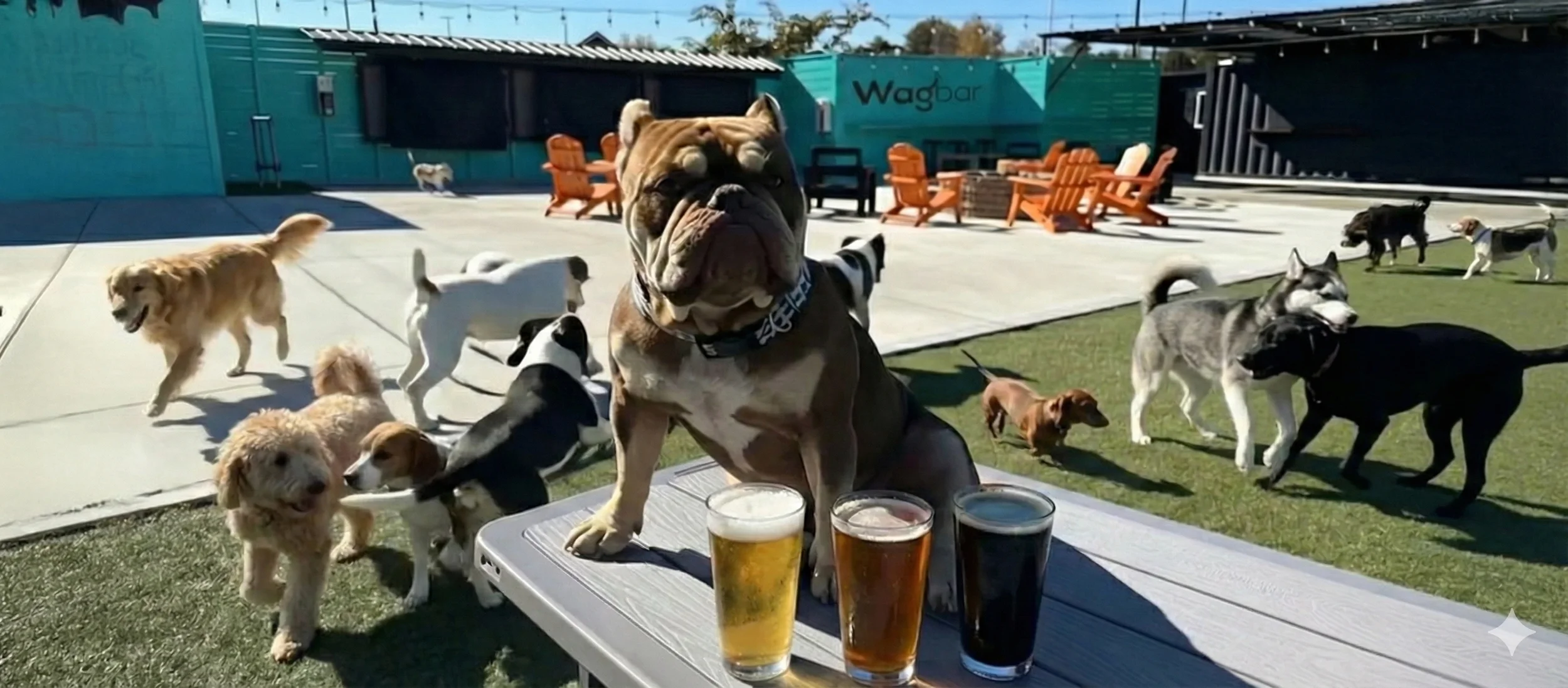
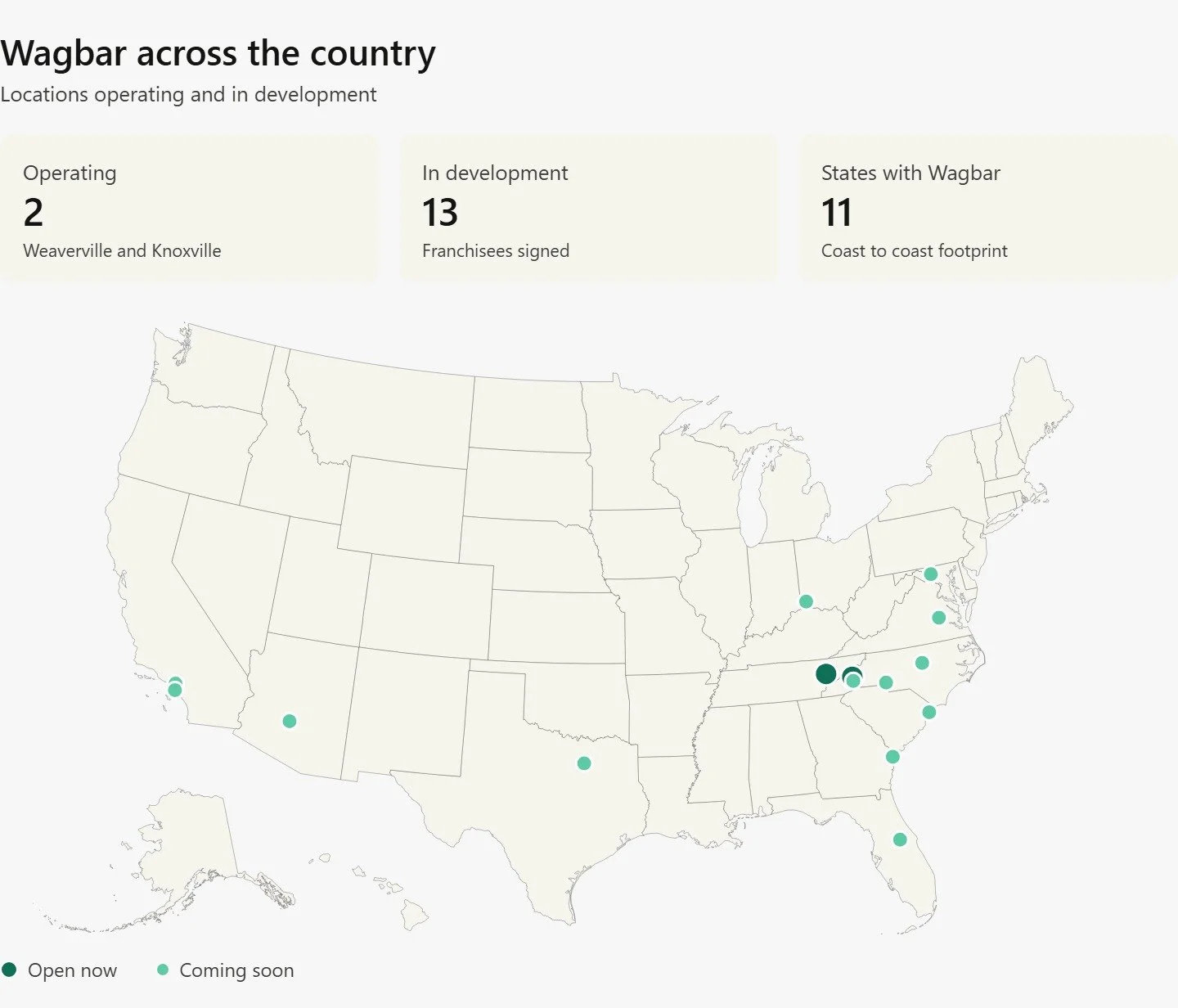
Off-leash dog park bars represent innovative concepts combining large outdoor off-leash dog parks with bar atmospheres where owners socialize while their dogs play. Wagbar pioneered this category with franchises requiring $470,300-$1,145,900 investment generating $800,000-$1.5 million annual revenue and $280,000-$675,000 EBITDA for successful locations. The business model monetizes both dogs (through day passes or memberships) and owners (through beverage sales, food trucks, and events).
Facilities typically occupy 1-3 acres featuring fully fenced off-leash areas separated by dog size, covered patio spaces with seating, shipping container bars serving craft beer, wine, cocktails, and non-alcoholic beverages, food truck partnerships providing dining options, and amenities like dog pools, agility equipment, and wash stations. Revenue comes from membership programs (monthly or annual), day passes for non-members, beverage sales with 60-70% margins, private event rentals, and retail merchandise.
The concept appeals to urban and suburban markets with high concentrations of young professionals, strong craft beverage culture, dog-friendly community attitudes, and limited existing off-leash spaces. Successful locations become community gathering spots where owners meet regularly, building social networks extending beyond the facility. This creates retention rates exceeding traditional daycare (80%+ annual retention) and word-of-mouth marketing driving growth with moderate advertising spend.
Break-even typically occurs within 18-24 months as locations build membership bases and optimize beverage programs. The model requires different expertise than traditional pet care, combining pet care operations, bar management, event coordination, and outdoor facility maintenance. However, the diversified revenue streams and experience-based positioning create defensible competitive advantages independent operators struggle matching. Many markets remain underpenetrated, providing expansion opportunities for franchisees in territories demonstrating favorable demographics.
Pet sitting and dog walking franchises
Pet sitting and dog walking franchises like Fetch! Pet Care require $85,000-$125,000 investment operating through independent contractor networks rather than employee models. Franchisees function as booking and coordination hubs connecting clients with certified pet sitters and dog walkers while handling marketing, customer service, quality control, and business administration. This model allows relatively low overhead while scaling to $200,000-$400,000 annual revenue with 35-45% margins generating $70,000-$180,000 owner profit.
Services include daily dog walks (15-60 minute options), pet sitting during owner travel, puppy care and socialization visits, medication administration for senior or special-needs pets, and overnight care in pet's home. The variety appeals to broad customer bases from busy professionals needing daily walks to travelers requiring extended care. Most franchisees service 30-60 clients weekly at maturity, with individual customers typically booking 2-4 services monthly creating predictable recurring revenue.
The contractor model enables rapid scaling without employment overhead but requires different management skills than direct service delivery. Successful franchisees excel at recruiting and vetting qualified contractors, maintaining quality standards across independent workers, handling scheduling logistics efficiently, and building systems preventing breakdown as operations scale. Technology platforms provided by franchisors manage booking, scheduling, communications, and payments reducing administrative burden.
Success requires strong local marketing building awareness and credibility, excellent customer service differentiating from independent providers, consistent quality control maintaining service standards, and adequate contractor pools covering service demand. Markets with professional demographics, time-constrained lifestyles, and limited quality alternatives provide the strongest opportunities for pet sitting franchises capturing market share through professional operations and brand recognition.

Top dog franchises comparison
Investment requirements comparison
Investment requirements vary dramatically across dog franchise categories, creating different barriers to entry and requiring different capitalization strategies. Training franchises represent the most accessible entry with Dog Training Elite requiring just $50,000-$80,000 total investment including $39,500 franchise fee, working capital, marketing, and equipment. This positions training as ideal testing ground for entrepreneurs exploring franchise ownership without risking substantial capital or requiring significant debt financing.
Mobile grooming franchises require moderate investment of $100,000-$180,000 primarily driven by customized van costs ($50,000-$90,000) plus franchise fees, working capital, and initial marketing. Aussie Pet Mobile, Preppy Pet, and Zoomin Groomin all fall within this range with slight variations based on van specifications and included services. The investment remains accessible through personal savings, home equity lines of credit, or small business loans with manageable monthly payments not straining cash flow during startup phases.
Facility-based franchises require substantially higher investment creating significant barriers but buying capacity and stability mobile units can't match. Dogtopia requires $532,000-$1.1 million, Camp Bow Wow requires $566,000-$1.1 million, and Wagbar requires $470,300-$1,145,900 depending on facility size and market characteristics. Most franchisees finance 60-70% through SBA loans or conventional financing, requiring $150,000-$400,000 liquid capital and $300,000-$700,000 net worth qualifying for franchise approval.
The investment comparisons must account for working capital requirements beyond initial investment. Service franchises typically need 3-6 months operating expenses since break-even occurs relatively quickly. Facility franchises require 12-18 months operating losses during ramp periods, adding $50,000-$150,000 to total investment ensuring adequate reserves reaching profitability without emergency capital injections destroying returns.
Revenue and profitability comparison
Revenue potential correlates strongly with investment level but ROI percentages favor lower-investment service models. Dog Training Elite generates $75,000-$150,000 first-year revenue scaling to $150,000-$300,000 for established operators, representing 94-375% annual revenue on initial investment but translating to $50,000-$150,000 absolute profit. The high ROI percentages reflect minimal investment and high margins (40-55%) but absolute dollar returns remain modest compared to facility concepts.
Mobile grooming franchises generate $150,000-$250,000 annual revenue per van with 45-55% gross margins producing $65,000-$125,000 owner profit for established single-van operations. This represents 43-125% annual ROI on $100,000-$150,000 investment—attractive returns accessible to many entrepreneurs. Multi-van operations scale revenue to $400,000-$800,000 with 3-5 vans but margins compress to 30-40% after paying groomer wages, generating $120,000-$320,000 owner profit requiring management of multiple teams.
Facility franchises generate the highest absolute profits despite lower ROI percentages. Dogtopia produces $1 million-$1.5 million annual revenue with 30-40% EBITDA margins generating $300,000-$600,000 profit representing 30-75% ROI on $700,000-$1 million average investment. Camp Bow Wow generates $900,000-$1.3 million revenue with 25-35% margins producing $225,000-$455,000 profit representing 20-45% ROI. Wagbar generates $800,000-$1.5 million revenue with 35-45% margins producing $280,000-$675,000 profit representing 35-100% ROI depending on specific location performance and market characteristics.
Break-even timelines significantly affect realized returns and risk exposure. Service franchises typically break even within 6-15 months, beginning to generate returns relatively quickly. Facility franchises require 18-36 months reaching profitability, exposing investors to longer loss periods and greater market risk. However, once established, facilities generate substantially higher absolute income—a critical consideration for investors needing $200,000+ annual income justifying full-time commitment.
The most profitable franchises balance strong unit economics with proven systems and defensible market positions. Neither service nor facility models universally superior—choose based on available capital, income requirements, operational preferences, management capabilities, and risk tolerance. Request Item 19 financial performance representations from Franchise Disclosure Documents understanding actual franchisee results rather than relying on marketing materials or best-case scenarios.
Franchisor support comparison
Franchise support systems differentiate professional franchise organizations from licensing arrangements providing minimal value beyond brand usage rights. Top dog franchises provide comprehensive training programs (2-6 weeks depending on concept complexity), ongoing field support and coaching, marketing support including national campaigns and local marketing tools, technology platforms managing operations, purchasing power through vendor relationships, and annual conferences connecting franchisees sharing best practices.
Dog Training Elite provides 2-week intensive training in dog behavior and training techniques (even without prior experience), proprietary curriculum and training materials, initial marketing packages and lead generation systems, technology for scheduling and client management, and ongoing support through field representatives and franchisee community. The accessible support structure suits first-time business owners lacking prior experience in pet care or franchising, reducing learning curves and accelerating profitability timelines.
Dogtopia provides 4-6 week training covering facility operations, staff management, customer service, marketing, and financial management. New franchisees spend time at corporate locations and successful franchise locations learning proven practices before opening. Ongoing support includes regional field consultants visiting regularly, operations manuals and training programs updated continuously, national marketing driving brand awareness, technology platforms managing reservations and communications, and vendor relationships negotiating favorable pricing on supplies and equipment.
Camp Bow Wow and Wagbar provide similar comprehensive support emphasizing their specific operational models. Camp Bow Wow focuses heavily on certification programs for staff, technology systems including webcam infrastructure, and boarding-specific operational procedures. Wagbar provides unique support around alcohol licensing, food truck coordination, outdoor facility management, and event programming differentiating its model from traditional pet care facilities.
Evaluate franchise support through interviewing current franchisees about actual support quality versus promised support. Some franchisors excel at pre-opening support but provide minimal ongoing assistance once you're operational. Others maintain strong field support, regularly updated training materials, and responsive problem-solving as issues arise. The quality of ongoing support often matters more than initial training since you'll need guidance navigating challenges throughout ownership rather than just during startup phases.
Location considerations and market analysis
Demographic requirements for success
Dog franchise success depends heavily on local market demographics regardless of franchise concept quality or operator capabilities. Ideal markets demonstrate household income above $75,000 median (preferably $90,000+), professional demographics including educated workforce in knowledge industries, dog ownership rates exceeding 40% of households, population density supporting efficient customer acquisition, and growth trends indicating expanding rather than declining populations.
Training franchises require the broadest geographic flexibility since services aren't location-dependent. Successful trainers serve customers across 15-20 mile radius from home base, allowing operations in suburban or exurban areas while accessing affluent customer bases in nearby communities. However, extremely sparse rural markets require expensive marketing reaching dispersed populations and limit daily appointment capacity due to drive times between clients.
Mobile grooming franchises similarly operate across broad territories but population density affects route efficiency and daily capacity. Dense suburban markets allow completing 6-8 appointments daily within compact geographic areas. Sparse markets require extensive drive time between appointments, limiting daily capacity to 4-5 appointments reducing revenue potential and margin efficiency. Target markets with 100,000+ population within 10-mile radius providing sufficient customer density supporting efficient operations.
Facility franchises require careful site-specific evaluation since locations lock you into specific markets through multi-year leases and six-figure buildouts. Daycare and boarding facilities need affluent neighborhoods with high pet ownership, strong daily commuter patterns creating daycare demand, and travel patterns generating boarding utilization. Regional spending patterns vary significantly—analyze your specific market rather than assuming national averages apply to your territory.
Off-leash dog park bars like Wagbar require specific demographic combinations: urban or suburban markets with young professional populations, craft beverage culture and social scene supporting bar attendance, dog-friendly community attitudes and policies, outdoor recreational preferences, and limited existing off-leash spaces creating unmet demand. Markets lacking these characteristics struggle supporting the concept regardless of execution quality.
Competitive landscape evaluation
Analyze existing competition understanding market saturation and positioning opportunities before committing to locations. Markets with multiple established quality providers may be saturated, requiring different strategies and expectations than underserved markets with only marginal independent operators. However, competition validates market demand—the absence of quality providers sometimes indicates insufficient demand rather than untapped opportunity.
Training franchise competition includes independent trainers, other franchise systems (Zoom Room, Noble Beast, etc.), large retailers offering basic classes (PetSmart, Petco), and do-it-yourself alternatives. Differentiate through professional certification, proven methodology, consistent quality, and focus on results. Most markets support multiple quality trainers if population and income levels justify demand, though concentration of competitors in small markets can suppress pricing and utilization.
Mobile grooming competition comes from independent mobile groomers, traditional salon groomers, and other mobile franchise operators. Independent groomers lacking franchise systems can undercut pricing but many customers prefer franchise reliability and brand recognition. Traditional salons compete on price and capacity though they lack convenience advantages. Evaluate how many mobile groomers already service your territory and whether market size supports additional capacity.
Facility franchise competition varies dramatically by market. Some suburban areas have multiple daycare and boarding facilities competing intensely for market share. Others lack quality facilities despite strong demographics, creating opportunities for well-capitalized franchises capturing market share through professional operations. Site visits to competing facilities, reviewing online reviews, and analyzing competitor pricing and service offerings inform competitive positioning and viability assessments.
The competitive analysis should identify positioning opportunities rather than simply counting competitors. Markets with multiple budget-focused providers but no premium options might support premium positioning despite competition. Markets with established premium providers but weak basic service offerings might support value positioning. Match your positioning to competitive gaps rather than directly competing against entrenched market leaders' strengths.
Real estate and site selection factors
Real estate decisions affect facility franchise success more than any other factor. Poor locations permanently impair profitability regardless of operational excellence, while excellent locations forgive many operational mistakes through consistent traffic and visibility. Prioritize site selection over most other considerations when evaluating facility-based franchises, investing time and expertise ensuring optimal location choices before signing multi-year leases committing to specific sites.
Daycare and boarding facilities require 4,000-10,000 square feet depending on concept and market size. Ideal locations offer ground-floor access with separate entrance (avoiding interior mall locations), adequate parking for pickup and dropoff (15-30 spaces), visibility from major roads, proximity to affluent residential neighborhoods (within 5 miles), access to professional employment centers creating daycare demand, and zoning allowing pet care operations without conditional use permits creating approval risk.
Most franchisors provide site selection assistance including demographic analysis tools, territory mapping, and real estate broker relationships helping identify potential sites. However, franchisees bear ultimate responsibility for site decisions. Conduct independent market analysis, visit sites at different times observing traffic patterns, analyze competitor locations understanding successful positioning, and consult with commercial real estate professionals familiar with your market before committing to locations affecting long-term viability.
Lease negotiations significantly impact profitability through rent costs, lease terms, tenant improvement allowances, and exit flexibility. Negotiate favorable terms including 5-10 year leases with renewal options, tenant improvement allowances offsetting buildout costs, rent abatement during construction and ramp periods, and assignment or sublease rights providing exit options if franchise doesn't perform. Many franchisees accept unfavorable lease terms through inexperience or eagerness, permanently damaging profitability through excessive rent or inflexible terms.
Off-leash dog park bars require larger sites (1-3 acres) in markets allowing outdoor alcohol service and dog park operations. Zoning and permitting create significant challenges since many municipalities lack clear ordinances addressing this novel concept. Work closely with franchisors understanding regulatory requirements, consult with local attorneys and zoning experts early in site selection, and budget significant time (6-12 months) navigating approval processes before committing to sites or starting construction.
Success stories and case studies
Dog Training Elite franchisee profile
Sarah Martinez purchased a Dog Training Elite franchise in suburban Phoenix in 2021 after 15 years in corporate HR feeling unfulfilled by office work. With limited savings ($75,000) and no prior dog training experience, Sarah completed the intensive 2-week certification program learning dog behavior, training techniques, and business operations. She launched operations from home with minimal overhead, focusing initially on evening and weekend appointments while maintaining her corporate job.
Sarah's first year generated $85,000 revenue serving 180 clients through private training packages. She invested heavily in Google Business Profile optimization, requested reviews from every satisfied client, and built relationships with three local veterinarians who referred clients regularly. Marketing expenses of $18,000 combined with minimal operating costs generated $45,000 first-year profit while working 20-25 hours weekly around her corporate job.
Year two revenue increased to $135,000 as reputation built and referrals accelerated. Sarah transitioned to full-time training in month 8, allowing her to serve more clients and expand services to include puppy socialization classes and specialized behavioral consultations. Second-year profit reached $78,000, representing 117% ROI on her initial $67,000 investment and providing income exceeding her corporate salary with significantly better lifestyle flexibility.
By year four, Sarah generates $185,000 annual revenue with 40-45 weekly clients, producing $105,000 annual profit. She's considering hiring an assistant trainer expanding capacity to $250,000-$300,000 revenue though this would reduce her margin percentage. The franchise provided the framework, training, and support allowing Sarah to build a successful business despite no prior experience, validating the proven systems and comprehensive support attracting many franchisees to service-based models.
Dogtopia multi-unit operator profile
Michael and Jennifer Chen opened their first Dogtopia in suburban Atlanta in 2018 after Michael's corporate career and Jennifer's veterinary practice left them seeking businesses combining their professional skills with passion for dogs. Their initial investment of $825,000 (financing $550,000 through SBA 7(a) loan) opened a 7,500 square foot facility in an affluent suburb with strong professional demographics and high pet ownership.
The first 18 months proved challenging as the facility burned through working capital reaching just 35% capacity. Monthly losses of $15,000-$25,000 strained cash reserves and tested their commitment. However, persistent marketing, excellent customer service, and strong online reviews gradually built the client base. Month 19 reached break-even at 52% capacity, and growth accelerated as word-of-mouth referrals kicked in.
By year three, the location operated at 72% capacity generating $1.2 million annual revenue and $385,000 EBITDA. The Chens paid down debt aggressively and began planning location two, leveraging lessons learned and their proven track record securing more favorable lease terms and faster ramp. Location two opened in year four in a neighboring suburb, reaching break-even in just 13 months through aggressive marketing and operational expertise transferred from location one.
Today, the Chens operate four Dogtopia locations generating combined $4.8 million revenue and $1.6 million EBITDA. Jennifer works 25-30 hours weekly overseeing operations while Michael maintains his corporate position providing financial stability during expansion phases. They employ 55 people including regional manager overseeing all locations, allowing semi-absentee ownership while maintaining quality standards. Their success demonstrates facility franchise potential for well-capitalized operators willing to persist through challenging ramp periods.
Wagbar franchisee early results
Tony Wu opened Wagbar Cincinnati in 2024 after researching dog franchise opportunities for two years. A successful real estate investor with capital to deploy, Tony was attracted to Wagbar's unique concept combining his interest in dogs with differentiated positioning in the pet care market. His $895,000 investment included prime 2-acre site in affluent suburb, comprehensive buildout with shipping container bar, and working capital supporting 18-month ramp period.
Tony's extensive real estate experience proved invaluable navigating zoning and permitting challenges. Working with local attorneys and city officials, he secured necessary approvals including outdoor alcohol service permits, dog park zoning, and food truck licenses. The approval process consumed eight months but Tony maintained positive relationships with city officials, ultimately receiving unanimous approval and becoming a case study for subsequent Wagbar locations navigating similar processes.
The location opened in April 2024 with strong initial response. Membership presales generated $85,000 before opening, covering several months of operating expenses. Local media coverage attracted significant awareness and trial, with opening month generating 2,400 visitors. However, converting trial to memberships proved slower than projected. By month six, membership revenue of $28,000 monthly combined with beverage sales of $45,000 approached break-even but didn't yet cover full operating expenses.
Tony's realistic expectations and adequate capitalization allow him to weather the ramp period without panic. He's implementing lessons learned around membership conversion, event programming driving repeat visits, and beverage program optimization improving margins. Early results suggest 18-24 month break-even timeline achievable with projected revenue of $1.1 million and EBITDA of $425,000 by year three. His experience demonstrates the importance of adequate capitalization, realistic expectations, and operational persistence achieving facility franchise profitability.
Financing options for dog franchises
SBA loan programs
Small Business Administration loan programs provide the primary financing vehicle for franchise purchases through government guarantees reducing lender risk and enabling favorable terms. SBA 7(a) loans offer up to $5 million with 10-year terms for working capital and equipment or 25-year terms for real estate, requiring 10-20% down payment and interest rates of Prime + 2-3%. Most franchisees use 7(a) loans financing 70-80% of total investment, significantly reducing required liquid capital.
SBA qualification requires demonstrating adequate liquidity (typically 20-30% of total project costs), acceptable credit scores (typically 680+), relevant business or management experience, sufficient collateral securing loans, and viable business plans showing realistic profitability projections. Franchises provide advantages since lenders view established franchise systems as lower risk than independent startups, though you still must demonstrate personal qualifications and franchise-specific viability.
Working with SBA-experienced lenders streamlines the process since they understand franchise financing and documentation requirements. Many franchisors maintain relationships with preferred lenders familiar with their specific concepts, facilitating faster approval and closing. However, compare multiple lenders since rates, terms, and closing costs vary significantly even within SBA programs. Allow 60-90 days for SBA loan processes from application to closing.
SBA loans require personal guarantees from franchisees with 20%+ ownership, meaning you're personally liable if businesses fail and can't repay loans. This creates significant risk beyond losing invested capital—loan defaults can result in personal bankruptcy and loss of personal assets including homes. Ensure adequate working capital reserves, realistic revenue projections, and thorough market analysis before committing to franchise loans potentially affecting your financial situation for decades.
Franchisor financing programs
Some franchisors offer direct financing or financing facilitation helping qualified candidates overcome capital barriers. These programs typically finance franchise fees (rarely equipment or real estate), offer 3-7 year repayment terms, charge market interest rates (6-10%), and require down payments of 20-40%. Franchisor financing provides convenience and potentially faster approval but carefully compare terms against traditional financing ensuring competitiveness.
Third-party franchise lenders like FranFund, Guidant Financial, and ApplePie Capital specialize in franchise financing across multiple brands. These lenders understand franchise economics, move quickly through approval processes, and offer creative solutions including retirement account financing (ROBS) allowing you to use 401(k) funds without penalties or taxes. However, ROBS arrangements create complex tax situations and require careful consideration of retirement implications before deployment.
Equipment financing through manufacturers or leasing companies funds vehicles for mobile franchises or equipment packages for facilities. These loans typically offer 3-7 year terms, require 10-20% down payments, and charge 5-8% interest rates. Equipment financing preserves working capital since you're not funding full vehicle or equipment costs upfront, though total interest costs exceed conventional financing over loan terms.
Many franchisees combine multiple financing sources creating optimal capital structures. Typical structures include SBA loans covering 60-70% of investment, personal savings covering 10-20%, franchisor or equipment financing covering 10-20%, and friends/family investments covering 0-10%. This diversification reduces reliance on single sources, preserves personal liquidity, and optimizes tax treatment of different capital sources.
Alternative funding sources
Home equity lines of credit provide flexible, lower-cost financing for franchisees owning homes with sufficient equity. HELOCs typically offer variable interest rates (currently 7-9%), interest-only payment periods (5-10 years), no prepayment penalties, and tax-deductible interest if funds are used for business purposes. However, HELOCs put your primary residence at risk if franchise fails—carefully consider whether you're comfortable with this risk before using home equity.
Retirement account rollovers through ROBS (Rollover as Business Startup) arrangements allow using 401(k) or IRA funds for franchise purchases without early withdrawal penalties or taxes. The arrangement creates C-corporation purchasing franchise and hiring you as employee, with retirement accounts purchasing stock in the corporation providing capital for franchise investment. ROBS arrangements are complex, require ongoing compliance, and create tax implications requiring professional advice before implementation.
Friends and family investments provide capital from personal networks willing to invest in your success. Structure these arrangements professionally through proper documentation (operating agreements, promissory notes, or investment agreements), clear terms regarding repayment or equity, and realistic expectations about risk and return. Many successful franchisees raise $50,000-$150,000 from friends and family, reducing institutional financing requirements and demonstrating confidence in ventures to commercial lenders.
Partnerships allow sharing capital requirements and operational responsibilities with co-investors. Many franchisees lacking full capital requirements partner with investors providing 30-50% of investment in exchange for proportional ownership and profit sharing. However, partnerships create complexity around decision-making, profit distribution, and exit scenarios. Carefully select partners with complementary skills, aligned values, and clear agreements covering all contingencies before committing to partnership structures.
Steps to secure a dog franchise
Research and concept selection
Begin by exploring available dog franchise opportunities understanding investment requirements, operational models, profitability potential, and franchisor support quality across different concepts. Review types of animal franchise opportunities identifying categories aligning with your capital availability, operational preferences, income requirements, and business goals. Most prospective franchisees seriously evaluate 3-5 concepts before selecting their preferred option.
Request Franchise Disclosure Documents (FDDs) from franchisors matching your criteria. FDDs contain 23 items including franchise fee and investment details, franchisor background and litigation history, franchisee obligations and restrictions, territory rights and protection, training and support programs, financial performance representations (Item 19), franchisee list for validation, and audited financial statements showing franchisor financial condition. Read FDDs thoroughly or hire franchise attorneys reviewing documents identifying concerns or risks.
Item 19 provides the most critical information—actual franchisee financial performance when provided. Not all franchisors include Item 19 (it's optional), but those providing performance representations offer invaluable data about revenue ranges, profitability, and success rates. Franchisors without Item 19 make validation more difficult since you're relying solely on franchisee interviews without standardized performance data. Prioritize franchisors providing comprehensive Item 19 data demonstrating strong unit economics.
Franchisee validation process
Interview current franchisees thoroughly understanding realistic expectations, operational challenges, franchisor support quality, and financial performance. Most FDDs include complete franchisee lists—contact at least 10-15 franchisees per concept, deliberately including both successful and struggling operators gaining balanced perspectives. Prepare structured interview questions covering investment experience, revenue and profitability, time to break-even, operational challenges, franchisor support quality, and whether they'd invest again knowing what they know now.
Ask specific financial questions understanding actual performance rather than marketing projections. What was your first-year revenue? When did you reach break-even? What's your current annual revenue and profit? How does your performance compare to Item 19 ranges? What unexpected expenses did you encounter? How much working capital did you actually need? Most franchisees willingly share detailed information if approached professionally and respectfully—their insights provide invaluable reality checks against rosy franchise marketing materials.
Visit operating franchises observing customer interactions, facility conditions, operational execution, and community reception. Observations reveal operational realities marketing materials can't capture. Busy facilities during peak hours indicate strong demand. Empty facilities during traditional busy periods raise concerns about market fit or execution quality. Staff interactions, cleanliness standards, and customer satisfaction all inform evaluation and help predict whether concepts will work in your markets.
Request permission from franchisors to contact former franchisees understanding why they exited. While some franchisees leave for legitimate reasons (retirement, relocation, health issues), patterns of failure or dissatisfaction reveal systemic issues. Franchisors typically resist providing failed franchisee contacts, but persistent requests sometimes succeed. At minimum, research franchise litigation and complaints through Better Business Bureau, Federal Trade Commission, and state franchise regulatory agencies identifying red flags before committing.
Application and approval process
Submit franchise applications once you've selected preferred concepts and completed thorough validation. Applications typically request personal financial information, business experience, market preferences, timeline expectations, and references. Franchisors evaluate applicants ensuring adequate capital, relevant experience or transferable skills, realistic expectations, and values alignment with franchise culture. Not all applicants receive approval—franchisors reject candidates lacking qualifications or demonstrating attitudes suggesting poor franchise partnership fits.
The discovery process involves conversations with franchise development representatives, regional directors, and potentially current franchisees in your target market. These conversations allow franchisors assessing your suitability while giving you opportunities asking final questions and addressing concerns. Approach discovery professionally, asking substantive questions demonstrating serious interest while evaluating whether you want to work with these people for the next 5-15 years.
Discovery days at franchise headquarters provide final evaluation opportunities. Most franchisors invite serious candidates to corporate offices or flagship locations for full-day or multi-day sessions. You'll tour facilities, meet leadership teams, review operations in detail, and ask final questions before decisions. Franchisors similarly evaluate your fit, often making final approval decisions based on discovery day impressions. Prepare thoroughly, dress professionally, and demonstrate genuine interest and business competence.
Signing and funding
Once both parties agree to proceed, franchise attorneys prepare Franchise Agreements detailing all terms, conditions, rights, and obligations. These lengthy legal documents govern your franchise relationship for the entire term (typically 10 years with renewal options). Review agreements carefully with franchise attorneys experienced in franchise law—don't sign documents without legal review regardless of franchisor pressure or enthusiasm. Understand all provisions including territory rights, renewal conditions, transfer restrictions, and termination clauses before committing.
Finalize financing before signing franchise agreements ensuring capital availability when needed. Submit complete loan applications, provide all requested documentation promptly, and respond quickly to underwriter questions accelerating approval timelines. Most franchises require funding verification before signing franchise agreements—you can't execute agreements without demonstrating ability to complete projects. Allow 60-90 days for conventional and SBA loan processes from application to funding.
Site selection for facility franchises begins after signing agreements and continues through construction and opening. Work closely with franchisors' site selection teams, engage qualified commercial real estate brokers, and conduct thorough due diligence on proposed sites. Many franchisees rush site selection under pressure to open quickly, making location mistakes they regret for entire lease terms. Take adequate time finding optimal sites even if it delays opening—the right location affects long-term success more than opening a few months earlier.
Training and launch
Complete comprehensive training programs provided by franchisors before opening. Training typically lasts 2-6 weeks depending on concept complexity, covering operations, customer service, marketing, financial management, and concept-specific skills. Take training seriously, asking questions freely, building relationships with trainers and fellow franchisees, and absorbing all available knowledge. Many operational problems stem from inadequate training attention or failure to implement learned systems.
Execute pre-opening marketing campaigns building awareness and driving early trial. Most franchisors provide launch marketing templates and strategies, but customize approaches to your specific markets and demographics. Successful launches typically invest $10,000-$30,000 in pre-opening marketing including grand opening events, digital advertising, direct mail, PR outreach, and community involvement. Strong openings create momentum carrying through early months, while weak launches struggle building awareness and trial.
Monitor operational and financial metrics closely during ramp periods, comparing actual performance against projections and identifying needed adjustments early. Most franchises struggle in some areas initially—the key is identifying problems quickly and implementing corrective action rather than hoping issues resolve themselves. Regular communication with franchisor support teams, fellow franchisees, and business advisors helps navigate challenges and accelerate paths to profitability.
Conclusion: Choosing your dog franchise path
Dog franchise opportunities span diverse business models from $50,000 training businesses to $1 million+ daycare facilities, each offering different investment-return trade-offs, operational requirements, and lifestyle implications. Service-based franchises including training, mobile grooming, and pet sitting provide accessible entry points with lower investment, faster break-even, and high ROI percentages suited to entrepreneurs seeking hands-on businesses with limited capital exposure. Facility-based franchises including daycare, boarding, and off-leash dog park bars require substantial capital and longer profitability timelines but generate higher absolute income and build greater business equity.
Your choice should align with available capital, income requirements, operational preferences, management capabilities, risk tolerance, and long-term objectives. Thorough research, comprehensive FDD review, extensive franchisee validation, careful market analysis, and realistic financial modeling separate successful franchise investments from expensive mistakes. Don't rush decisions based on enthusiasm or pressure—take adequate time ensuring proper concept selection, appropriate market targeting, and realistic capability assessment before committing significant capital to franchise investments affecting your financial situation for years.
The dog care market's growth trajectory supports strong returns for properly selected franchises in appropriate markets with competent execution. However, franchise success isn't guaranteed by brand recognition or national performance—it's earned through smart concept selection, excellent site selection for facility franchises, adequate capitalization, system adherence, persistent effort building reputation and customer bases, and continuous adaptation to market conditions. Choose franchises matching your specific situation, commit fully to proven systems, and maintain realistic expectations about timelines and challenges achieving the financial outcomes making dog franchise ownership worthwhile.

Bottom TLDR: Dog franchise opportunities range from service-based models (Dog Training Elite $50K-$80K investment with 100-200% ROI generating $50K-$150K annual profit, mobile grooming $100K-$180K investment with 40-80% ROI generating $65K-$125K profit) to facility-based concepts (Dogtopia $532K-$1.1M investment with 30-60% ROI generating $300K-$600K profit, Camp Bow Wow $566K-$1.1M investment with 20-40% ROI generating $225K-$455K profit, Wagbar $470K-$1.15M investment with 35-100% ROI generating $280K-$675K profit), creating different investment profiles serving different franchisee capabilities and capital availability. Success requires selecting concepts matching your capital availability and operational preferences, thoroughly validating franchise performance through FDD review and franchisee interviews, ensuring adequate capitalization including 12-18 months working capital for facility franchises, choosing excellent locations in markets demonstrating favorable demographics for facility concepts, and committing to proven franchise systems rather than modifying approaches based on personal preferences. Request FDDs from 3-5 concepts, interview 10+ franchisees per concept, analyze your specific market demographics and competitive landscape, model conservative financial scenarios with below-average performance, and engage franchise attorneys reviewing agreements before signing commitments affecting your financial future for the next decade or longer.