
Dog Bar Insurance Explained: What Coverage an Off-Leash Dog Bar Needs
Top TLDR: Dog bar insurance for an off-leash dog bar typically combines general liability, liquor liability, animal bailee coverage, commercial property, workers' compensation, and business interruption policies into a single program. Prospective franchisees should budget insurance into pre-opening capital and pair it with strict vaccination and entry rules. Request quotes from carriers familiar with both hospitality and pet-care risk before signing a lease.
Investing in an off-leash dog bar combines two risk categories most insurance agents rarely see together: a bar serving alcohol to adults and a play yard full of unleashed dogs. That combination shapes every policy you'll buy, every endorsement you'll need, and every safety rule you'll write into your operations manual. For prospective Wagbar franchisees and other pet industry entrepreneurs, getting insurance right is one of the first real tests of whether a concept can move from idea to opening day.
This page walks through the coverage types an off-leash dog bar actually needs, why each one matters, and how Wagbar's franchise structure helps new owners build a sound risk program before pouring the first beer.
Why Off-Leash Dog Bars Need Specialized Insurance Coverage
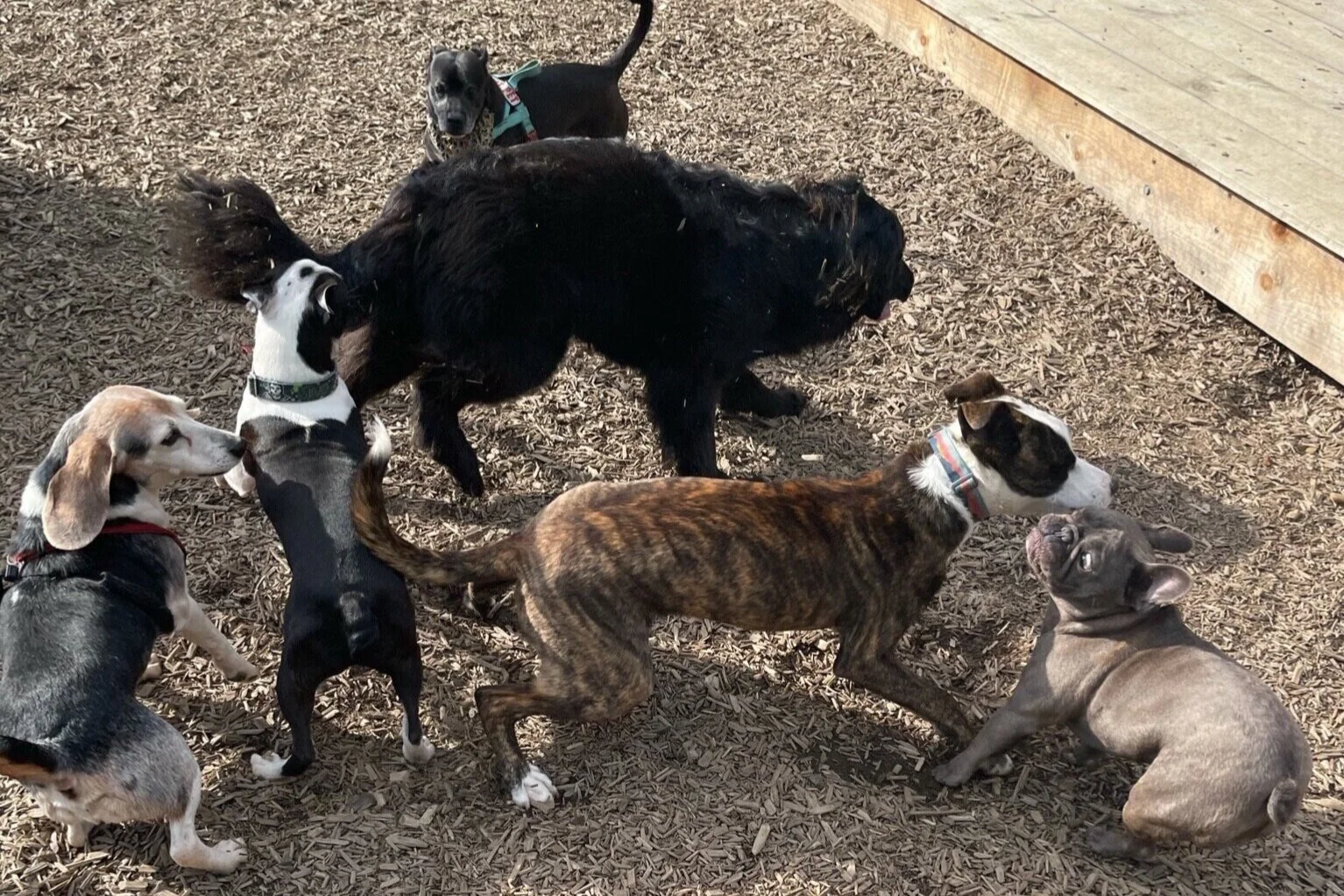
Standard restaurant or bar policies were not written with off-leash dogs in mind. A traditional hospitality policy assumes patrons sit at tables, walk to a bar, and use a restroom. An off-leash dog bar adds a fenced play yard where dozens of dogs interact at once, which introduces bite risk, scratch injuries, slip-and-fall claims tied to wet grass or paw prints on patios, and property damage to fencing and turf.

Most pet-business policies, on the other side, assume kennels or grooming shops where dogs are leashed or crated. They rarely contemplate alcohol service or live entertainment. Wagbar's off-leash dog bar concept sits between these two worlds, which is why prospective owners need brokers who write hybrid policies covering both the bar and the play yard under one program. The wrong policy structure can leave gaps that surface only after a claim is filed.
General Liability: The Foundation of Dog Bar Insurance
General liability is the base layer of any dog bar insurance program. It covers third-party bodily injury and property damage arising from your operations, which for a dog bar means human guests slipping on a wet patio, getting bumped by a running dog, or having a phone knocked into a water bowl.
Most carriers writing hospitality risks offer per-occurrence limits starting at $1 million with $2 million aggregates, and many landlords and franchisors require those limits as a minimum. As you review the legal and licensing requirements for your market, expect your municipality, alcohol board, and franchisor to all weigh in on minimum general liability limits. Higher limits become more important as your guest count grows and as you add live music, food trucks, or private events.
Liquor Liability: Required for Dog Bar Operations
Any business pouring beer, wine, cider, or non-alcoholic options that could include alcohol needs liquor liability coverage. This protects the business against claims tied to alcohol service, including injuries caused by an over-served guest after they leave the property. Most general liability policies exclude liquor risk by default, so it has to be purchased as a separate line.
Liquor liability premiums depend on annual alcohol sales, hours of service, training programs for bar staff, and state dram-shop laws. North Carolina, where Wagbar's Weaverville flagship operates, has different dram-shop standards than Texas, California, or Tennessee, so your premium will reflect your state's legal exposure. Carriers also reward operators who require server training certifications and limit pours per guest. Building these practices into your daily operations from day one usually pays for itself in lower renewals.
Animal Bailee and Care, Custody & Control Coverage
This is the coverage type most new dog-business owners overlook. Animal bailee insurance covers losses involving animals temporarily in your care. Even though guests at an off-leash dog bar remain responsible for supervising their own dogs, courts and insurers can still treat the business as a partial custodian, particularly for dogs left in your play yard while owners visit the bar area.
Care, custody, and control endorsements typically cover veterinary bills, replacement costs, and litigation costs tied to injury or escape of a dog on premises. Limits run from $25,000 to $250,000 per occurrence, and brokers price them based on average daily dog count and your written intake protocols. Wagbar's franchise training program emphasizes vaccination verification, behavior screening, and active staff supervision, which lowers underlying frequency and helps franchisees secure better terms.
Commercial Property Insurance for Dog Bar Build-Outs
Commercial property coverage protects the physical assets you own or are responsible for under your lease. For an off-leash dog bar, that means fencing, turf or surfacing, the bar structure, kitchen equipment, point-of-sale hardware, outdoor furniture, signage, and any tenant improvements you funded. Wagbar's container bar build-out option makes some of this easier to value because the converted shipping containers come with documented costs.
Property policies usually pay on a replacement-cost basis if you elect that option, which is preferable to actual cash value for a newer build-out. Hail, wind, fire, theft, and vandalism are standard perils. Flood and earthquake almost always need separate coverage, depending on your market. If you're opening in a coastal city like Myrtle Beach or Charleston, your broker will spend extra time on wind-deductible structures, since named-storm deductibles can easily run 2 to 5 percent of insured value.
Workers' Compensation for Dog Bar Employees
Almost every state requires workers' compensation once you hire your first employee, with a few exceptions for owner-only operations. For a dog bar, the workforce typically includes bartenders, dog yard monitors, kitchen or food-truck partners, and event staff. Each role carries a different class code, and your premium is based on payroll multiplied by class-code rates plus an experience modifier.
Dog yard monitors carry slightly higher rates than bar staff because of bite and scratch exposure, but written safety protocols can keep losses low and modifiers favorable. Wagbar's staffing and operations practices build supervision standards into the daily playbook, which gives new franchisees a documented loss-control program to share with underwriters during the quoting process.
Business Interruption Insurance Protects Cash Flow
Business interruption coverage replaces lost income if a covered event closes the property. For a dog bar, that could include a fire in the bar structure, severe weather damage to fencing, or a covered utility outage. Most policies pay net income plus continuing expenses for a defined period, often 12 months, while you rebuild or repair.
This coverage is easy to underprice. New franchisees sometimes set the limit based on the first six months of break-even projections rather than 12 months at full operating capacity, which leaves them short if the loss happens after they hit stride. Building a realistic 12-month income forecast during your business-plan stage makes this calculation much easier and helps your broker set a defensible limit. The revenue streams of memberships, day passes, beverage sales, and event income each carry their own seasonality patterns worth modeling.
Cyber Liability for Membership and Payment Systems
Cyber liability has become a standard line for any business taking card payments or storing customer information, and a dog bar with online membership sign-ups, vaccination uploads, and event reservations falls squarely in that category. Coverage typically responds to data breaches, ransomware events, social-engineering fraud, and the regulatory notification costs that follow.
Premiums for a single-location operation are usually modest, often in the low four figures annually, but limits and sublimits matter. Ransomware sublimits in particular have tightened in recent years, so review what your policy actually pays for an extortion event versus the headline limit. Pairing cyber coverage with employee training and multi-factor authentication on your point-of-sale and email systems usually qualifies you for better terms.
How Vaccination Requirements Lower Your Risk Profile
Underwriters reward strict entry rules with better pricing because the rules directly reduce the frequency and severity of claims. Wagbar requires Rabies, Bordetella, and Distemper vaccinations for every dog, a minimum age of 6 months, and that all dogs be spayed or neutered before entering the Asheville flagship or any franchise yard. Each of those rules removes a category of risk an underwriter would otherwise have to price.
Vaccination verification at every visit also cuts disease-transmission claims, while age and alteration requirements reduce hormone-driven aggression. When you submit these protocols to a carrier alongside your application, you make it easier for the underwriter to write the account at competitive pricing. Documenting how staff verify these rules at the door is just as important as the rules themselves.
How the Wagbar Franchise Model Supports Insurance Setup
Buying insurance as a brand-new operator with no claims history is harder than most prospective owners expect. Carriers want to see operating manuals, vaccination protocols, dog-behavior screening procedures, staff training documentation, and incident-response plans. Without these, you're asking an underwriter to price your account on intuition, which usually means higher premiums or declined submissions.
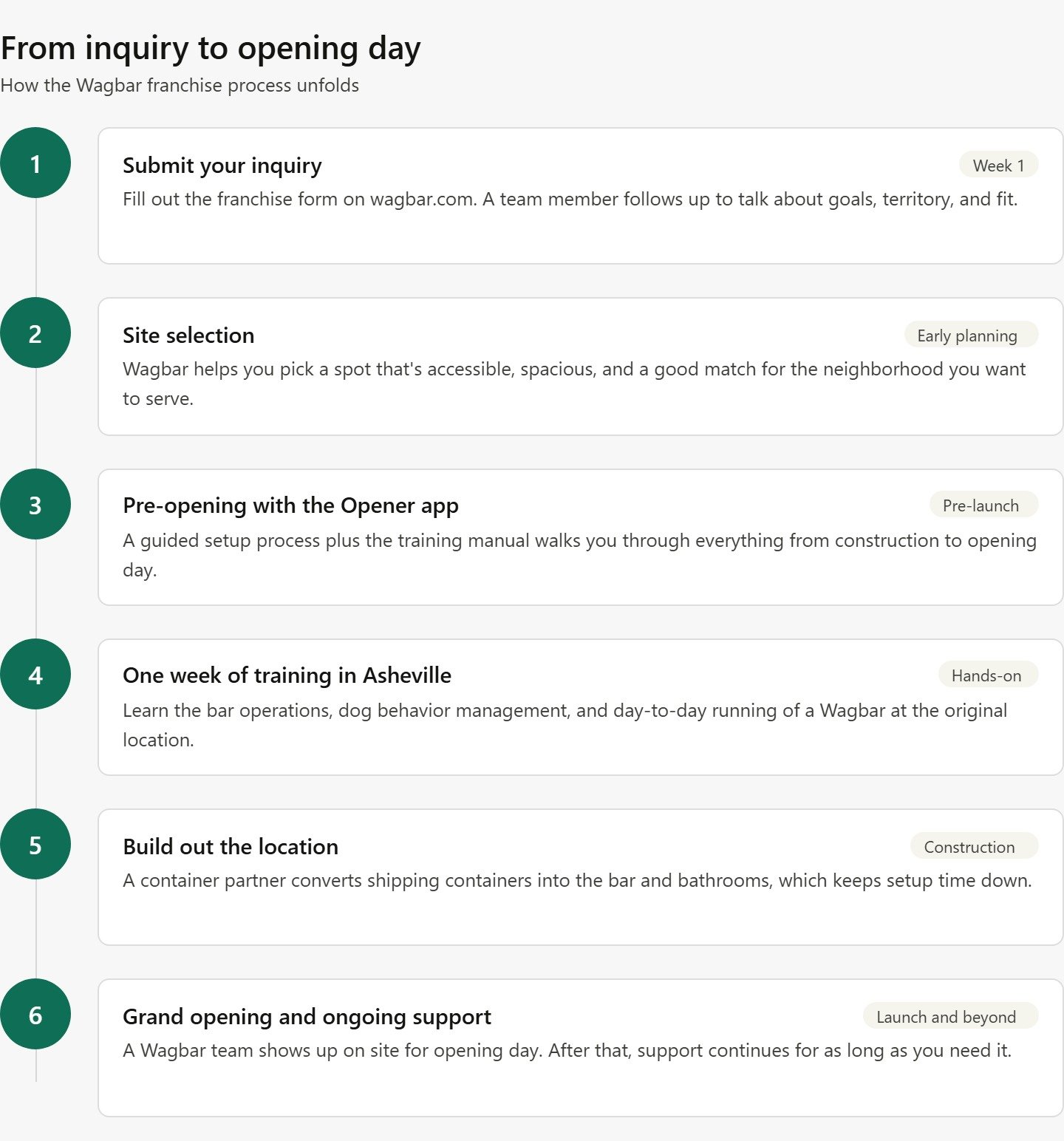
The Wagbar franchise system provides those documents in a binder, an app, and a one-week training program in Asheville before you ever meet with a broker. Franchisees receive operational standards, dog-screening criteria, a vaccination-verification process, and incident protocols developed across years of running the original location and supporting franchisees in markets like Richmond, Knoxville, and Phoenix. This shortens the underwriting cycle and often improves first-year pricing.
Estimating Insurance Costs Within Total Investment
Insurance is one line in a much larger pre-opening budget. The Wagbar franchise model has an initial franchise fee of $50,000 and an estimated initial investment between $470,300 and $1,145,900 depending on market, build-out scope, and lease structure. Insurance costs typically fall within the operating capital portion of that range and depend on the same factors that drive every line above: limits, location, payroll, and alcohol sales.
This information is not intended as an offer to sell, or the solicitation of an offer to buy, a franchise. It is for information purposes only. An offer is made only by Franchise Disclosure Document (FDD).
A reasonable first-year insurance budget for a single-location dog bar combining general liability, liquor liability, animal bailee, property, workers' compensation, business interruption, and cyber typically runs in the low five figures, with wide variation by state and by carrier. Multi-unit operators who qualify for Wagbar's 50 percent multi-unit fee discount on three or more locations also tend to see better blended insurance pricing as they scale, since underwriters reward documented operating history across locations.
Frequently Asked Questions
Do I need a special policy for off-leash dogs versus on-leash dogs?
The policy structure does change. Off-leash operations require explicit endorsements that confirm the carrier knows dogs interact freely on premises. Standard pet-business policies often assume leashed handling. Asking your broker for a hybrid hospitality and pet-care program with off-leash language built in avoids surprises at renewal or claim time.
How much does dog bar insurance cost per year?

Total annual premiums vary widely based on state, alcohol sales, payroll, limits, and loss history. A new single-location off-leash dog bar typically sees combined annual premiums in the low five figures across all required lines, but the only reliable number comes from quotes pulled by a broker who writes both hospitality and pet-care risks.
Does Wagbar require franchisees to carry specific insurance limits?
Yes. As part of the Franchise Disclosure Document and franchise agreement, Wagbar specifies minimum coverage types and limits each franchisee must carry, with the franchisor named as additional insured. Specific limits and required endorsements are detailed in the FDD provided to qualified candidates.
Can I use my existing bar or restaurant insurance broker?
You can, but only if they have experience with both hospitality and pet-business risks. Most general-purpose hospitality brokers underestimate the dog-related exposures, and most pet-care brokers underestimate the alcohol exposures. Asking for references from off-leash dog bars or hybrid pet-and-beverage concepts is worth the time.
How do dog vaccination rules affect my insurance pricing?
Strict vaccination rules reduce claim frequency, especially for disease-transmission and bite events. When you document these rules and your verification process, underwriters typically respond with better pricing. Wagbar's required vaccinations for Rabies, Bordetella, and Distemper, along with age and alteration requirements, give franchisees a documented standard to share during quoting.
What happens if a dog bites another dog at a Wagbar location?
Liability for dog-on-dog incidents usually falls to the dog owners under premises rules, but the business can still face claims and litigation costs. Animal bailee or care-and-custody endorsements respond to those costs, and trained staff supervision helps reduce the chance of escalation. Posted yard rules and signed waivers also play a role in how claims are handled.
Do I need separate insurance for special events at my dog bar?
Most events held on-premises with your usual operations are covered by your standing policies, though large private events or off-site activations sometimes need event-specific endorsements. Coordinate with your broker before booking large bookings, ticketed events, or any activity outside your normal footprint.
Bottom TLDR
Dog bar insurance for an off-leash dog bar must combine bar and pet-care exposures into one program, including general liability, liquor liability, animal bailee, property, workers' compensation, business interruption, and cyber. Wagbar franchisees inherit operating standards and vaccination protocols that improve underwriting outcomes. Request quotes from a broker familiar with hybrid hospitality and pet-care risks before signing your lease.
Insurance is rarely the most exciting part of franchise due diligence, but it is one of the clearest indicators of whether an operator has thought through the realities of running an off-leash dog bar. The right program protects guests, dogs, and the business through years of growth. Wagbar's franchise system gives prospective owners the operating standards, vaccination protocols, and documented training that brokers and underwriters look for, which in turn shapes a more straightforward path from quote to bind to opening day.