
The Complete Guide to Knoxville's 15 Municipal Dog Parks (With Amenities Lists)
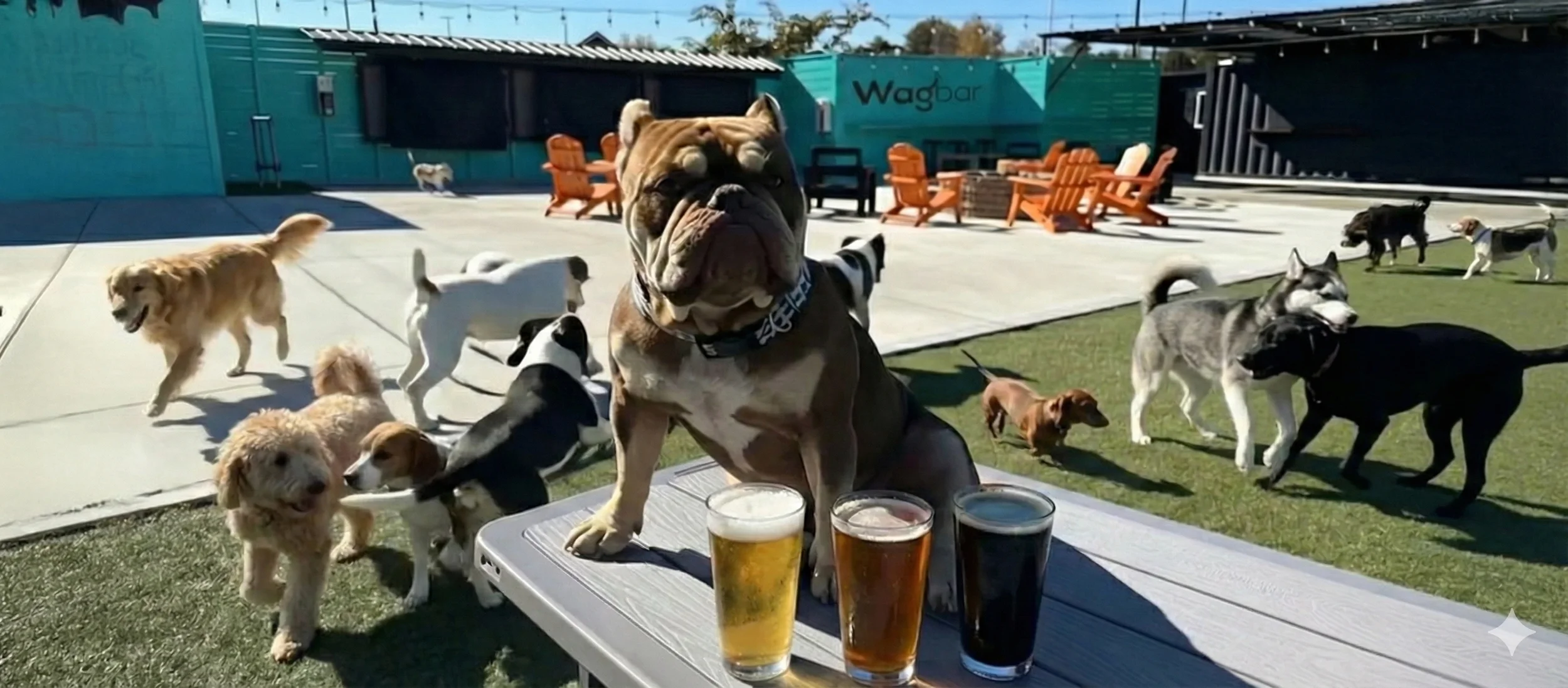
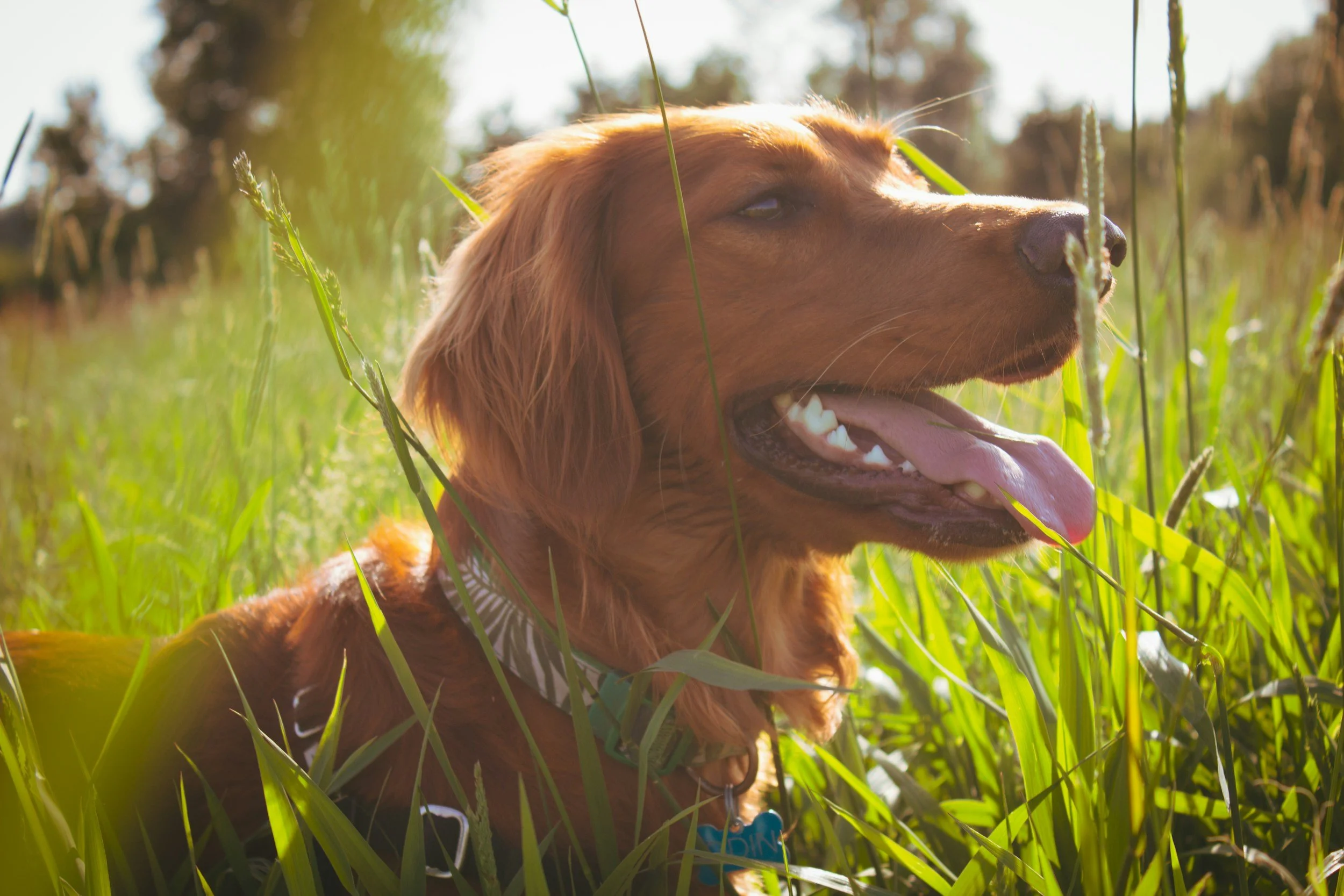
A dog running free at Wagbar's off-leash dog park
Knoxville has quietly built one of the most dog-friendly park systems in the Southeast. Between the City of Knoxville's nine dedicated off-leash areas and Knox County's six newer additions — the last of which opened in August 2026 — dog owners across the metro area now have 15 free, publicly operated parks to choose from. No membership fees. No reservations. Just fenced space where dogs can run and owners can sit on a bench without worrying about a leash.
This guide covers every one of them: what is there, what is not, and which parks are worth the drive depending on your dog and your priorities.
How Knoxville Built 15 Dog Parks
The City of Knoxville began investing in dedicated dog parks in 2007 when PetSafe Village Dog Park opened as the metro area's first purpose-built off-leash facility. Over the next several years, the city partnered with PetSafe and the Legacy Parks Foundation to build a network of nine parks spread across different neighborhoods.
Knox County expanded that footprint significantly starting in 2020, when UT President Randy Boyd and the Boyd Family Foundation committed $500,000 to fund five new dog parks outside the city limits. Combined with $150,000 in county funding, the initiative added parks in Powell, Fountain City, Halls, Karns, and North Knoxville between 2021 and 2026. Clayton Park, the final Boyd-funded park, opened in August 2026.
The result is a metro-wide network that gives most Knoxville residents a public dog park within a 15-minute drive.

General Rules That Apply to All Knoxville Dog Parks
Before diving into individual parks, these rules apply across the board at both city and county facilities.
All parks operate dawn to dusk unless otherwise noted. Dogs must be current on vaccinations, including rabies and distemper-parvo. Owners are required to clean up after their dogs — most parks provide waste bag stations, but bringing your own is always smart. Aggressive dogs must be removed immediately. Dogs in heat are not permitted. Children under a certain age (typically 12) must be accompanied by an adult. Glass containers are prohibited. Owners enter at their own risk and are responsible for their dog's behavior at all times.
For a deeper look at what safe off-leash play actually requires, Wagbar's dog park safety guide for Knoxville covers etiquette, vaccination requirements, and behavior management in detail.
City of Knoxville Dog Parks
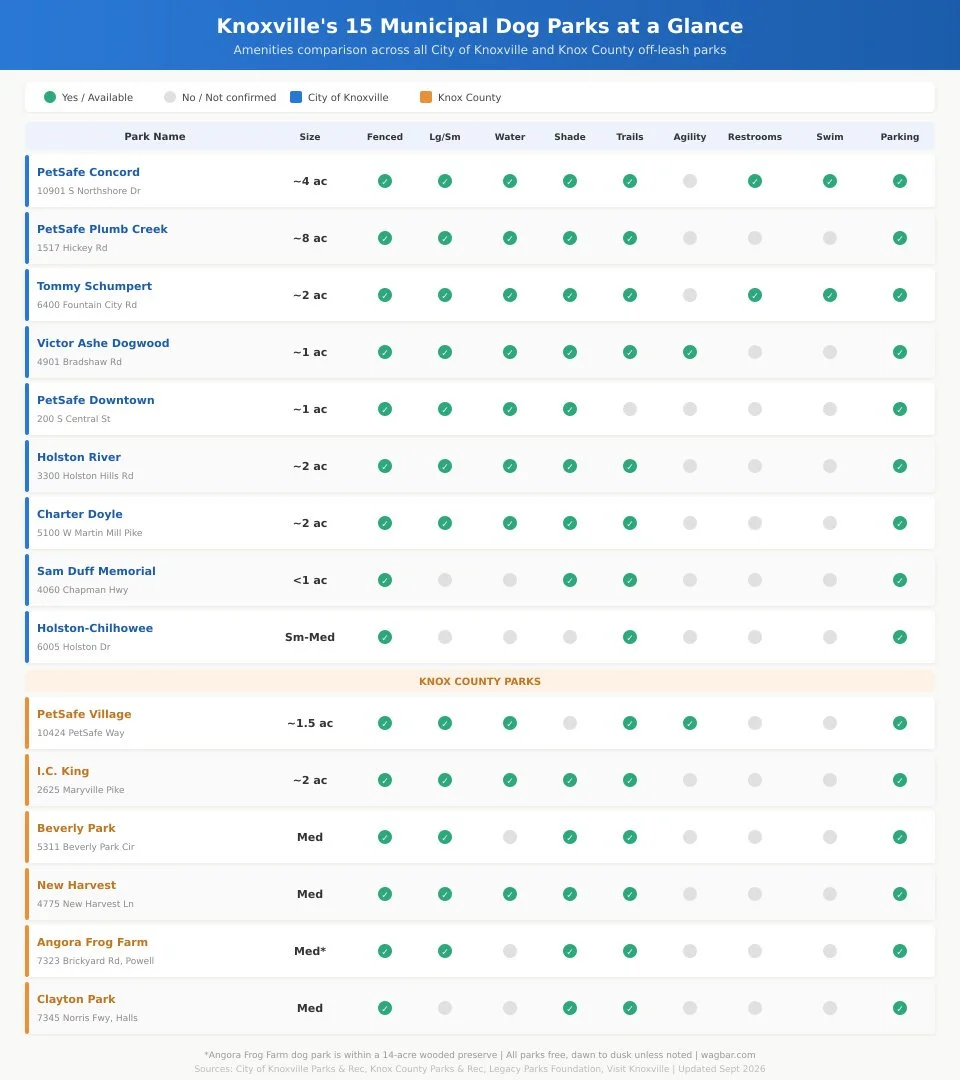
These nine parks are operated by the City of Knoxville Parks and Recreation Department.
1. PetSafe Concord Dog Park
Address: 10901 South Northshore Drive, Knoxville, TN 37922 Neighborhood: West Knoxville (Concord Park) Size: Approximately 4 acres Hours: Dawn to dusk
Concord is the largest dedicated dog park in the Knoxville area and the one that draws visitors from the widest radius. Four acres of space divided into separate areas for small dogs, large dogs, and a dedicated doggy beach with dock access to Fort Loudoun Lake give it a range of experiences no other municipal park matches.
Amenities:
Fully fenced with separate large dog, small dog, and beach areas
Pet water fountains and human drinking fountains
Dog shower station near the beach
Covered benches and seating
Paved and natural surface walking trails
Waste bag stations throughout
Restrooms available in adjacent Concord Park
Ample parking
Best for: Water-loving dogs, owners who want space to spread out, weekend trips with the whole family. The adjacent Concord Mountain Bike Trails and the broader park complex make this a full-day destination.
2. PetSafe Plumb Creek Dog Park
Address: 1517 Hickey Road, Knoxville, TN 37931 Neighborhood: Northwest Knoxville Size: 8 acres (7 for large dogs, 1 for small dogs) Hours: Dawn to dusk
Plumb Creek is the largest single-site dog park in the system by total acreage. The seven-acre large dog area includes a paved walking path that loops through open fields, giving high-energy dogs room to sprint while owners walk the perimeter. The one-acre small dog section is fully separated.
Amenities:
Fully fenced with separate large and small dog enclosures
Water fountains for dogs and owners
Shaded shelters and picnic-friendly seating
Paved walking path through the large dog area
Waste bag stations
Adjacent playground and disc golf course
Parking lot on site
Best for: High-energy dogs that need room to run, owners who like to walk while their dog plays, families who want playground access alongside the dog park.
3. Tommy Schumpert PetSafe Dog Park (Emma Jane Walker Memorial)
Address: 6400 Fountain City Road, Knoxville, TN 37918 Neighborhood: Fountain City Size: Medium (approximately 2 acres combined) Hours: Dawn to dusk
Named in memory of Emma Jane Walker, this Fountain City park has developed one of the strongest regular-visitor communities in the Knoxville system. Two off-leash areas — one for dogs under 30 pounds and one for all sizes — are separated by fencing. A pond with a dock provides water access, and a mulched walking trail loops through the property.
Amenities:
Fully fenced with two separate areas (under 30 lbs and all sizes)
Pond with dock access
Mulched walking trail
Benches throughout
Grass, mulch, and natural surface areas
Waste bag stations
Parking available
Restrooms nearby in the broader park
Best for: Dog owners looking for a tight-knit community atmosphere, dogs that enjoy water but do not need lake-level swimming, and owners in the Fountain City and North Knoxville area.
4. Victor Ashe Dogwood Dog Park
Address: 4901 Bradshaw Road, Knoxville, TN 37912 Neighborhood: Northwest Knoxville (Victor Ashe Park) Size: Approximately 1 acre Hours: Dawn to dusk
Situated inside the 120-acre Victor Ashe Park complex, Dogwood Dog Park earned recognition from Dog Fancy Magazine in 2009 as the country's "Dog Park with the Best Setting." The park features a balance of mature shade trees and open grassy areas, along with agility equipment including a tunnel, puppy jump, and hill structures that give active dogs more to do than just chase each other.
Amenities:
Fully fenced with a small dog section
Agility equipment (tunnel, jumps, ramps, hill structures)
Water fountain
Shade from mature trees
Waste bag stations
Adjacent walking trails, playgrounds, and green space within Victor Ashe Park
Parking available in the Victor Ashe lot
Best for: Dogs that enjoy agility-style play, owners who want access to broader park trails, and anyone in the Bearden or Northwest Knoxville area.
5. PetSafe Downtown Dog Park
Address: 200 South Central Street, Knoxville, TN 37902 Neighborhood: Downtown / Old City Size: Approximately 1 acre Hours: Dawn to dusk
The most centrally located dog park in the system, the Downtown park sits near the Old City entertainment district and offers a convenient option for residents and workers in the urban core. Separate fenced sections for small and large dogs provide reasonable space despite the urban footprint.
Amenities:
Fully fenced with separate large and small dog areas
Dog and human water fountains
Shaded areas
Waste bag stations
Benches
Street parking and nearby garage parking
Best for: Downtown residents, workers on lunch breaks, visitors staying in the Old City or downtown hotel corridor. Convenient but not spacious — better suited for socialization than long sprints.
6. Holston River PetSafe Dog Park
Address: 3300 Holston Hills Road, Knoxville, TN 37914 Neighborhood: East Knoxville (Holston River Park) Size: 2 acres Hours: Dawn to dusk
Set along the Holston River Greenway, this East Knoxville park offers a shaded, wooded environment that stays cooler than many open-field parks during summer months. Two acres divided into large and small dog sections give enough room for comfortable play without the crowd density of more popular parks.
Amenities:
Fully fenced with separate large and small dog areas
Dog water fountain and fire hydrant feature
Shaded by mature trees throughout
Benches and shelters with tables
Waste bag stations
Adjacent Holston River Greenway for leashed walks before or after off-leash play
Walking track nearby
Playground adjacent
Parking available
Best for: Dogs and owners who prefer shade and a calmer atmosphere, anyone living in East or South Knoxville, and owners who want to combine off-leash play with a greenway walk.
7. Charter Doyle PetSafe Dog Park
Address: 5100 West Martin Mill Pike, Knoxville, TN 37920 Neighborhood: South Knoxville Size: 2 acres Hours: Dawn to dusk
Charter Doyle sits in one of the most naturally shaded settings of any Knoxville dog park, thanks to mature cedar trees that keep the partially wooded grounds cool even during humid Tennessee summers. Separate enclosures for large and small dogs are complemented by a half-mile on-leash loop trail around the broader Charter E. Doyle Park.
Amenities:
Fully fenced with separate large and small dog enclosures
Water fountain
Natural shade from mature cedar trees
Waste bag stations
0.5-mile on-leash loop trail
Adjacent playground, pickleball courts, and trails
Parking available
Best for: Dogs that overheat easily, owners who appreciate natural shade and a quieter setting, South Knoxville residents.
8. Sam Duff Memorial Park Dog Park
Address: 4060 Chapman Highway, Knoxville, TN 37920 Neighborhood: South Knoxville Size: Small (under 1 acre) Hours: Dawn to dusk
The smallest dedicated dog park in the city system, Sam Duff's off-leash area is tucked into the broader memorial park alongside basketball courts, tennis courts, pickleball courts, and the Sam Duff Greenway. It is a neighborhood park in the truest sense — functional, convenient for nearby residents, but not a destination for owners driving across town.
Amenities:
Fenced dog area
Open space with some shade
Seating
Waste bag stations
Adjacent Sam Duff Greenway for leashed walks
Two playgrounds for children
Parking available
Best for: South Knoxville residents looking for a quick, nearby off-leash option. Not ideal for dogs that need a lot of room to run.
9. Holston-Chilhowee Dog Park
Address: 6005 Holston Drive, Knoxville, TN 37914 Neighborhood: East Knoxville Size: Small to medium Hours: Dawn to dusk
A quieter, more secluded option on the east side of the city. Holston-Chilhowee sits adjacent to the larger Holston-Chilhowee park complex and offers a fenced off-leash area with benches and parking nearby. The trade-off for the peaceful setting is fewer amenities — no restrooms on site and limited shade compared to other parks.
Amenities:
Fenced dog area
Benches
Parking nearby
Adjacent to Holston-Chilhowee Greenway
Waste bag stations
Best for: Owners looking for a quiet, less-crowded space. A good option for dogs that get overstimulated in busier parks.
Knox County Dog Parks
These six parks are operated by Knox County Parks and Recreation, including five funded through the Boyd Family Foundation initiative.
10. PetSafe Village Dog Park
Address: 10424 PetSafe Way, Knoxville, TN 37932 Neighborhood: West Knoxville (PetSafe Headquarters) Size: Approximately 1.5 acres Hours: On-leash only during standard hours; off-leash after 5 PM on weekdays and after 3 PM on weekends
Knoxville's original dog park, opened in 2007, PetSafe Village holds historical significance as the facility that launched the city's dog park movement. Located at PetSafe's corporate headquarters, the park features a natural pond, agility equipment, and walking trails. The unusual schedule — on-leash during daytime, off-leash only in late afternoon and evening — makes it a different experience from other parks and requires planning around the clock.
Amenities:
Fenced with separate areas for small and large dogs
Agility equipment and obstacles
Natural pond
Dog water fountain
Picnic tables and park benches
Walking trails
Waste bag stations
Parking available
Best for: Owners available for late afternoon or evening visits, dogs that enjoy agility equipment, anyone in the Farragut or West Knoxville corridor.
11. I.C. King PetSafe Dog Park
Address: 2625 Maryville Pike, Knoxville, TN 37920 Neighborhood: South Knoxville (I.C. King Park) Size: 2 acres Hours: Dawn to dusk
Nestled within the larger I.C. King Park — a popular destination for hiking and mountain biking along the Tennessee River — this two-acre dog park offers separate sections for large and small dogs with a more natural, wooded setting than most urban parks. Leashed dogs can also explore the park's nature trails before or after off-leash play.
Amenities:
Fully fenced with separate large and small dog areas
Benches and seating
Shelter for weather protection
Water fountain for dogs
Adjacent hiking and mountain biking trails
Playground nearby
Waste bag stations
Parking available
Best for: Active owners who want to combine a hike or trail ride with dog park time, South Knoxville residents, and dogs that enjoy a wooded environment.
12. Beverly Park Dog Park
Address: 5311 Beverly Park Circle, Knoxville, TN 37918 Neighborhood: North Knoxville (Inskip/Fountain City area) Size: Medium Hours: Dawn to dusk
One of the five Boyd Family Foundation parks, Beverly Park's dog area features separate sections for large and small dogs with shade trees, benches, and concrete pads. The park connects to the paved Beverly Park Greenway and internal trails, giving leashed dogs additional exercise options beyond the off-leash enclosures.
Amenities:
Fenced with separate large and small dog areas
Shade trees
Benches and concrete pads
Waste bag stations
Adjacent Beverly Park Greenway (paved, leashed)
Internal park trails
Parking available
Best for: North Knoxville and Fountain City residents, owners who want greenway access for a pre- or post-play walk.
13. New Harvest Dog Park
Address: 4775 New Harvest Lane, Knoxville, TN 37918 Neighborhood: North Knoxville Size: Medium Hours: Sunrise to sunset
New Harvest was one of the first Boyd-funded parks to open and sits within the larger New Harvest Park, which includes paved walking loops, a natural trail, and a connection to the Beverly Park Greenway. Separate large and small dog areas are complemented by shaded seating and water stations.
Amenities:
Fenced with separate large and small dog areas
Water stations
Shaded areas with benches
Two paved walking loops (0.25 miles each)
One natural trail loop (0.5 miles)
Connects to Beverly Park Greenway for leashed walks
Waste bag stations
Parking available
Best for: North Knoxville residents, owners who enjoy trail walking alongside off-leash play, dogs that benefit from a warm-up walk before entering the park.
14. Angora Frog Farm Dog Park
Address: 7323 Brickyard Road, Powell, TN 37849 Neighborhood: Powell Size: Medium (within a 14-acre wooded preserve) Hours: Dawn to dusk
The most creatively designed park in the system, Angora Frog Farm integrates the dog park into a 14-acre wooded preserve that also features 10 play structures and a half-mile storybook trail for children. The dog park itself occupies the front north corner of the property with strong perimeter fencing and designated zones for small and large dogs. Trees and fallen logs were intentionally preserved during construction rather than cleared, giving the space a naturalistic feel that other parks lack.
Amenities:
Fenced with separate small and large dog zones
Natural wooded setting with preserved trees and logs
Adjacent half-mile storybook trail
Play structures throughout the broader park
Parking area
Waste bag stations
Best for: Families with both kids and dogs, owners who appreciate a natural wooded setting, Powell and North Knox County residents.
15. Clayton Park Dog Park
Address: 7345 Norris Freeway, Knoxville, TN 37918 Neighborhood: Halls Size: Medium Hours: Dawn to dusk
The newest dog park in the metro area, Clayton Park opened in August 2026 as the final piece of the Boyd Family Foundation's five-park initiative. Like Angora Frog Farm, the design preserves natural elements — trees and fallen logs were left in place rather than cleared, and additional amenities were built around them. The park sits along Beaver Creek and connects directly to the Halls Greenway trail network.
Amenities:
Fenced dog area
Natural setting with preserved trees and fallen logs
Adjacent 0.2-mile paved walking loop
Connection to Halls Greenway
Playground and picnic shelters in the broader park
Natural wetlands along Beaver Creek
Parking available
Best for: Halls and North Knox County residents, owners who enjoy trail connectivity, dogs that do well in a more natural, wooded environment.
Knox County SportsPark Dog Park (Bonus)
Address: 8050 Oak Ridge Highway, Knoxville, TN 37931 Neighborhood: Karns Hours: Dawn to dusk
Worth mentioning alongside the 15 dedicated parks, the Knox County SportsPark in Karns added an off-leash dog area as part of the Boyd-funded initiative. The dog park sits within the larger SportsPark complex, which includes baseball and softball fields, a playground, walking trail, concessions, and a kayak launch. Amenity details specific to the dog area are limited, but the fenced space provides a Karns-area option for owners who would otherwise drive to Plumb Creek or PetSafe Village.
How to Choose the Right Park for Your Dog
Not every dog does well in every park. Size, temperament, energy level, and socialization experience all matter when picking the right environment.
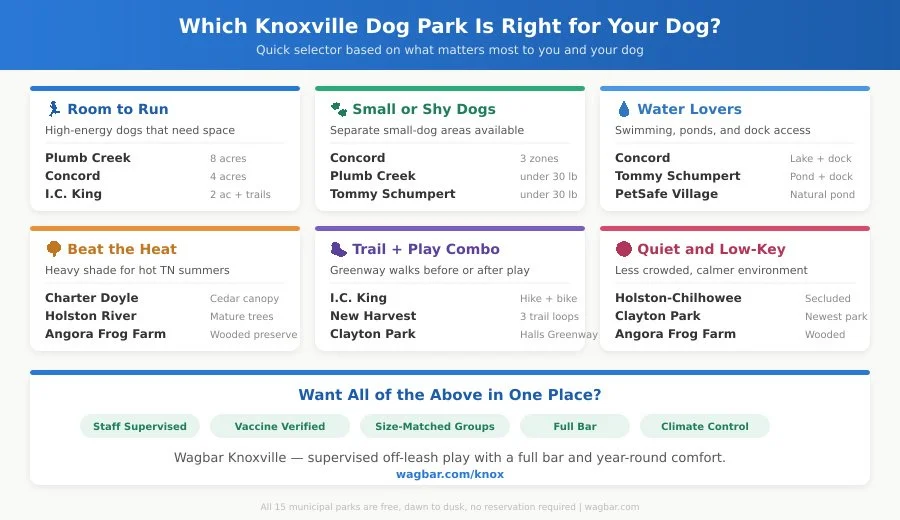
High-energy dogs that need room to run do best at Plumb Creek (8 acres), Concord (4 acres), or I.C. King (2 acres with adjacent trails). Smaller parks like Sam Duff or Downtown will frustrate a dog that wants to sprint.
Small or shy dogs should start at parks with dedicated small-dog sections where they will not be overwhelmed by larger, faster dogs. Concord, Plumb Creek, Tommy Schumpert, Downtown, Holston River, Charter Doyle, and Beverly Park all have separate areas for smaller dogs.
Water-loving dogs have the clearest choice: Concord's doggy beach and dock access to Fort Loudoun Lake is unmatched in the system. Tommy Schumpert's pond with dock access is a smaller-scale alternative.
Dogs that overheat easily will appreciate the heavy shade at Charter Doyle (cedar canopy), Holston River (mature tree cover), and Angora Frog Farm (wooded preserve).
Dogs that get overstimulated around other dogs do better at lower-traffic parks like Holston-Chilhowee, Clayton Park, or Angora Frog Farm during weekday mornings when attendance is lightest.
Owners who want a trail walk before or after off-leash play should look at parks with greenway connections: Holston River (Holston River Greenway), New Harvest (Beverly Park Greenway), Clayton Park (Halls Greenway), Charter Doyle (loop trail), or I.C. King (hiking and mountain biking trails).
For a more detailed breakdown of how to evaluate fenced dog parks in Knoxville based on your specific safety priorities, that guide covers fencing quality, visibility, and separation standards across the system.
What Municipal Dog Parks Do Not Provide
Public dog parks are a valuable community resource, but understanding their limitations helps set realistic expectations.
No staff supervision. Every municipal park in Knoxville is unmonitored. There are no trained attendants watching for behavioral warning signs, breaking up conflicts, or managing group play dynamics. Owners are solely responsible for their dog's behavior and safety.
No vaccination verification. While all parks require current vaccinations, none check paperwork at the gate. You are trusting that every other dog in the park meets the same health standards yours does.
No temperament screening. Any dog can enter any park regardless of behavioral history, socialization experience, or comfort level around other dogs. The dog park behavior guide explains what healthy group play looks like and when to intervene.
No climate control. Tennessee summers are hot and humid. Winter days get cold. Parks do not have cooling stations, heated areas, or indoor shelter for dogs or owners.
No food or beverage service. Bring your own water, snacks, and entertainment for longer visits. Downtown is the only park within walking distance of restaurants and bars.
These trade-offs are inherent to public parks, not criticisms of how Knoxville operates them. For owners who want supervised off-leash play with staff monitoring, temperament assessments, vaccination verification, and climate-managed environments, Wagbar Knoxville offers a different model — trained staff on-site, multiple play zones matched by dog size and play style, a full bar, and year-round comfort. It is a complement to the public parks, not a replacement.
The Bigger Picture: Knoxville's Dog-Friendly Identity
Knoxville's investment in 15 municipal dog parks reflects a broader trend that has made the metro area one of the most dog-friendly communities in Tennessee. The combination of public off-leash parks, pet-friendly restaurants and breweries, greenway trails, and private facilities like Wagbar gives dog owners a range of options that few similarly sized cities can match.
Knox County's stated goal of achieving the highest per-capita dog park count in the country is ambitious, and the Boyd Foundation initiative brought it significantly closer to reality. With 15 free public parks and additional private options, Knoxville dog owners have more choices for off-leash exercise and socialization than at any point in the city's history.
Understanding the full landscape of dog parks in Knoxville — public and private, fenced and open, supervised and unsupervised — helps every owner find the right fit for their dog's temperament, energy level, and socialization needs.
Frequently Asked Questions
Are Knoxville's municipal dog parks free?
Yes. All 15 parks operated by the City of Knoxville and Knox County are free and open to the public. No membership, registration, or reservation is required.
What vaccinations does my dog need?
All parks require current rabies and distemper-parvo vaccinations. While these are posted rules, no park staff verify vaccination records at entry. Owners are expected to comply on the honor system. The complete dog park safety guide covers vaccination requirements and other health considerations in detail.
Which park is best for small dogs?
Parks with dedicated small-dog areas — separated by fencing from larger dogs — include Concord, Plumb Creek, Tommy Schumpert, Downtown, Holston River, Charter Doyle, Beverly Park, and New Harvest. PetSafe Village and Victor Ashe also have small-dog sections.
Are the parks open year-round?
Yes. All parks are open year-round, dawn to dusk (PetSafe Village has restricted off-leash hours). There are no seasonal closures, though individual parks may close temporarily for maintenance or weather-related damage.
Can I bring my puppy?
Puppies are generally welcome, but they should have completed their full vaccination series before visiting any public dog park. Unvaccinated puppies are at risk for parvo and other communicable diseases in shared environments. Most veterinarians recommend waiting until a puppy is at least 16 weeks old and fully vaccinated.
What should I do if a fight breaks out?
Do not reach into a dog fight with your hands. Use a loud noise, a spray of water, or a barrier like a chair or bag to separate the dogs. Remove your dog from the park immediately after any aggressive incident. Wagbar's dog park behavior guide covers intervention techniques and how to read pre-conflict body language.
Is there a supervised alternative to public dog parks in Knoxville?
Yes. Wagbar Knoxville offers supervised off-leash play with trained staff, vaccination verification, temperament-matched play groups, a full bar, climate-controlled comfort, and no concerns about unmonitored interactions. It is a membership-based off-leash dog park and bar that complements the public park system.
Park details, addresses, and amenities are based on publicly available information from the City of Knoxville, Knox County Parks and Recreation, Legacy Parks Foundation, and Visit Knoxville. Amenities and conditions can change — check with the managing authority before visiting a park for the first time. Last updated September 2026.
