
Complete Guide to Dog Services in Knoxville: Everything Your Pup Needs
Finding Quality Care for Your Knoxville Dog
Your dog needs more than just food, water, and a place to sleep. They need veterinary care when they're sick, socialization opportunities to develop confidence and social skills, grooming to stay healthy and comfortable, training to navigate the world safely, and sometimes professional care when you can't be there yourself.
Knoxville offers all these services, but quality varies dramatically. Some providers genuinely understand dogs and prioritize their wellbeing. Others treat pet care as purely transactional business where animals are inventory rather than individuals deserving respect and appropriate handling.
This guide helps you navigate Knoxville's dog service landscape, identifying quality providers while explaining what separates excellent care from merely adequate service. We'll cover everything from emergency veterinary hospitals you hope never to need, to the daycare and boarding facilities where your dog might spend regular time, to the trainers who can help address behavioral challenges or build new skills.
Understanding Dog Daycare in Knoxville
What Dog Daycare Actually Provides
Dog daycare, at its most basic, means supervised care during daytime hours when you can't be home. Your dog spends the day with other dogs in group settings, hopefully getting exercise, socialization, and mental stimulation rather than sitting alone in your house bored and unstimulated.
The quality difference between excellent daycare and barely adequate facilities is enormous. Great daycare actively manages group dynamics, intervenes before play escalates inappropriately, provides rest periods so dogs don't become overstimulated, and genuinely cares about each individual dog's experience rather than just preventing injuries and keeping everyone alive until pickup.
Poor daycare amounts to warehousing—dogs crammed into spaces with minimal supervision, inadequate staff who can't recognize problem interactions until fights break out, and environments so chaotic that sensitive dogs spend entire days stressed while bullies dominate play without intervention.
Traditional Daycare Model in Knoxville
Most Knoxville daycares follow similar structures: drop-off between 7-9am, pickup between 5-7pm, full-day rates ranging $25-35, sometimes offering half-day options at reduced rates. Dogs spend the day in group play areas supervised by staff whose qualifications vary dramatically between facilities.
These facilities typically operate in converted warehouses or purpose-built buildings with indoor and outdoor areas. Better facilities maintain cleanliness standards and enforce vaccination requirements strictly. Lower-quality operations cut corners on both, creating health risks alongside behavioral management failures.
The traditional daycare model works for some dogs—those who genuinely enjoy high-energy group play for extended periods, who aren't overwhelmed by constant stimulation, and whose owners need full workday coverage. But it fails other dogs who find all-day group environments exhausting or stressful, and it certainly doesn't serve owners who might want to participate in their dogs' socialization rather than treating it as childcare service to be outsourced.
The Wagbar Alternative: Daycare Reimagined
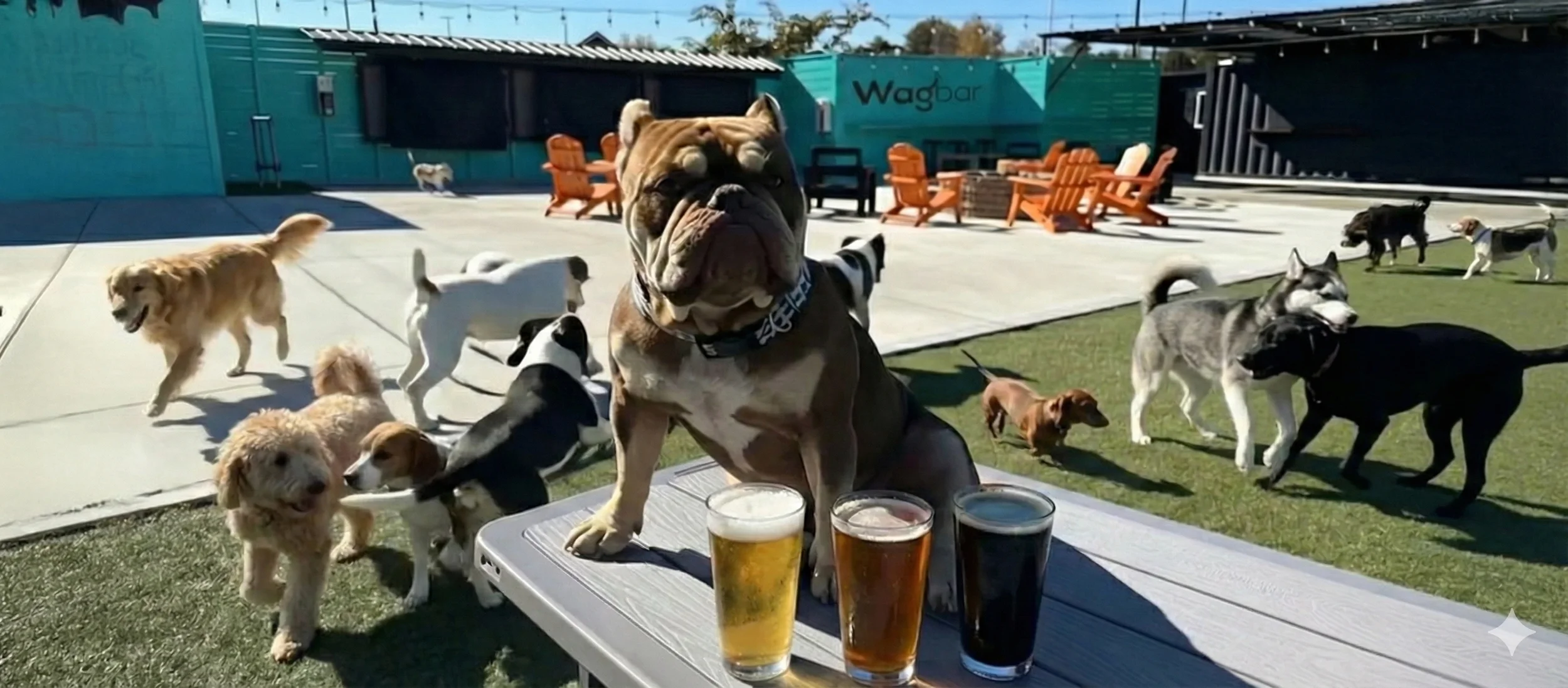
Wagbar Knoxville, opening October 2025, offers fundamentally different approach to dog socialization and care. Rather than all-day daycare where you drop off your dog and leave, Wagbar creates space where you and your dog spend time together—your dog playing off-leash in supervised environment while you relax with a drink and actually watch them enjoy themselves.
This changes everything. You're not paying someone else to provide your dog's social needs while you're absent. You're participating in your dog's socialization, building your own social connections with other dog owners, and spending quality time that strengthens your bond rather than outsourcing that time to daycare staff.
The practical differences are significant:
Cost Structure Traditional daycare charges $25-35 per visit or more for package deals. Wagbar offers both day passes and membership options starting significantly lower, making regular participation more affordable than traditional daycare. And unlike daycare where you pay whether you use it or not, Wagbar memberships make sense even with occasional use since you control when you attend.
Time Flexibility Traditional daycare operates rigid schedules—drop off during morning window, pick up during evening window, pay full day regardless of actual time your dog spends there. Wagbar operates extended evening hours, allowing you to stop by after work rather than rushing home for 6pm pickup deadlines, and stay as long as you want rather than being constrained by facility closing times.
Environment and Experience Traditional daycare facilities, even nice ones, are fundamentally utilitarian spaces designed for dog containment rather than human comfort. You're not supposed to be there—they're closed to visitors during operating hours. Wagbar is specifically designed for human comfort with bar seating, comfortable outdoor areas, and amenities that make spending time there actually pleasant rather than merely tolerable.
Supervision and Safety Both models provide supervision, but the nature differs dramatically. Daycare staff manage large groups of dogs throughout full workdays, often with inadequate staff-to-dog ratios that make truly attentive supervision impossible. Wagbar's model—where owners are present and staff specifically trained in canine behavior and communication actively monitor play—creates accountability and attention that daycare can't match.
Social Experience Traditional daycare provides socialization for your dog only. Wagbar creates community for both dogs and their owners, building relationships that extend beyond transactional service provision. This matters tremendously for urban dog owners seeking connection and community rather than just checking off their dogs' exercise requirements.

Dog Boarding in Knoxville: When You Need Overnight Care
Understanding Boarding Options
Dog boarding means overnight care when you travel or otherwise can't provide housing yourself. Boarding quality ranges from excellent facilities providing genuine enrichment and individual attention, to kennel situations where dogs spend 23 hours daily in small concrete runs with minimal human interaction.
Traditional Boarding Kennels
Traditional kennels house dogs in individual runs or suites, providing food, water, and basic care. Some offer "daycare" time where boarded dogs join group play. Others keep dogs confined except for brief potty breaks.
Pricing: Expect $30-50 per night for basic kennels, $50-80+ for luxury facilities offering suites, extended play time, and additional amenities.
Pros: Secure containment, professional staff, veterinary relationships for emergencies
Cons: Limited personal attention, potential stress from kennel environment, exposure to other dogs' illnesses despite vaccination requirements
Home-Based Boarding
Some providers offer boarding in their homes rather than kennel facilities. Dogs stay in family environments, often sleeping in bedrooms rather than crates, and participating in household routines rather than institutional schedules.
Pricing: Varies widely, typically $40-75 per night depending on provider qualifications and home setup
Pros: More personal attention, home environment less stressful for some dogs, often more flexible than commercial facilities
Cons: Difficult to verify care quality, limited backup if provider has emergencies, potential interactions with provider's own pets that might not be compatible
Veterinary Boarding
Some veterinary practices offer boarding services, particularly appealing for dogs with medical needs requiring monitoring or medication administration.
Pricing: Generally higher than traditional kennels ($50-75+ per night) due to medical expertise available
Pros: Immediate veterinary care if health issues arise, appropriate for dogs needing medication or monitoring
Cons: Often more clinical/less enriching environment, may not offer extended play or socialization
Selecting Quality Boarding
Tour Facilities Before Booking Never board your dog somewhere without personally visiting. Observe cleanliness, ask about supervision protocols, request information about staff qualifications and dog-to-staff ratios.
Verify Vaccination Requirements Quality facilities strictly enforce vaccination requirements—rabies, distemper, bordetella at minimum. Facilities that don't require proof of vaccination risk exposing your dog to preventable diseases.
Understand Exercise and Enrichment Plans Ask specifically what your dog's daily routine will include. "We let them out in play yards" differs dramatically from "We provide supervised group play, individual walks, and enrichment activities."
Check References and Reviews Read recent reviews from multiple sources. Look for patterns in complaints—occasional negative review is normal, but consistent issues with cleanliness, communication, or care quality indicate problems worth avoiding.
Discuss Emergency Protocols Understand what happens if your dog becomes ill or injured. Which veterinarian do they use? How quickly can they access care? Will they contact you before making treatment decisions?
Veterinary Services Across Knoxville

Primary Care Veterinarians
Every dog needs a regular veterinarian providing preventive care, treating minor illnesses, and monitoring overall health across their lifetime. Quality veterinary care dramatically affects your dog's health outcomes and longevity.
West Knoxville Veterinary Options West Knoxville hosts numerous veterinary practices ranging from small single-veterinarian clinics to larger practices with multiple doctors. This area's higher concentration of pet-owning households means more options but also often longer wait times for appointments.
North Knoxville and Fountain City North Knoxville and Fountain City offer several established veterinary practices serving those communities for decades. These practices often maintain longer-term relationships with clients, seeing multiple generations of pets within families.
South Knoxville Practices South Knoxville's revitalization has brought new veterinary options to historically underserved areas. Newer practices often have more modern facilities and equipment while established practices offer decades of community knowledge and relationships.
Downtown and Old City Limited veterinary options exist in downtown proper, requiring downtown residents to travel to neighboring areas for care. However, proximity to University of Tennessee's veterinary college provides access to specialty care and emergency services within short distances.
Selecting Your Veterinarian
Visit Before Emergencies Arise Tour potential veterinary offices, meet doctors and staff, and assess whether the practice's approach matches your preferences before you need urgent care and have no choice about providers.
Consider Communication Style Some veterinarians provide extensive explanations and welcome questions. Others prefer directive approaches with minimal discussion. Neither style is inherently wrong, but matching your preferences improves the long-term relationship.
Assess Staff Interactions Watch how staff handle dogs in the waiting room and during procedures you observe. Rough handling, impatience with fearful dogs, or dismissive attitudes toward owner concerns indicate cultural problems worth avoiding.
Verify Emergency Coverage Understand what happens when your regular veterinarian isn't available. Do they have after-hours answering services? Which emergency hospitals do they recommend? How do they handle urgent situations outside regular business hours?
Discuss Cost Transparency Quality veterinarians provide treatment cost estimates before procedures, explain what's included, and discuss options at different price points rather than presenting single expensive recommendations without alternatives.
Emergency and 24-Hour Veterinary Care
Knox County has several 24-hour emergency veterinary hospitals providing critical care when your regular veterinarian's office is closed. These facilities treat injuries, sudden illness, poisoning, and other urgent situations requiring immediate attention.
University of Tennessee Veterinary Medical Center UT's veterinary college operates 24-hour emergency and specialty services with board-certified specialists in multiple disciplines. This facility handles the most complex cases requiring advanced diagnostics and treatment unavailable at general practices.
West Knoxville Emergency Veterinary Hospitals Multiple 24-hour emergency facilities serve West Knoxville, providing urgent care for injuries, illness, poisoning, and other situations requiring immediate attention outside regular veterinary office hours.
Cost Considerations Emergency veterinary care costs significantly more than routine appointments at regular veterinarians. Emergency examination fees alone typically run $150-200 before any diagnostics or treatment. Complex cases easily reach thousands of dollars.
Pet insurance or emergency savings funds allow you to make treatment decisions based on your dog's needs rather than immediate financial capacity during crises.
When to Seek Emergency Care Certain situations require immediate emergency veterinary attention rather than waiting for regular veterinary offices to open:
Difficulty breathing or continuous coughing
Seizures or loss of consciousness
Suspected poisoning or toxin ingestion
Severe bleeding that doesn't stop with pressure
Bloated, distended abdomen (particularly in deep-chested breeds)
Inability to urinate or defecate despite straining
Eye injuries or sudden blindness
Fractures or inability to walk
Severe allergic reactions with facial swelling or hives
Heatstroke symptoms after high temperature exposure
Specialty Veterinary Services
Beyond primary care and emergency services, specialty veterinary care addresses specific health challenges requiring advanced training and expertise.
Orthopedic Surgery Board-certified veterinary surgeons perform complex orthopedic procedures—cruciate ligament repairs, hip replacements, fracture repairs—requiring advanced surgical training and specialized equipment.
Oncology Veterinary oncologists specialize in cancer diagnosis and treatment, providing chemotherapy, radiation therapy, and surgical tumor removal with expertise beyond general practitioners' scope.
Cardiology Veterinary cardiologists diagnose and treat heart conditions using advanced imaging like echocardiograms and managing complex cardiac medications requiring specialized knowledge.
Dermatology Veterinary dermatologists address chronic skin conditions, allergies, and other dermatological issues that haven't responded to general practice treatment approaches.
Internal Medicine Board-certified internal medicine specialists diagnose and treat complex conditions affecting internal organs and systems, often serving as diagnostic consultants for challenging cases.
Dog Training Resources in Knoxville
Why Training Matters
Training isn't about performing tricks or achieving perfect obedience competition scores. It's about communication—teaching your dog to understand what you want while building trust and relationship through clear, consistent interaction.
Well-trained dogs safely enjoy more freedom and experiences. Their owners feel confident in varied situations rather than avoiding contexts where they can't control their dogs' behavior. And the training process itself strengthens bonds through focused interaction and mutual achievement.
Group Training Classes
Multiple facilities throughout Knoxville offer group training classes covering everything from puppy socialization through advanced competition skills.
Puppy Classes Puppy classes focus on early socialization and confidence building during critical developmental windows. Quality puppy classes balance controlled exposure to new experiences with preventing overwhelming situations that create lasting fear or anxiety.
Basic Obedience Basic obedience classes teach fundamental commands—sit, down, stay, come, loose-leash walking—that every dog should understand regardless of whether you pursue advanced training. These classes provide structured introduction to training methods while offering socialization opportunities in controlled environments.
Advanced Training Beyond basic obedience, advanced classes address specific skills—off-leash reliability, competition obedience, agility, scent work, tricks, and other specialized training depending on your interests and your dog's aptitudes.
Reactive Dog Classes Several Knoxville trainers offer specialized classes for reactive dogs who lunge, bark, or display aggressive behavior toward other dogs or people. These classes use careful management and systematic desensitization to help dogs develop better coping strategies and emotional responses.
Private Training
Private training provides individualized attention addressing your specific dog's challenges without distraction or comparison with other dogs in group settings.
In-Home Training Trainers conducting sessions in your home address issues in the actual environment where problems occur—doorway reactivity, house training, destructive behavior when left alone, or any challenges specific to your living situation.
Board-and-Train Programs Some trainers offer board-and-train programs where your dog stays with the trainer for intensive training periods ranging from one week to several months. These programs create rapid progress but require owner education and follow-through to maintain results after your dog returns home.
Behavior Modification Serious behavioral issues—aggression, severe anxiety, compulsive behaviors—often require specialized behavior modification protocols developed by trainers with extensive education in canine behavior and psychology. These situations benefit from professional assessment before attempting training protocols that might worsen problems if implemented incorrectly.
Evaluating Trainers
Dog training remains largely unregulated, meaning anyone can claim expertise regardless of actual knowledge or qualifications. Evaluating trainer quality requires understanding what separates qualified professionals from well-intentioned amateurs or, worse, trainers using methods that damage dogs psychologically while sometimes achieving short-term compliance.
Look for Certifications While not guaranteeing quality, certifications from organizations like the Certification Council for Professional Dog Trainers (CCPDT), International Association of Animal Behavior Consultants (IAABC), or Karen Pryor Academy indicate trainers pursued education and demonstrated competency through examination.
Observe Training Methods Quality trainers rely primarily on positive reinforcement—rewarding desired behavior rather than punishing unwanted behavior. While some situations benefit from incorporating mild corrections, training centered on fear, pain, or intimidation creates psychological damage that outweighs any behavioral compliance achieved.
Ask About Philosophy Request explanation of the trainer's approach to common challenges—how they address jumping, pulling on leash, recall failures, or reactivity. Their answers reveal whether they understand learning theory and modern training approaches or rely on outdated dominance myths and coercive methods.
Check References and Reviews Talk to previous clients about their experiences. Look for patterns in feedback—consistent praise for communication, clear explanations, and lasting results versus complaints about ineffective methods, poor communication, or dogs showing increased fear or anxiety after training.
Grooming Services in Knoxville
Professional Grooming Needs
Some breeds require professional grooming—Poodles, Doodles, Bichons, and other dogs with continuously growing coats need regular haircuts to prevent matting and maintain comfort. Other breeds benefit from professional grooming even if not strictly necessary—nail trimming, ear cleaning, and bath services that many owners prefer to outsource.
Mobile Grooming Services
Mobile groomers bring fully-equipped vans to your location, providing grooming services in familiar environments rather than requiring transport to grooming shops. This convenience appeals to busy owners and can reduce stress for dogs who find grooming shop environments overwhelming.
Pricing: Mobile grooming typically costs more than shop grooming ($75-150+ depending on dog size and services) but provides convenience and potentially better experience for anxious dogs.
Traditional Grooming Shops
Grooming shops throughout Knoxville offer services ranging from basic baths through full grooming including haircuts, nail trimming, ear cleaning, and teeth brushing.
Pricing: Varies dramatically based on dog size, coat condition, and services requested. Basic bath-and-brush services for small dogs might start around $40, while full grooming for large or heavily matted dogs can exceed $100-150.
Booking: Popular groomers often require booking weeks in advance, particularly during busy seasons. Establishing regular appointment schedules helps maintain spots with preferred groomers.
Do-It-Yourself Grooming
Self-service dog wash facilities provide washing stations with professional equipment you operate yourself—raised tubs at comfortable heights, quality shampoos, high-velocity dryers, and all the tools needed to bathe your dog without destroying your own bathroom.
Cost: Usually $15-25 per wash regardless of dog size, making it economical for large dogs whose professional grooming costs would be substantially higher.
Benefits: Cost savings, control over process and products used, and avoidance of grooming appointment scheduling challenges.
Pet Supply Stores and Resources
National Chain Stores
PetSmart and Petco locations throughout Knoxville provide comprehensive pet supplies alongside services like grooming, training classes, and veterinary clinics (Banfield Pet Hospital inside PetSmart, Vetco clinics inside Petco).
These chains offer convenience through extended hours, consistent inventory, and loyalty programs providing discounts for regular customers. However, staff knowledge varies dramatically, and these stores generally can't compete with specialty retailers for knowledgeable advice about specific products or brands.
Local Independent Pet Supply Stores
Several independent pet supply stores throughout Knoxville offer more personalized service, locally-sourced products, and staff with deeper knowledge about nutrition, training equipment, and product selection for specific breeds or needs.
These stores typically cost slightly more than chains but provide expertise and relationship building that justifies premium pricing for owners valuing knowledgeable recommendations over purely transactional shopping experiences.
Feed Stores and Rural Suppliers
Tractor Supply Company and local feed stores carry pet supplies alongside livestock feed and equipment. These stores welcome dogs inside, offer competitive pricing on certain products (particularly food and basic supplies), and create shopping environments where dogs are expected rather than merely tolerated.
Dog Walking and Pet Sitting Services
Professional Dog Walkers
Multiple professional dog walking services operate throughout Knoxville, offering midday walks for dogs whose owners work full days. These services particularly benefit high-energy breeds requiring more exercise than morning and evening walks provide.
Pricing: Typically $20-30 per walk depending on duration, number of dogs, and specific services requested. Package deals for multiple weekly walks usually offer per-walk discounts.
Bonded and Insured: Quality dog walking services carry liability insurance and bond their employees, protecting you if your dog is injured during walks or if walkers damage property or steal items from your home.
Pet Sitting Services
Pet sitters provide in-home care while you travel, maintaining your dog's routine in familiar environments rather than boarding them elsewhere. Services range from basic visits (feeding, letting dogs out, providing companionship) through overnight stays where sitters sleep at your home.
Pricing: Visit-based pet sitting typically costs $25-40 per visit depending on duration and services. Overnight stays generally run $75-125 per night depending on number of pets and home location.
Finding Quality Sitters: Rover and other online platforms connect pet owners with sitters, though individual sitter quality varies. Personal referrals from trusted friends typically provide more reliable quality than platform algorithms.
Creating Your Knoxville Dog Services Network
Building Relationships with Providers
The best service providers become partners in your dog's care rather than vendors you transact with occasionally. Building these relationships requires consistency, clear communication, and mutual respect.
Veterinary Relationship Schedule wellness visits consistently rather than only seeking care when problems arise. This allows your veterinarian to establish baseline health and recognize concerning changes earlier. Communicate concerns clearly and honestly rather than minimizing symptoms or withholding information that might seem embarrassing.
Groomer Relationship Regular grooming schedules keep your dog comfortable while building familiarity that reduces grooming stress. Good groomers learn your preferences and your dog's particular sensitivities, delivering increasingly personalized service as the relationship develops. Communicating honestly about your dog's behavior (biting, fear, previous negative experiences) allows groomers to handle your dog appropriately rather than being surprised by issues you failed to mention.
Trainer Relationship Training relationships succeed when owners follow through on homework and practice assignments between sessions. Trainers can only teach; actual learning happens through repeated practice in various contexts. Being honest about what you did and didn't practice, what worked and what didn't, allows trainers to adjust approaches rather than proceeding based on false assumptions about your compliance.
When to Change Providers
Loyalty matters, but not when it means accepting inadequate service that affects your dog's wellbeing.
Consider Changing When:
Communication breakdown makes you avoid necessary contact
Service quality deteriorates without improvement despite feedback
Your dog shows increasing fear or stress around specific providers
You discover dishonesty about services provided or credentials claimed
Pricing increases substantially without corresponding service improvement
Staff turnover creates such inconsistency that relationship building becomes impossible
Changing providers feels disloyal, particularly with long-term relationships, but your dog's wellbeing justifies the discomfort of transition when current arrangements truly aren't working.
Understanding Pet Insurance and Financial Planning
Pet Insurance Basics
Pet insurance reimburses veterinary costs for covered conditions, typically after you pay initial deductibles and co-insurance percentages. Unlike human health insurance, pet insurance usually requires upfront payment of full veterinary bills before submitting claims for reimbursement.
Coverage Types
Accident-only: Covers injuries only, excluding illness
Accident and Illness: Covers both injuries and illnesses (most common)
Comprehensive/Wellness: Adds preventive care coverage including vaccinations, wellness exams, dental cleanings
Cost Factors Premiums depend on multiple variables—breed, age, location, coverage level, deductible amount, reimbursement percentage. Expect monthly premiums ranging from $30-100+ depending on these factors.
Pre-existing Conditions No pet insurance covers pre-existing conditions—health issues that existed before coverage began. This makes purchasing insurance while dogs are young and healthy financially advantageous over waiting until problems develop.
Alternative Financial Planning
Pet insurance isn't the only approach to managing veterinary cost uncertainty. Emergency savings funds dedicated to pet care provide similar financial protection without insurance premium expenses or reimbursement delays.
Emergency Savings Approach Set aside regular monthly amounts in dedicated savings account earmarked for veterinary expenses. This creates financial cushion for unexpected costs while avoiding insurance premium expenses for conditions that might never occur. The pet industry's growth reflects increasing willingness to invest in pet care, making dedicated savings increasingly common among responsible owners.
Care Credit and Payment Plans Many veterinary practices accept Care Credit or offer internal payment plans, allowing you to spread major expense costs across multiple months rather than paying entirely upfront. This provides emergency coverage without insurance premiums when combined with modest savings covering deductibles and initial payments.
Knoxville-Specific Considerations
Seasonal Service Challenges

Tennessee's climate creates seasonal variations affecting service availability and your dog's needs:
Summer: Heat and humidity increase grooming demand (particularly shedding management), tick and flea prevention needs, and swimming/cooling service requests. Book grooming appointments further in advance during peak summer months.
Winter: Cold weather creates demand for paw protection products, sweaters for short-coated breeds, and indoor exercise alternatives when outdoor activities become uncomfortable.
Spring/Fall: Optimal weather creates peak demand for outdoor training classes, hiking with dogs, and general activity increases. Service providers often fill schedules more completely during these comfortable months.
Transportation Considerations
Knoxville's sprawling geography means service locations might require substantial drives depending on where you live. West Knoxville residents access different providers than North Knoxville or South Knoxville residents due to traffic patterns and geographic spread.
Planning service provider selection around convenient locations relative to your home and regular routes reduces the friction of maintaining consistent service relationships. A slightly less ideal veterinarian five minutes away often serves you better than a perfect veterinarian requiring 30-minute drives through rush hour traffic.
University of Tennessee Resources
UT's veterinary college provides educational resources, public seminars, and community outreach programs beyond their clinical services. These programs offer learning opportunities about dog health, behavior, and care from qualified professionals at minimal or no cost.
The college also conducts research studies occasionally seeking dog participants, providing free or reduced-cost services in exchange for participation in studies advancing veterinary medicine knowledge.
The Wagbar Knoxville Advantage
Redefining Dog Care Services
Wagbar Knoxville, opening October 2025, reimagines what dog care services can be when designed around what dogs and their owners actually need rather than what's most profitable or easiest to operationalize for businesses.
Traditional services separate you from your dog—drop them at daycare, leave them for boarding, hand them to groomers and wait in your car. These models treat dogs as inventory to be processed rather than individuals deserving respect, and they isolate owners from their dogs' experiences rather than facilitating shared time.
Wagbar creates space where you and your dog spend quality time together in an environment designed for both species' comfort. Your dog gets the off-leash play, socialization, and exercise they need. You get the relaxation, social connection, and genuine enjoyment of watching your dog be purely, joyfully themselves in safety.
This isn't replacement for veterinary care, grooming services, or training—those specialized services require dedicated focus and expertise. But it addresses the daily or weekly need for exercise, socialization, and shared experience that traditional service models fragment into separate, disconnected transactions.
How Wagbar Complements Other Services
Wagbar works alongside other pet services rather than attempting to replace them:
Veterinary Care: Regular Wagbar attendance helps you recognize concerning health or behavior changes earlier through consistent observation, prompting veterinary consultation before issues become serious.
Training: Wagbar's supervised environment provides controlled settings for practicing training skills—recall, impulse control, polite greetings—with professional staff available for guidance and feedback.
Socialization: Unlike daycare where you're absent during your dog's socialization, Wagbar allows you to observe your dog's play style and social preferences, understanding their personality more completely while ensuring play remains appropriate.
Community: The relationships you build at Wagbar create support network for referrals, recommendations, and knowledge sharing about quality services throughout Knoxville.
Wagbar Membership Value
Wagbar's membership structure provides better value than traditional pay-per-visit daycare while offering flexibility that rigid package deals lack:
Cost Efficiency: Membership costs less per visit than traditional daycare while including amenities (the bar) that daycare facilities don't provide.
Flexibility: Attend when you want rather than feeling obligated to use prepaid package deals or losing money on unused daycare days.
Community Access: Membership includes access to events, training workshops, and social gatherings beyond basic facility access.
Family Experience: Unlike daycare where you drop off and leave, Wagbar provides experiences you and your dog share together, creating memories and strengthening bonds rather than outsourcing that time.
Planning Your Dog Services Strategy
Creating Your Service Network
Quality dog care in Knoxville requires coordination across multiple service providers, each filling specific needs in your dog's overall care:
Core Services (required for all dogs):
Primary care veterinarian for wellness exams and routine care
Emergency veterinarian identified before emergencies arise
Grooming (professional or DIY) appropriate to coat type
Supplemental Services (depending on individual needs):
Training classes or private instruction
Dog walking for midday exercise
Boarding or pet sitting for travel coverage
Daycare or socialization opportunities
Specialty veterinary care as health conditions require
Budgeting for Dog Services
Dog ownership costs extend well beyond food and supplies. Responsible budgeting includes:
Annual Veterinary Care: $300-800+ depending on age and health, including wellness exams, vaccinations, preventive medications
Grooming: $0-2000+ annually depending on coat type and whether you groom yourself or use professional services
Training: $100-1000+ depending on extent of training pursued
Boarding/Pet Sitting: Variable based on travel frequency
Emergency Savings: Recommended $1000-5000 cushion for unexpected veterinary expenses
Wagbar Membership: Annual membership providing regular socialization and exercise costs less than equivalent daycare usage while delivering superior experience
Understanding total ownership costs before getting dogs prevents situations where financial constraints force difficult decisions about appropriate care levels.
Making Informed Decisions
Questions to Ask Every Service Provider
Regardless of specific service type, certain questions reveal provider quality and appropriateness for your needs:
What are your qualifications and training? Legitimate professionals welcome this question and provide specific answers about education, certifications, and continuing education. Defensiveness or vague responses indicate potential credential inflation or complete lack of relevant training.
What happens if problems arise? Every service encounters occasional issues—dogs who don't respond to training, grooming challenges, daycare behavior problems, unexpected veterinary complications. How providers handle these situations reveals whether they take responsibility and communicate honestly or blame clients while avoiding accountability.
Can you provide references? Quality providers happily connect potential clients with previous customers who can describe their experiences. Refusal to provide references suggests either inability to maintain satisfied clients or lack of established client base.
What are your policies regarding [specific concern]? Ask about policies directly relevant to your situation—how they handle fearful dogs, what happens if your dog displays aggression, their approach to dogs with separation anxiety, vaccination requirements, emergency protocols.
How do you communicate with clients? Understanding communication methods and frequency helps set expectations. Some providers offer detailed daily updates; others communicate only when problems arise. Neither approach is inherently wrong, but mismatched expectations create frustration.
Trusting Your Instincts
Data and references matter, but so does your gut reaction. If a provider's facility, staff, or approach makes you uncomfortable despite impressive credentials and positive reviews, that discomfort deserves consideration.
Dogs are incredibly perceptive of their owners' emotional states. Your comfort level with service providers affects how your dog experiences those interactions. Choosing providers where you genuinely feel confident and comfortable creates better experiences for your dog than forcing relationships with providers who make you anxious regardless of their objective qualifications.
Your Knoxville Dog Services Journey
Navigating Knoxville's dog service landscape initially feels overwhelming. Dozens of providers, conflicting advice, varying price points, and uncertainty about quality make simple decisions about grooming or training feel impossibly complex.
Start with research but don't let perfect become the enemy of good. Choose providers with strong recommendations, try their services, and adjust based on experience. Most mistakes aren't catastrophic—mediocre grooming grows out, training approaches can change, and even less-than-ideal daycare typically doesn't cause lasting harm if you switch quickly upon recognizing problems.
Build your service network gradually, adding providers as needs arise rather than attempting to establish every possible relationship simultaneously. And remember that your network will evolve—providers you love might move away or retire, your dog's needs will change with age, and new options like Wagbar will expand what's possible.
The goal isn't perfection. It's creating a sustainable network of quality providers who keep your dog healthy, happy, and thriving throughout their lifetime while making dog ownership genuinely enjoyable for you rather than exhausting obligation management.
Knoxville offers the resources your dog needs. This guide helps you find them and use them effectively, building the support system that allows you and your dog to live your best lives together in this city we're lucky enough to call home.
Frequently Asked Questions About Dog Services in Knoxville
What's the average cost of dog daycare in Knoxville?
Traditional dog daycare in Knoxville costs $25-35 per day for full-day care, with some facilities offering package deals for multiple days per week. Wagbar Knoxville, opening October 2025, will offer significantly lower per-visit costs through both day passes and membership options while providing superior amenities including bar service for owners.
Do I need to book dog boarding in advance for holidays?
Yes, boarding facilities fill completely during major holidays—Thanksgiving, Christmas, spring break periods. Book at least 6-8 weeks in advance for holiday travel, more if possible. Quality facilities with limited capacity fill even earlier, sometimes months ahead for Christmas week.
What should I look for in a dog trainer in Knoxville?
Look for certifications from recognized organizations (CCPDT, IAABC), training philosophy emphasizing positive reinforcement over punishment-based methods, willingness to explain approaches clearly, and references from previous clients describing positive experiences and lasting results. Avoid trainers relying primarily on dominance theory or using fear-based training methods.
Are there 24-hour emergency veterinary services in Knoxville?
Yes, Knox County has several 24-hour emergency veterinary hospitals including University of Tennessee Veterinary Medical Center and multiple private emergency facilities throughout the area. Program emergency contact information in your phone before you need it so you're not searching during actual emergencies.
How often should my dog be professionally groomed?
Grooming frequency depends entirely on coat type. Breeds with continuously growing hair (Poodles, Doodles, Shih Tzus) need professional grooming every 6-8 weeks. Double-coated breeds benefit from professional de-shedding treatments seasonally but don't require regular haircuts. Short-coated breeds may only need occasional baths unless you prefer outsourcing nail trimming and ear cleaning.
What vaccinations do Knoxville dog daycares require?
Quality facilities require proof of current rabies, distemper, and bordetella (kennel cough) vaccinations. Some also require canine influenza vaccination. These requirements protect all dogs at the facility from preventable contagious diseases that spread rapidly in group environments.
Is Wagbar the same as traditional dog daycare?
No, Wagbar offers fundamentally different model. Traditional daycare means dropping your dog off for full workdays while you're absent. Wagbar creates space where you and your dog spend time together—your dog playing off-leash in supervised environment while you relax with a drink and watch them enjoy themselves, building community with other dog owners rather than outsourcing your dog's socialization.
Do mobile groomers cost more than grooming shops?
Yes, mobile grooming typically costs $20-40 more than comparable shop grooming due to convenience and fuel costs. However, for anxious dogs who find grooming shop environments overwhelming, mobile grooming's stress reduction often justifies the premium pricing.
Should I get pet insurance for my dog?
Pet insurance makes most financial sense when purchased while dogs are young and healthy, before pre-existing conditions develop that won't be covered. Whether insurance or dedicated emergency savings better suits your situation depends on personal factors—monthly budget flexibility, risk tolerance, and saving discipline. Both approaches work; what matters is having some financial plan for unexpected veterinary expenses.
What's the difference between dog trainers and dog behaviorists?
Dog trainers teach skills and commands. Veterinary behaviorists (DVMs with additional behavioral specialization) diagnose and treat psychological conditions, often using medication alongside behavior modification. Applied animal behaviorists (non-veterinarian specialists with advanced degrees) work on complex behavioral issues without prescribing medication. Simple training needs require trainers; severe behavioral problems benefit from behaviorist involvement.
Where can I find emergency pet care on weekends in Knoxville?
Multiple 24-hour emergency veterinary hospitals operate throughout Knox County every day including weekends and holidays. University of Tennessee Veterinary Medical Center and several private emergency practices provide urgent care any time regular veterinary offices are closed.
How do I choose between different dog daycare facilities?

Tour facilities personally before enrolling your dog. Observe cleanliness, staff interactions with dogs, dog-to-staff ratios, play group management, and whether dogs seem genuinely happy versus stressed or overstimulated. Ask about vaccination requirements, how they handle behavior issues, what a typical day includes, and how they communicate with clients about their dogs' experiences.
What training classes does a new puppy need?
New puppies benefit from early socialization classes starting as early as 8 weeks (after first vaccination series), followed by basic obedience covering fundamental commands like sit, stay, come, and loose-leash walking. These foundational classes create confident, well-adjusted adult dogs who handle varied situations calmly rather than developing fear or reactivity.
Can I visit my dog while they're boarding?
Policies vary by facility. Some kennels discourage visits as they can disrupt dogs' adjustment to boarding environment. Others welcome brief visits. However, if you're local enough to visit, alternative arrangements (pet sitter at your home, friend/family care, or Wagbar membership allowing you to be with your dog) often work better than traditional boarding.