

Complete Dog Park Ratings & Reviews: How to Evaluate the Best Parks for Your Dog

Not all dog parks are created equal. Some are clean, safe havens where dogs thrive. Others are neglected spaces with broken fences, aggressive dogs, and owners who ignore basic etiquette. The difference between these experiences often comes down to knowing what to look for before you unleash your pup.
The right dog park makes all the difference in your dog's socialization, exercise, and overall happiness. The wrong one can lead to fights, injuries, or even disease transmission. That's why learning to evaluate dog parks systematically matters more than simply showing up at the closest fenced area and hoping for the best.
This guide teaches you exactly how to assess any dog park's quality using objective criteria that experienced dog owners rely on. You'll learn the rating methodology that separates excellent facilities from mediocre ones, identify warning signs before problems occur, and create your own personalized scorecard for making smart decisions about where your dog plays.
Understanding Dog Park Quality: Why Rating Systems Matter
Dog parks serve as critical socialization spaces for urban and suburban dogs. According to the American Kennel Club, properly socialized dogs show fewer behavioral problems, reduced anxiety, and better overall mental health. But not every fenced space with a water bowl qualifies as a quality dog park.
Quality varies dramatically based on maintenance budgets, community involvement, enforcement of rules, and design choices made during construction. A park that works perfectly for a confident Labrador might be dangerous for a reactive terrier. Understanding these differences helps you make informed choices rather than discovering problems after your dog has already had a negative experience.
Rating systems provide objective frameworks for evaluation. Rather than relying on gut feelings or incomplete first impressions, systematic assessment considers multiple factors that influence safety, cleanliness, and overall experience. This approach mirrors how professional reviewers evaluate restaurants, hotels, or other service-oriented facilities.
The most effective rating systems balance hard data with subjective experience. Physical features like fence height and surface material can be measured objectively. Community culture and enforcement of etiquette rules require observational assessment. Both matter equally when determining if a park meets your dog's needs.
The Five Core Criteria for Rating Dog Parks
Safety: The Non-Negotiable Foundation
Safety represents the single most important factor when evaluating any dog park. Before considering amenities or atmosphere, you need confidence that your dog won't be injured through poor design, inadequate maintenance, or preventable incidents.
Physical safety starts with perimeter fencing. Quality parks feature double-gated entries that prevent escape while dogs enter or exit. Fencing should stand at least six feet tall for large dog areas, constructed from materials dogs cannot dig under or push through. Check for gaps, holes, or sections where fencing has pulled away from posts. Even small openings create escape risks or injury hazards.
Surface conditions directly impact injury prevention. Well-maintained grass provides good traction and cushioning. Gravel areas should use rounded pea gravel rather than sharp crushed stone. Mulch needs regular replenishment to prevent bare patches where dogs might slip. Wood chips should be free of splinters. Whatever the surface material, watch for uneven ground, exposed roots, holes, or other trip hazards that could cause sprains or fractures.
Equipment safety matters as much as ground conditions. Agility equipment should be stable, well-maintained, and appropriate for dogs rather than humans. Water features need clean, accessible designs without sharp edges or slippery surfaces. Benches and shade structures should be securely anchored. Any play equipment showing rust, splinters, or instability needs immediate attention or removal.
Separation between size groups prevents many injuries. Parks serving multiple dog sizes should provide completely separate fenced areas for small dogs (typically under 25-30 pounds) and large dogs. Shared spaces create mismatch risks where size differences lead to accidental injuries during play. Small dog survival requires dedicated spaces where toy breeds can play without getting trampled by enthusiastic larger dogs.
Emergency access represents often-overlooked safety infrastructure. Quality parks maintain clear paths for emergency vehicle access if needed. Gates should be wide enough for gurneys. Cell phone reception allows calling for help. Nearby veterinary emergency clinics within 10-15 minutes provide critical backup if serious injuries occur.
Cleanliness: Health and Hygiene Standards
Cleanliness directly impacts disease transmission, parasite control, and overall park appeal. Dogs playing in filthy conditions face increased exposure to parvovirus, giardia, intestinal parasites, and bacterial infections. Clean parks demonstrate management commitment to dog health.
Waste management provides the most visible cleanliness indicator. Quality parks offer multiple waste stations throughout the facility, each stocked with bags and featuring trash receptacles with lids. Stations should appear every 100-150 feet so owners never have to walk far to clean up after their dogs. Empty or broken dispensers signal poor maintenance.
Ground waste removal frequency matters as much as station availability. Premium parks employ daily cleanup crews who scoop missed waste and rake high-traffic areas. Minimal parks rely entirely on owner compliance. Reality requires both approaches: excellent infrastructure plus professional maintenance. Parks showing obvious accumulation of feces fail basic health standards.
Water feature sanitation prevents disease spread. Water bowls should be dumped and refilled multiple times daily. Kiddie pools used for cooling need frequent draining and scrubbing. Splash pads require appropriate drainage to prevent standing water. Any water features showing algae growth, debris accumulation, or foul odors indicate inadequate maintenance.
Surface material maintenance affects cleanliness perception and reality. Grass should be mowed regularly and free from bare mud patches where bacteria thrive. Gravel needs raking to prevent waste from hiding in crevices. Artificial turf requires regular cleaning and disinfecting according to manufacturer specifications. Well-maintained surfaces dry quickly after rain, preventing muddy conditions that spread filth.
General upkeep extends beyond waste management. Trash receptacles throughout the park should be emptied before overflowing. Benches and picnic tables should be clean enough to sit on comfortably. Shade structures shouldn't be covered in spider webs or bird droppings. These details reveal whether park management takes pride in facility presentation or merely performs minimum maintenance.
Amenities: Features That Enhance the Experience
Amenities transform basic fenced areas into destinations that serve both dogs and their owners. While not strictly necessary for dog exercise, thoughtful amenities significantly improve experience quality and encourage regular use. For comprehensive analysis of which features genuinely matter, see our detailed dog park amenities comparison.
Water access tops the amenity priority list. At minimum, parks need working water spigots where owners can fill portable bowls. Better facilities provide multiple raised dog water fountains throughout the park designed for canine use. Premium parks add splash pads or kiddie pools for cooling during hot weather. Summer safety requires adequate water access to prevent heat exhaustion.
Seating for humans affects how long owners can comfortably supervise their dogs. Benches should be numerous, well-distributed, and located where owners can maintain sight lines to their dogs. Shade coverage over seating areas makes extended visits comfortable during summer. Premium parks add picnic tables for those who want to pack lunches and make afternoons of their visits.
Shade for dogs matters as much as owner comfort. Natural shade from mature trees provides ideal cooling. Permanent shade structures work where trees don't exist. Some innovative parks incorporate shade sails or pergolas. Without adequate shade, parks become unusable during peak summer temperatures, limiting their value to the community.
Agility equipment adds enrichment for dogs beyond simple running. A-frames, tunnels, jumps, and weave poles provide mental stimulation and physical challenge. Equipment should be dog-appropriate rather than human playground items. Quality installations use materials that stay cool in summer and provide good traction year-round.
Separate small dog areas deserve mention again as crucial amenities. Size-separated play protects small breeds while giving large dogs room for vigorous play. Understanding dog park behavior dynamics reveals why mixing size groups creates problems even among friendly dogs.
Parking and accessibility determine whether owners can realistically use parks. Adequate parking near entrances allows easy access with dogs. ADA-compliant paths ensure wheelchair users can accompany their service dogs. Gates wide enough for mobility aids and strollers demonstrate inclusive design.
Lighting extends usability into evening hours, critical during winter months when daylight ends early. Well-lit parks allow safe visits after work without navigating in darkness. Lighting also improves security by making parks less appealing to problematic late-night activity.
Posted rules and information boards help set expectations. Clear signage stating vaccination requirements, prohibited items (toys, food, etc.), hours of operation, and emergency contacts keeps everyone informed. Dog park etiquette works best when rules are clearly communicated and consistently enforced.
Community Culture: The Invisible Quality Factor
Physical infrastructure matters, but community culture often determines whether parks feel welcoming or stressful. The best-maintained facility becomes unpleasant if populated by irresponsible owners or aggressive dogs.
Owner engagement reveals community standards. Quality dog park communities feature owners who actively supervise their dogs, intervene during inappropriate play, and engage with other visitors. Red flag communities show owners glued to phones, ignoring their dogs entirely, or socializing in clusters while dogs run wild.
Rule enforcement separates functional communities from dysfunctional ones. Even the best posted rules mean nothing without compliance. Observe whether owners clean up after their dogs, remove aggressive dogs promptly, and respect separate areas for different size groups. Peer enforcement emerges in healthy communities where regulars gently remind newcomers of expectations.
Welcoming atmosphere matters for both humans and dogs. Friendly communities include experienced owners willing to help newcomers, social groups that welcome rather than exclude new visitors, and general positive energy. Cliquish atmospheres that make newcomers feel like intruders discourage regular use.
Regular schedules develop in established communities. Many dog parks see the same groups of owners during specific time slots: early morning working professionals, midday retirees, evening rush after work. Understanding these patterns helps you find groups matching your social preferences and your dog's play style.
Problem resolution capability demonstrates community maturity. Issues inevitably arise at dog parks. Strong communities address problems directly, communicate about concerning dogs or owners, and support park management in maintaining standards. Dysfunctional communities gossip rather than resolve, allow problems to fester, or create hostile environments around conflicts.
Diversity and inclusion affect community strength. Parks that welcome all breeds, sizes, and owner demographics tend to develop richer communities than those dominated by narrow groups. Check whether the park population reflects your local area's diversity or if certain groups seem excluded either explicitly or through unwelcoming behavior.
Accessibility: Can You Actually Use This Park?
A perfect dog park that you can never visit provides zero value. Accessibility encompasses practical factors that determine whether facilities fit into your life.
Location convenience starts with proximity to your home or regular routes. Parks requiring significant detours face less frequent use than those on your daily path. Urban residents often need neighborhood parks within walking distance. Suburban families might accept longer drives for superior facilities, but 20-minute drives rarely happen on weeknights.
Hours of operation create or eliminate usability. Parks open from dawn to dusk serve most schedules. 24-hour parks benefit night-shift workers and those with non-traditional schedules. Parks with restrictive hours (10am-4pm, for example) exclude working professionals entirely. Consider whether listed hours match your realistic availability. For those balancing careers with pet care, managing work-life balance with dogs often determines which parks you can actually visit regularly.
Parking adequacy affects whether you can visit during peak times. Insufficient parking forces street parking that may violate local regulations or create safety hazards. Adequate parking includes accessible spaces, safe paths to entrances, and enough capacity for busy weekends.
Seasonal accessibility matters in regions with weather variations. Do paths to park entrances get plowed in winter? Does the park turn into a mud pit after rain? Year-round dog park use requires facilities that remain functional during all seasons, not just perfect spring and fall days.
Entry requirements determine who can use facilities. Public parks generally welcome all dogs meeting basic vaccination and behavior standards. Private parks or membership-based facilities like Wagbar require paid access but often provide superior experiences through enhanced amenities, professional supervision, and higher maintenance standards.
Financial accessibility includes direct costs and indirect expenses. Municipal parks are typically free but may require annual registration or license fees. Private facilities charge membership or day-pass fees. Consider total costs including parking fees, travel expenses, and time investment when evaluating true accessibility.
Conducting Your Pre-Visit Assessment: Research Before You Go
Smart evaluation begins before you ever open your car door. Preliminary research prevents wasted trips and reduces the risk of negative first experiences that could set back your dog's confidence.
Online Research and Review Analysis
Start with Google Maps and review platforms. Read recent reviews (past 6 months) rather than focusing on overall star ratings that may reflect outdated conditions. Look for patterns rather than individual complaints: multiple recent mentions of aggressive dogs, dirty conditions, or broken fencing indicate real problems. Single complaints may reflect isolated incidents or individual preferences.
Photo analysis provides virtual tours. Google Maps user photos often reveal current conditions more accurately than official promotional images. Look for photos showing ground conditions, fence quality, shade availability, and crowding levels. Instagram geotags can reveal the park's actual atmosphere through candid photos posted by visitors.
Municipality or facility websites provide official information. Check posted rules, hours, vaccination requirements, and any notices about closures or renovations. Government-run parks often list upcoming maintenance schedules or improvement projects. This research prevents showing up to find gates locked.
Social media community groups offer insider knowledge. Local dog owner groups on Facebook or Nextdoor discuss park conditions, warn about problem dogs or owners, and share real-time updates. Join these groups before needing them so you have access to community knowledge when researching new parks.
Park management responsiveness indicates overall quality. Check whether the facility or municipality responds to reviews, addresses concerns raised online, and maintains active communication channels. Responsive management typically correlates with well-maintained facilities.
Drive-By Assessment: The Initial Site Visit Without Your Dog
Visit new parks alone before bringing your dog. This reconnaissance mission allows objective assessment without managing your dog simultaneously. Arrive during the time slot you'd typically visit so you see actual usage patterns.
Exterior assessment reveals obvious red flags. Look at fencing from outside: Does it appear secure? Are gates in good condition? Can you see inside to observe the dogs and owners? Observe the parking situation and note whether paths to entrances appear safe and well-maintained.
Observation period provides crucial data. Spend 15-20 minutes watching through the fence or from your car. Note dog behavior: Are they playing appropriately or does the energy feel tense? Count owner engagement: How many are actively watching their dogs versus sitting on phones? Watch for fights, mounting, or other problem behaviors and observe how quickly owners intervene.
Traffic patterns reveal usability. Note how crowded the park becomes during your visit time. Estimate whether the space would feel comfortable or overwhelming. Consider whether your dog's play style fits what you observe: timid dogs may be overwhelmed by boisterous play, while energetic dogs might be frustrated by overly cautious groups.
Safety features check verifies infrastructure. If you can enter without a dog, walk the perimeter. Check that double gates function properly. Look for escape risks. Examine the ground surface for trip hazards. Verify waste stations are stocked and receptacles aren't overflowing. Dog park safety begins with environmental assessment before adding your dog to the equation.
Ask current users for intel. Brief conversations with departing owners often reveal insights unavailable through online research. Most dog owners happily share their experiences: park atmosphere, problem users to avoid, best visiting times, or concerns about management. These conversations also let you gauge community friendliness.
Warning Signs of Poorly Maintained or Unsafe Dog Parks
Some red flags scream "turn around now" before your dog even enters. Learning to recognize these warning signs prevents exposure to dangerous or unhealthy conditions.
Physical Infrastructure Red Flags
Fence damage tops the critical warning list. Holes large enough for dogs to squeeze through, sections pulling away from posts, or gates that don't close properly create escape and injury risks. Temporary repairs using zip ties or wire indicate management knows about problems but hasn't prioritized proper fixes.
Broken glass or sharp debris in play areas represents inexcusable hazards. Even small glass shards can cause deep paw cuts requiring emergency veterinary care. Presence of glass, metal fragments, or construction debris indicates management doesn't conduct regular safety sweeps.
Uneven ground and erosion create sprain and fracture risks. Holes from digging that haven't been filled, exposed roots, or significant elevation changes without warning signs increase injury likelihood. Water drainage problems that leave standing water or mud indicate poor design or maintenance.
Equipment disrepair makes features dangerous. Rusty agility equipment, splintered benches, or unstable shade structures should be removed until repaired. Parks keeping dangerous equipment in place prioritize appearance over safety.
Water system failures include non-functional water fountains, empty bowls never refilled, or stagnant water in pools. During warm weather, lack of water access represents serious health and safety concerns that warrant leaving immediately.
Environmental and Health Hazards
Waste accumulation indicates management failure. If multiple piles of dog feces remain in high-traffic areas, the park lacks adequate maintenance. Waste buildup spreads disease, attracts pests, and creates slipping hazards. Parks where you can't walk without constantly watching for piles fail basic health standards.
Strong odors suggest sanitation problems. Dog parks naturally carry some smell, but overpowering odors of urine or feces indicate insufficient cleaning. Sewer-like smells might indicate drainage issues or chemical problems.
Pest infestations signal environmental problems. Visible rodents, aggressive bees or wasps, or tick populations indicate conditions that threaten both dogs and humans. Fire ant mounds pose specific dangers in southern regions.
Contaminated water features spread disease rapidly. Algae-covered water bowls, green pools, or water fountains with visible slime indicate poor cleaning protocols. These conditions expose dogs to harmful bacteria and parasites.
Hazardous plants within dog areas require immediate management attention. Some common landscaping plants (sago palms, azaleas, foxglove) are highly toxic to dogs. Their presence in play areas shows dangerous lack of knowledge.
Behavioral and Social Red Flags
Aggressive dog presence without intervention creates unsafe environments. If you observe dogs displaying aggressive behavior (hard stares, raised hackles, stiff postures, snarling) without owners immediately intervening, the community lacks basic safety awareness. Understanding dog socialization and behavioral development helps you recognize when interactions cross from play into concerning territory.
Unattended dogs indicate owner irresponsibility. Dogs left alone while owners exit the park or stand far away scrolling phones cannot be properly supervised. This situation often precedes fights or injuries.
Overcrowding beyond safe density makes aggression and injury more likely. General guidelines suggest no more than one dog per 1000 square feet of space during active times. Parks where dogs cannot move without constant body contact are too crowded for safe play.
Inappropriate dogs in wrong size sections creates mismatch risks. Large dogs in small dog areas, or vice versa, indicate either owner rule violation or lack of enforcement. Either situation suggests management problems.
Resource guarding behaviors around toys or treats show poor park culture. While toys are often prohibited at dog parks, their presence alongside guarding behaviors (growling, snapping over toys or food) indicates owners who don't understand or follow dog park basics.
Management and Maintenance Red Flags
Posted closure notices ignored by users indicates no enforcement. If signs state "Park Closed for Maintenance" but people use it anyway, management lacks authority or capability to enforce basic rules.
Overflowing trash receptacles and depleted bag stations demonstrate inadequate servicing schedules. Parks should never run out of waste bags, and trash should be emptied before receptacles overflow.
Broken locks or gates propped open defeat security and containment purposes. These conditions suggest both mechanical failures and possible misuse by community members.
Absence of posted rules or contact information makes accountability impossible. Parks should clearly display rules, emergency contact information, and management contact details. Their absence suggests minimal oversight. If you have questions about what to expect, checking frequently asked questions about dog park visits can provide helpful baseline expectations.
Deferred maintenance accumulating over time reveals declining commitment. Minor issues left unfixed multiply into major problems. If you see multiple small repair needs ignored, expect larger safety issues are also being neglected.

Reading and Interpreting User Reviews Effectively
Online reviews provide valuable crowdsourced intelligence, but require critical reading skills. Not all reviews carry equal weight, and some patterns matter more than others.
Identifying Credible Reviews
Detailed reviews from local owners carry the most weight. Reviews describing specific experiences, naming facility features, or mentioning multiple visits show genuine knowledge. Vague complaints ("this park sucks") or generic praise ("great park!") offer little actionable information.
Recent reviews reflect current conditions. Prioritize reviews from the past 3-6 months over older feedback. Parks change management, undergo renovations, or deteriorate over time. Three-year-old five-star reviews may not reflect today's conditions.
Photo evidence supporting review claims increases credibility. Reviews accompanied by photos showing fence damage, crowding, or cleanliness issues provide verifiable information. Photos of clean, well-maintained facilities confirm positive reviews.
Balanced reviews acknowledging both strengths and weaknesses demonstrate thoughtful assessment. All facilities have trade-offs. Reviews mentioning both positives and areas for improvement suggest writers who evaluated systematically rather than reacting emotionally to single incidents.
Multiple reviews mentioning the same issues reveal patterns. One person complaining about aggressive dogs might reflect their individual experience. Ten people mentioning aggressive dogs in recent reviews indicates a real problem requiring attention.
Red Flag Review Patterns
Review clusters around specific incidents may skew ratings temporarily. A dog bite incident might trigger multiple negative reviews in a short period. These events matter, but context determines whether they indicate systemic problems or isolated occurrences.
Extremely polarized reviews (all 5-star or all 1-star) with few middle ratings suggest either inauthentic reviews or a park that works perfectly for some users while failing others completely. Healthy review distributions show bell curves with most ratings in the 3-4 star range.
Complaints about "the wrong kind of dogs" often reveal reviewer bias rather than park problems. Breed discrimination in reviews doesn't reflect actual park quality. However, repeated mentions of specific aggressive dogs by name or description indicate potential safety concerns.
Blame deflection in responses to negative reviews suggests defensive management. Professional management acknowledges concerns, explains actions taken, and invites further discussion. Responses that attack reviewers or refuse accountability raise concerns about overall management quality.
Suspiciously generic positive reviews may be fake or incentivized. Reviews using similar phrasing, posted within short timeframes, or lacking specific details sometimes indicate manipulation. Cross-reference with other platforms to verify legitimacy.
Using Review Information to Personalize Assessment
Match review complaints with your dog's specific needs. Reviews complaining about "too many small dogs" are irrelevant if you have a small dog. Complaints about inadequate shade matter more in summer than winter. Filter feedback through your situation's specific requirements.
Identify your dog's risk factors mentioned in reviews. If reviewers mention aggressive intact males and your dog is intact, pay extra attention to those patterns. References to rough play affecting older dogs matter more if you have a senior.
Learn from positive review details about optimal visiting times. Reviews often mention "great group of dogs Tuesday mornings" or "avoid Saturday afternoons when it gets too crowded." This intelligence helps you plan successful visits.
Compare multiple parks when available. If reviews for Park A consistently mention cleanliness while Park B reviews complain about waste, that comparison provides relative quality information even if you can't verify absolute conditions.
Weight reviews by reviewer's experience level. Experienced dog owners who mention specific behavioral concerns or safety features generally provide more valuable insights than first-time park visitors. However, newcomer perspectives about welcoming atmosphere can be especially valuable.
Creating Your Personalized Dog Park Assessment Scorecard
Systematic evaluation requires consistent criteria applied across all parks you consider. A personalized scorecard ensures you never overlook critical factors while accommodating your dog's unique needs.
Core Scorecard Components
Safety scoring deserves the highest weight in any system. Rate fence quality (0-5), surface conditions (0-5), equipment safety (0-5), size separation (0-5), and emergency access (0-5). Parks scoring below 20/25 on safety require significant caution. Parks scoring below 15/25 should be avoided entirely.
Cleanliness assessment should be objective and regular. Score waste management (0-5), water sanitation (0-5), surface maintenance (0-5), trash management (0-5), and general upkeep (0-5). Monthly rescoring reveals whether standards are maintained or declining over time.
Amenity ratings reflect personal priorities. Score water access (0-5), seating (0-5), shade (0-5), agility equipment (0-5), and size-appropriate areas (0-5). Weight these scores based on your dog's and your own priorities: owners of heat-sensitive breeds should double-weight shade scores.
Community culture requires observation rather than one-time assessment. Score owner engagement (0-5), rule compliance (0-5), friendliness (0-5), and conflict resolution (0-5) after at least three visits during different time periods. Initial impressions may not reflect regular community norms.
Accessibility scoring ensures practical usability. Rate location convenience (0-5), hours compatibility (0-5), parking adequacy (0-5), seasonal usability (0-5), and financial accessibility (0-5). Parks scoring low on accessibility provide less value regardless of other strengths.
Customizing Scores for Your Dog's Needs
Small dog owners should add "size-appropriate groups" as a high-weight factor. Small dogs face unique risks in mixed-size environments. Double the weight of "size separation" scores and add "small dog attendance" as an additional factor.
Reactive dog owners need community culture scoring weighted heavily. Parks with engaged, responsible owners who maintain control make or break success for reactive dogs. Add "low dog density" and "owner responsiveness" as high-value factors. Managing reactive dogs requires carefully selected environments.
Senior dog owners should emphasize comfort factors. Add "gentle play groups," "accessible terrain," and "climate control" (shade/shelter) as important factors. Reduce weight given to agility equipment and increase weight for seating near low-activity areas.
High-energy breed owners prioritize space and enrichment. Add "total park size," "running room," and "agility equipment quality" as heavily weighted factors. Consider whether the park can truly tire out your Border Collie or Husky versus merely letting them run in circles.
First-time park visitors need community culture weighted heavily. Add "newcomer friendliness" and "visible rule enforcement" as critical factors. Parks with welcoming regulars who help newcomers navigate expectations create positive first experiences. For puppies specifically, understanding the critical puppy socialization timeline helps you choose age-appropriate environments.
Implementing and Updating Your Scorecard
Create a simple spreadsheet or note app template you can complete during park visits. Include space for date, time of day, weather conditions, and estimated crowd size alongside your scores. Context helps interpret scores during later review.
Schedule quarterly reassessments of regularly used parks. Conditions change seasonally, management turnover affects quality, and community culture evolves. Regular rescoring ensures your ratings reflect current conditions rather than outdated impressions.
Compare scores across multiple parks in your area. Rankings emerge naturally when you consistently apply the same criteria. This comparative analysis reveals which parks truly serve your needs best versus which are merely convenient.
Share scorecards with other responsible dog owners in your community. Your systematic approach provides valuable information for others making park decisions. Some communities create shared databases of park assessments that benefit all members.
Adjust weighting as your dog's needs change. Puppies require different environments than adults. Injured dogs recovering from surgery need different settings than healthy dogs. Life changes including moves, work schedule shifts, or new pets in the household may alter which factors matter most.
Regional Variations in Dog Park Standards and Expectations
Dog park quality standards vary significantly by region, reflecting different climates, land availability, population density, and cultural attitudes toward dogs. Understanding these regional differences helps set realistic expectations and identify above-average facilities in your area.
Urban vs. Suburban vs. Rural Standards
Urban parks maximize limited space through intensive use and design. Expect smaller total area but higher amenities-per-square-foot ratios. Urban parks often feature artificial turf for durability, minimal vegetation, and efficient layouts. Premium urban facilities may offer indoor components for climate control. Urban dog ownership requires accepting space constraints while demanding excellence in safety and maintenance.
Suburban parks typically offer moderate space with mixed amenities. Most suburban dog parks feature natural grass, moderate shade trees, and standard equipment. Size separation is more common than in urban settings but less universal than ideal standards suggest. Suburban parks often strike middle ground between urban intensity and rural expansiveness.
Rural parks may offer extensive space but minimal amenities. Large fenced areas with basic infrastructure serve communities where land is cheap but tax bases are small. Don't expect agility equipment, multiple water stations, or intensive maintenance. Value lies in space for running rather than enrichment features.
For urban dog owners who struggle with limited park options, urban dog exercise strategies can supplement or replace traditional dog park visits when quality facilities aren't available.
Climate-Driven Differences
Southern regions prioritize shade and water above all other amenities. Year-round warm climates make adequate cooling infrastructure non-negotiable. Premium southern parks feature extensive covered areas, multiple water sources, and splash pads. Summer closures during peak heat hours are common and responsible.
Northern climates emphasize seasonal transitions and winter usability. Quality northern parks maintain year-round access through plowed paths, snow removal from play areas, and posted ice warnings. Some facilities add windbreaks or partially enclosed structures for winter protection. Mud season management becomes a critical quality indicator.
Arid western regions face unique maintenance challenges. Water conservation affects irrigation frequency, often resulting in dirt or decomposed granite surfaces rather than grass. Dust control measures and temperature management become critical factors. Parks that maintain green space in desert climates demonstrate significant resource investment.
Coastal areas contend with salt air, sand, and humidity. Rust-resistant materials and frequent paint maintenance separate quality coastal parks from deteriorating facilities. Sand tracking from nearby beaches requires additional cleaning efforts. Hurricane preparation and recovery capabilities matter in vulnerable regions.
Cultural and Regulatory Differences
West Coast culture generally embraces more relaxed dog park approaches. Off-leash expectations, breed acceptance, and minimal rule enforcement reflect prevailing attitudes toward dogs as family members. However, this permissiveness sometimes translates to lower safety standards.
East Coast traditions tend toward more structured, rule-focused approaches. Stricter enforcement, more comprehensive regulations, and greater formality characterize many East Coast dog parks. This structure can feel restrictive but often results in safer, more predictable environments.
Southern hospitality extends to dog park culture in many areas. Friendly, welcoming communities and social atmosphere characterize quality southern dog parks. However, less consistent rule enforcement and more variable maintenance standards require careful evaluation.
Midwest practicality focuses on functional design over aesthetics. Midwestern parks often emphasize durability, sensible layouts, and low-maintenance materials. While they may lack the design flourishes of coastal parks, well-run Midwestern facilities deliver reliable, safe experiences.
Affluent vs. Budget-Constrained Communities
Wealthy communities often maintain multiple premium dog parks with extensive amenities, professional management, and frequent maintenance. Expect artificial turf, elaborate agility courses, and possibly staffed facilities. High property values fund these investments through tax revenue.
Middle-income communities typically offer adequate but not exceptional facilities. Standard safety features, basic amenities, and acceptable maintenance characterize most middle-class area parks. Quality varies based on community engagement rather than pure budget.
Low-income communities often struggle to maintain even basic dog parks. Limited tax revenue, competing priorities, and deferred maintenance plague facilities in economically challenged areas. Community volunteers sometimes supplement insufficient municipal resources.
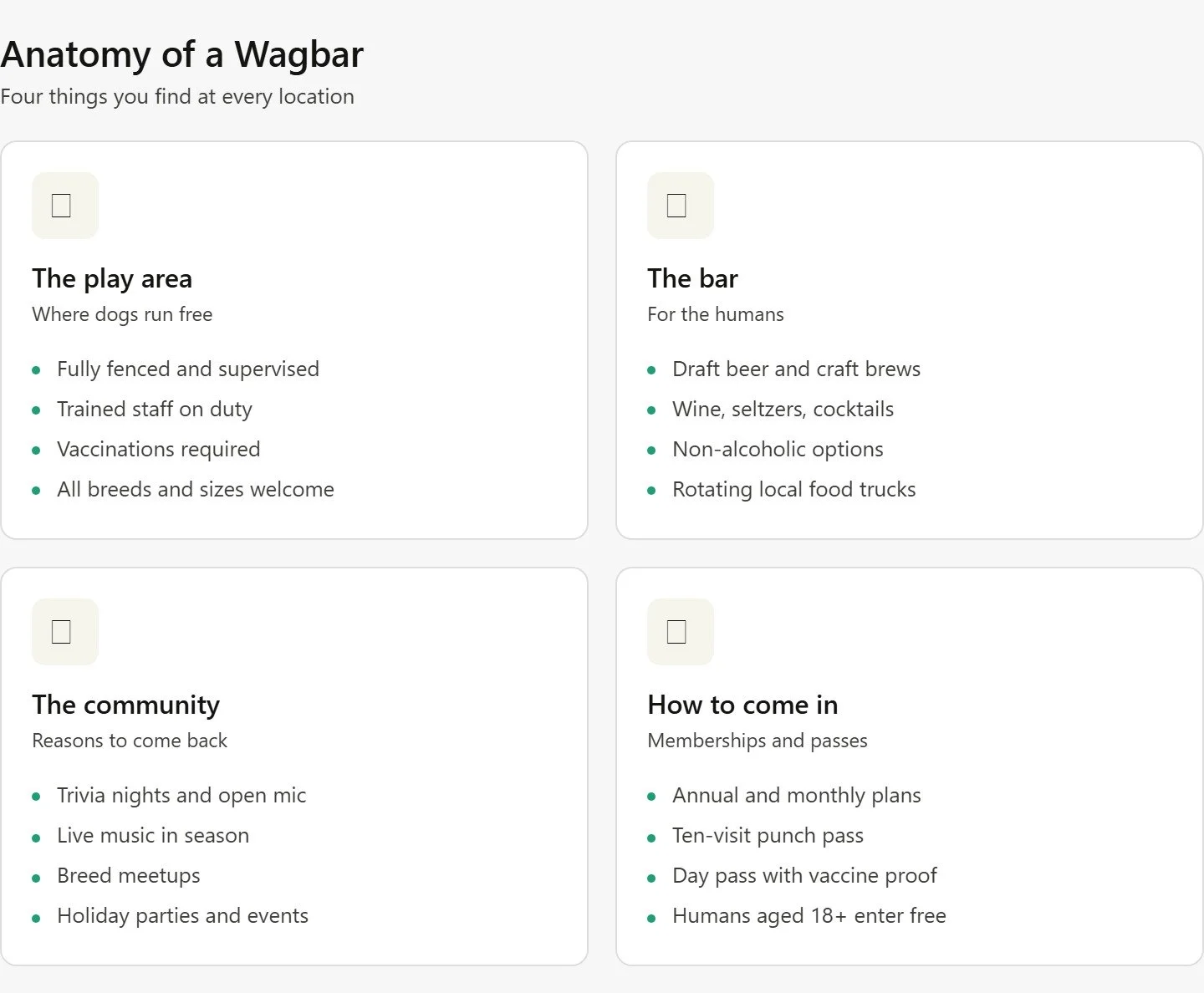
Private parks and membership facilities create two-tier systems in some regions. Free public parks serve general populations while premium paid facilities offer enhanced experiences. Understanding the off-leash dog park and bar concept helps clarify what premium private facilities provide beyond traditional free parks. Wagbar exemplifies this model, providing supervised off-leash environments with bar amenities alongside traditional free dog parks.
Advanced Assessment: Beyond Basic Ratings
Once you've mastered fundamental evaluation, advanced assessment techniques provide deeper insight into park quality and suitability.
Observing Dog-to-Dog Interaction Quality
Body language analysis reveals community health. Healthy play features play bows, self-handicapping by larger dogs, frequent role reversals, and voluntary breaks. Problem signs include stiff posturing, relentless pursuit of reluctant dogs, and mounting beyond brief duration.
Play style compatibility affects your dog's experience. High-arousal players need other high-energy dogs who enjoy rough play. Gentle players prefer calm, polite interactions. Mismatched play styles cause frustration even without aggression. Identify the dominant play style at different times and match visits to your dog's preferences. Different breeds have distinct play styles—understanding family-friendly breed temperaments helps predict compatibility.
Pack dynamics show leadership and balance. Observe whether a few dogs dominate all interactions or if play distributes across multiple groups. Unbalanced dynamics where one or two dogs control all activity create stressful environments for other dogs.
Evaluating Management and Enforcement
Response time to problems reveals management effectiveness. How quickly do staff (at managed facilities) or regular community members address concerning situations? Immediate intervention suggests strong safety culture. Delayed or absent responses indicate problems will escalate.
Rule enforcement consistency matters more than strict rules. Parks where rules are enforced randomly or selectively create confusion and resentment. Consistent application of posted rules—even if you disagree with specific policies—demonstrates functional management.
Communication quality between management and users builds trust. Regular updates about maintenance, clear explanation of rule changes, and responsiveness to concerns indicate management that values community input. Silence or defensiveness suggests disconnect between facility operators and actual users.
Understanding Hidden Costs and Time Investments
Calculate true visit cost beyond obvious fees. Factor in driving time and fuel, parking fees where applicable, and opportunity cost of time spent. Free parks requiring 45-minute drives may cost more in practice than paid parks 10 minutes away.
Time efficiency varies between parks. Some require 15-minute minimum visits for bathroom and brief exercise. Others reward multi-hour stays with progressive socializing and thorough exercise. Match park types to your schedule rather than forcing incompatible arrangements.
Incident probability affects long-term costs. Parks with higher fight or injury rates generate veterinary bills that dwarf membership fees at safer alternatives. Calculate expected costs including low-probability but high-impact incidents when comparing options.
Tracking Your Dog's Individual Responses
Monitor your dog's enthusiasm level across multiple visits. Does your dog rush toward the car when you mention this park or show reluctance? Physical indicators like tail position, ear set, and overall body tension reveal comfort levels more accurately than assumptions.
Recovery time between visits indicates intensity appropriateness. Dogs should recover fully within 24 hours from typical play sessions. Extended fatigue, limping, or behavioral changes suggest either injury risk or poor play match for your dog's fitness level.
Long-term behavior changes show cumulative effects. Positive experiences build confidence, improve social skills, and increase overall happiness. Negative patterns including increased reactivity, resource guarding, or anxiety around other dogs warrant immediate park re-evaluation.
Taking Action: Making Data-Driven Park Decisions
Information only matters when it drives better decisions. Converting assessment into action improves your dog's quality of life through smarter park choices.
Creating Your Personal Park Ranking System
Rank parks in your area by overall score based on weighted criteria. Your top-ranked park becomes your default choice when conditions permit. Second and third options provide backup when your preferred park is overcrowded or you need variety.
Identify best parks for specific situations. Best park for hot weather (maximum shade), best park for socialization (ideal community), best park for exercise (maximum space), and best park for training (low distraction) may all be different facilities serving different needs.
Create condition-based decision trees. "If weather is above 85°F and sunny, use Park A with shade. If weather is moderate, use Park B with open running space. If we need a quick 20-minute visit, use Park C close to home." Automated decision-making saves mental energy.
Building Your Dog Park Rotation
Vary locations rather than visiting the same park exclusively. Different parks expose dogs to diverse situations, other dog populations, and varied physical environments. This variety enriches socialization beyond what single-park attendance provides.
Match park selection to training goals. New challenges require lower-distraction environments. Confidence-building benefits from successful experiences at familiar locations. Off-leash readiness develops progressively through strategic park selection.
Schedule maintenance breaks from overused parks. Even favorite parks benefit from occasional breaks that allow grass recovery, give communities opportunity to address problems, and prevent your dog from developing location-specific bad habits.
Advocating for Improvements at Favorite Parks
Document issues with photos and dates. Concrete evidence of problems supports advocacy efforts more effectively than general complaints. Build files showing problem persistence over time when management ignores concerns.
Engage constructively with park management or municipal authorities. Offer specific, actionable suggestions rather than vague criticism. Volunteer for committees or improvement projects when possible. Change comes through engagement rather than complaints.
Support quality parks through positive reviews and recommendations. Good facilities deserve recognition that helps them justify continued investment. Detailed positive reviews benefit other dog owners while supporting parks you value.
Knowing When to Stop Using Problematic Parks
Establish clear dealbreakers that trigger immediate cessation. Serious injury to your dog or witnessed attack without owner intervention should prompt immediate park abandonment. Life is too short and dogs too precious to tolerate dangerous situations.
Trust your instincts about uncomfortable situations. If something feels wrong even without obvious problems, that unease serves as valid warning. Your subconscious processes more information than your conscious mind articulates.
Seek alternatives rather than accepting substandard options. Quality off-leash experiences exist in most communities. Whether traditional parks in other neighborhoods, private facilities, or organized playgroups, options exist beyond the closest problematic park. To find Wagbar locations offering premium supervised environments, check our facilities across multiple states.

Real-World Applications: Case Studies in Park Assessment
Theory becomes practical through application. These scenarios demonstrate how systematic evaluation prevents problems and optimizes experiences.
Case Study: The Convenient but Concerning Neighborhood Park
Situation: Park located two blocks from home, perfect for quick evening visits after work. However, assessment reveals concerning patterns: owners rarely intervene during rough play, small dogs routinely bullied by large dogs in shared space, waste accumulation by late afternoon, and broken fence section temporarily "fixed" with zip ties for six months.
Assessment outcome: Safety 12/25 (fence issues, size mixing), Cleanliness 10/25 (waste problems), Community 8/25 (poor engagement). Convenience cannot outweigh safety concerns.
Decision: Discontinue regular use despite convenience. Identify alternative park requiring 15-minute drive but scoring Safety 22/25, Cleanliness 20/25, Community 18/25. Net result: safer, more positive experiences worth additional time investment.
Case Study: The Premium Private Facility vs. Free Public Park
Situation: Comparing free municipal park (5 miles away) against paid Wagbar membership (8 miles away). Municipal park offers adequate basics: good fence, separate size areas, basic amenities. Wagbar provides supervised off-leash environment, bar atmosphere for owners, professional cleaning, and curated community.
Assessment outcome: Municipal park scores Safety 18/25, Cleanliness 16/25, Community 15/25, Amenities 12/25. Wagbar scores Safety 24/25, Cleanliness 23/25, Community 22/25, Amenities 24/25. Cost difference: $0/visit vs. $35/month membership.
Decision: Wagbar membership despite higher cost because significantly superior scores across all categories justify expense for dogs visiting 3+ times weekly. Municipal park remains viable backup for days when Wagbar isn't convenient. Explore membership options to see if premium supervised environments fit your needs and budget.
Case Study: The Seasonal Park Challenge
Situation: Park scoring excellently during spring and fall (Safety 22/25, Cleanliness 20/25) becomes problematic in summer and winter. Summer heat without adequate shade creates dangerous conditions. Winter ice and snow without removal makes surfaces treacherous.
Assessment outcome: Same physical park rates differently across seasons. Summer score drops to Safety 15/25 due to heat risk. Winter score falls to Safety 14/25 due to ice hazards.
Decision: Seasonal park rotation. Use high-scoring park during optimal seasons. Switch to climate-controlled or season-appropriate alternatives during summer (early morning visits, shaded parks, or indoor facilities) and winter (plowed parks, weather-appropriate surfaces).
Moving Forward: Becoming a Better Dog Park Consumer
Knowledge transforms passive park users into informed consumers who vote with their feet and voices for better standards.
Remember that you control where your dog spends time. No obligation exists to accept substandard conditions because a park is convenient or your neighbors use it. Your dog's safety and happiness justify the effort required to find quality facilities.
Systematic assessment becomes second nature after practicing it consistently. Initial scorecards feel tedious, but pattern recognition develops quickly. Soon you'll instinctively evaluate new parks using the frameworks described here.
Share your knowledge with other dog owners. The complete dog park guide includes collective wisdom from thousands of experiences. Contributing your observations strengthens the entire community's ability to make informed decisions.
Quality standards improve when consumers demand them. Parks that lose visitors due to poor maintenance eventually face pressure to improve or face closure. Your choices send signals about what communities value and what they'll tolerate.
The right park makes every difference between stressful outings and joyful experiences. Dogs deserve environments where they can socialize safely, exercise thoroughly, and build confidence among their own kind. You deserve facilities that make supervision easy and enjoyable rather than exhausting and frightening.
Start your assessment journey today. Visit a park you're considering with your new evaluation framework. Take notes. Assign scores. Compare results with your impressions. You'll be surprised how systematic evaluation reveals details you'd previously overlooked and helps you articulate why certain parks feel right while others don't.
Your dog is counting on you to make smart choices about where they play, who they interact with, and what risks they face. Informed evaluation protects them while maximizing the enormous benefits quality dog parks provide. For those interested in the business side of creating quality dog park experiences, understanding dog franchise opportunities reveals how premium facilities like Wagbar maintain the high standards this guide describes.