

Cleaning and Sanitation Protocols at Off-Leash Dog Bars
Top TLDR: Cleaning and sanitation protocols at off-leash dog bars combine hospitality health code requirements with pet-care disease prevention into a single daily routine. Wagbar runs documented opening, mid-shift, and closing checklists covering yard waste pickup, surface cleaning, water station rotation, glassware sanitation, restroom upkeep, and outbreak response. Prospective franchisees should adopt these standards at every location and post them where staff and guests can see them.
Cleanliness is the single biggest reason guests return to a dog bar or never come back. A guest who finds dog waste in the yard, a sticky bar top, or a dirty water bowl is unlikely to bring friends. A guest who watches staff clean up promptly, hand a fresh glass over the bar, and rotate water stations regularly tells everyone they know. For prospective Wagbar franchisees and other pet industry entrepreneurs, getting the cleaning playbook right is one of the highest-impact investments in long-term repeat business.
This page walks through the cleaning and sanitation protocols an off-leash dog bar actually needs, why each category matters, and how Wagbar's franchise system gives new owners a documented standard from opening day onward.
Why Off-Leash Dog Bars Need Hybrid Cleaning Protocols
A traditional bar follows hospitality health code: handwashing stations, three-compartment sinks, food contact surface sanitation, ice handling, and restroom standards. A traditional pet business follows pet-care protocols: waste pickup, disease prevention, surface disinfection, and animal area cleanliness. An off-leash dog bar has to do both at the same time, in the same physical space, with the same staff.
That hybrid requirement is what makes off-leash dog bar cleaning more complex than either category alone. Bar staff need to know when to wash hands between cleaning the yard and pouring a beer. Yard staff need to know which disinfectants are dog-safe and which aren't. The off-leash dog bar concept requires a single playbook that covers both worlds, because guests judge cleanliness based on what they see across the entire venue, not by section.
Yard Waste Pickup and Disposal Standards
Dog waste pickup is the most visible cleaning task in any off-leash yard. Best practice is immediate pickup by the dog's owner with backup pickup by staff if the owner doesn't respond quickly. Waste bags and lidded disposal stations should be placed at multiple points around the yard so no guest is more than 15 to 20 feet from a station.
Daily yard cleaning at opening should include a full walk of the yard with a waste-pickup tool, even if owners cleaned up the night before. Surfaces that received waste during the previous day need attention because residue and odor can transfer to dogs that play in those spots. Disposal containers should be lined, lidded, and emptied at minimum twice a day in busy seasons. The staffing and operations practices at Wagbar build these checks into every shift schedule across the network.

Surface Cleaning for Turf, Gravel, and Concrete
The yard surface determines which cleaning agents and which methods work. Artificial turf with a backing system and infill needs periodic deep rinsing with a dog-safe enzymatic cleaner that breaks down urine and waste residue trapped in the infill. Without that step, urine builds up and produces ammonia smell within weeks.
Decomposed granite or pea gravel surfaces drain better but require periodic top-dressing because urine and waste contaminate the upper layer over time. Some yards rake and replace the top inch of gravel every several months. Concrete or sealed-surface areas accept standard quaternary disinfectants safely after dogs are off the surface, with proper rinse and dry time before dogs return. The Weaverville has refined surface care across multiple seasons and shares those protocols with new franchisees during training in Asheville.
Communal Water Stations and Disease Prevention
Communal water bowls are one of the most overlooked disease vectors in any off-leash yard. Water bowls accumulate saliva, debris, and bacteria within hours, which is how kennel cough and other respiratory infections move through a dog population. Fresh water rotation should happen multiple times a day, with a full disinfection of the bowl, not just a refill.
Best practice is a station rotation: while one bowl is in use, a backup bowl is being washed in a three-compartment sink with detergent, sanitizer, and rinse cycles, then air-dried before the swap. Stainless steel bowls are easier to sanitize than plastic, which can develop scratches that harbor bacteria. Some yards offer a refillable water station with a foot-operated spigot for owners to top off their dog's personal travel bowl, which reduces communal contact entirely. The dog health and safety standards Wagbar publishes for guests reinforce why water station discipline matters at the daily operations level.
Bar Area Sanitation Under Health Code
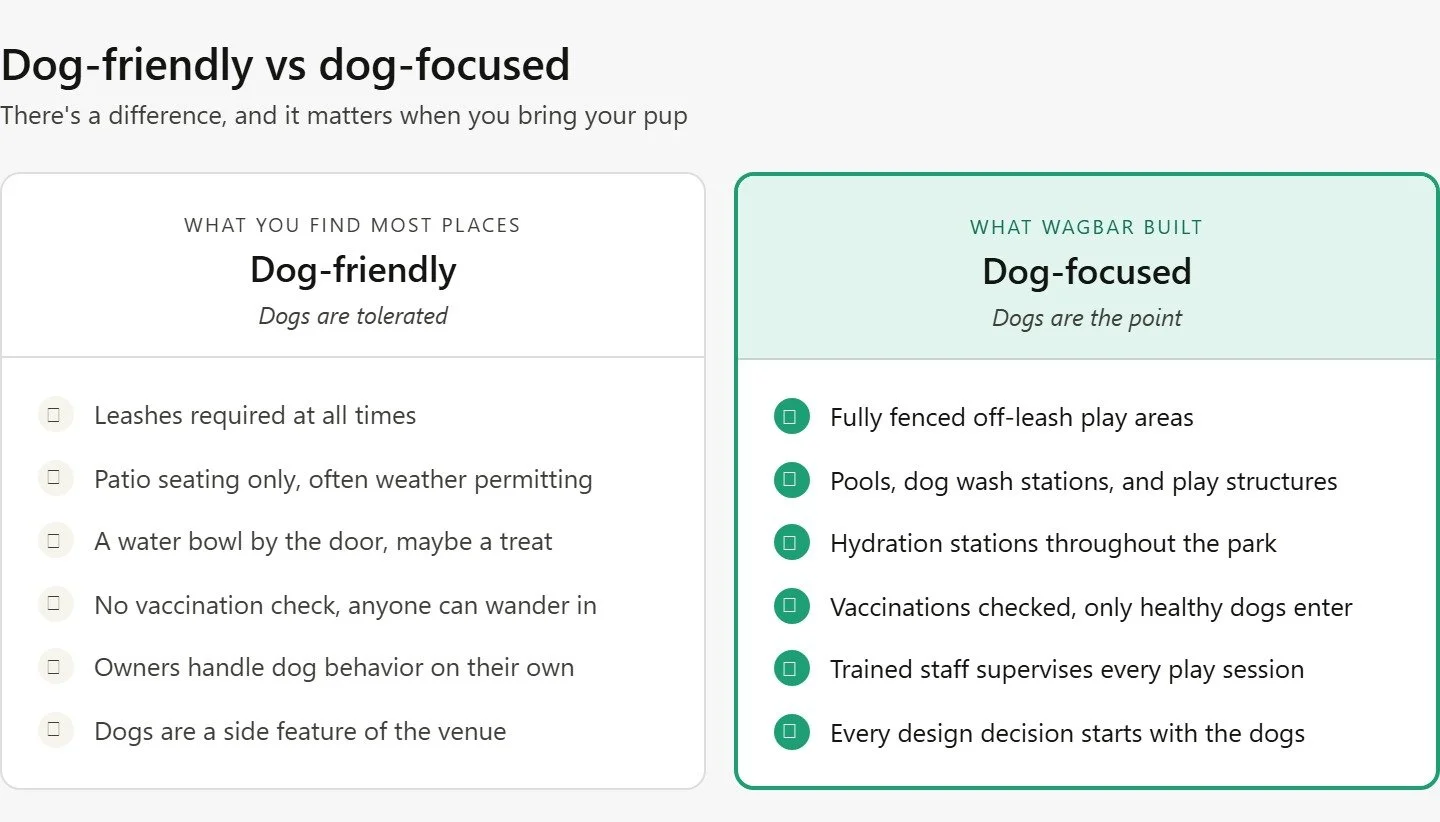
The bar side of an off-leash dog bar follows standard hospitality health code, with one important addition: the customer base brings dog hair, slobber, and outdoor debris into the space. Bar tops need wipe-downs more often than a typical bar, and beverage equipment needs frequent visual checks for hair on tap handles, ice scoops, and glassware staging areas.
Health code basics still apply: handwashing stations within reach of every prep station, three-compartment sinks for glassware, properly stored food contact items, and dated rotation for any food service. Most off-leash dog bars partner with food trucks or limit food service to packaged items, which simplifies the health code path. The pet business legal and licensing requirements cluster covers how local health departments review hybrid venues, and what franchisees should expect during inspections.
Glassware, Drinkware, and Cross-Contamination Prevention
Glassware sanitation in a dog bar requires extra discipline because a glass that touches a yard surface, a dog's nose, or a guest's lap that just held a wet dog needs to be removed from rotation. Most off-leash dog bars run glassware through three-compartment sinks or commercial dishwashers between every use, which is standard hospitality practice.
Some operators offer disposable cups for guests who want to take a drink into the yard, which avoids the question of whether a glass that came back from the yard is safe to reuse. Other operators allow personal yard-area drinkware but ban shared use. Whichever approach a location takes, the policy needs to be written, posted, and consistently applied so guests and staff know what's expected.
Restroom Cleaning Standards
Restrooms are one of the highest-visibility cleanliness signals at any venue. At a dog bar, restrooms see both human guests and the occasional dog, and both leave traces. Standard hospitality cleaning frequencies, every 30 to 60 minutes during peak hours, are the floor for off-leash dog bars rather than the ceiling.
Touch-point cleaning includes door handles, faucets, soap dispensers, hand-dryer or paper towel dispensers, and stall locks. Floor cleaning matters because guests track yard debris in. The container bar build-out option Wagbar offers includes converted shipping container restrooms with simple, durable surfaces designed for frequent deep cleaning. Materials matter at this scale because porous surfaces hold odors and bacteria, while sealed surfaces release them with normal cleaning.
Daily Opening, Mid-Shift, and Closing Cleaning Checklists
Cleaning standards work in practice when they're broken into checklists by shift. Opening checklists cover yard walkthrough, waste pickup, water bowl rotation, bar area wipe-down, restroom check, and supply restock. Mid-shift checklists cover restroom rotation, water station rotation, bar surface wipe, glassware throughput, and yard waste check. Closing checklists cover deep cleaning of the bar, yard surface treatment, equipment sanitation, restroom deep clean, and supply prep for the next day.
Posting these checklists in staff areas, training every new hire on them in their first week, and auditing them periodically is what turns standards into habits. The franchise training program Wagbar runs in Asheville covers exactly how to implement these checklists, how to train staff on them, and how to audit them across shifts.
Staff Hand Washing and PPE Standards
Hand washing is the single highest-impact action in any food service environment, and it matters more in an off-leash dog bar because staff move between yard tasks and bar tasks repeatedly. The standard is hand washing with soap and water for at least 20 seconds whenever transitioning from a yard task to a bar task, after restroom use, after eating or drinking, and after handling money.
Personal protective equipment for cleaning includes disposable gloves for waste pickup, eye protection for chemical handling, and appropriate footwear for wet conditions. Gloves used for waste pickup never go anywhere near food contact surfaces. Some yards use color-coded cleaning tools, with one color reserved for bar areas and another for yard areas, to prevent cross-contamination at the tool level. The walkthrough for starting an off-leash dog bar business covers staff training programs in detail, including how to onboard new hires on PPE protocols.
Disease Outbreak Response
Even with strong daily protocols, occasional disease outbreaks happen in any setting where dogs share space. Kennel cough, parvovirus, giardia, and canine influenza are the most common. The Wagbar response model has three steps. Identification through staff observation and owner reporting flags potentially affected dogs. Notification alerts other recent visitors so they can monitor their own dogs and consult with veterinarians. Deep cleaning uses appropriate disinfectants for the specific pathogen, applied to surfaces, water bowls, and any shared items.
Most outbreaks are contained quickly when owners are honest about symptoms and staff respond promptly. Vaccination requirements help significantly: Wagbar requires Rabies, Bordetella, and Distemper for every dog, which removes several of the highest-impact diseases from the equation. The Wagbar FAQ covers vaccination requirements and what owners can do to protect their dogs, including not bringing in dogs that are showing symptoms.
How Wagbar's Franchise Model Standardizes Cleaning Across Locations
A consistent cleaning standard across every location is part of what makes a multi-unit brand work. A regular guest who visits the flagship and then visits a future franchise in Charlotte, Phoenix, or Long Beach should encounter the same waste pickup standards, the same water rotation rhythm, the same glassware sanitation, and the same restroom care. Standardization protects guests, dogs, and the brand's reputation as the network grows.
Franchisees inherit the documented checklists, supply lists, and audit protocols as part of the franchise package. They also receive ongoing updates as the brand refines its standards based on data from across the network. Wagbar's active and developing locations span markets with different climates, customer bases, and health code structures, which means the cleaning playbook has been tested across real operating conditions. The Wagbar franchise model has an initial franchise fee of $50,000 and an estimated initial investment between $470,300 and $1,145,900 depending on market, build-out scope, and equipment selection.
This information is not intended as an offer to sell, or the solicitation of an offer to buy, a franchise. It is for information purposes only. An offer is made only by Franchise Disclosure Document (FDD).
Cleaning standards are also part of how the brand qualifies operators for the 50 percent multi-unit fee discount on three or more units, because operators who run clean locations consistently are the ones the brand wants opening more locations.
Frequently Asked Questions
What disinfectants are safe to use around dogs?
Quaternary ammonia compounds, accelerated hydrogen peroxide products, and dilute bleach solutions are common choices, each with specific dwell times and rinse requirements. Dogs should be off the surface during application and dwell time, and surfaces should be fully rinsed and dry before dogs return. Always check the product label for animal-safe use instructions.
How often should yard waste be picked up?
Immediately when it happens. Owners are the first line, with staff providing backup pickup if owners don't respond. Full yard sweeps happen at opening, before peak hours, and at closing, with spot checks throughout the day. Disposal containers should be emptied at least twice daily in busy seasons.
How does Wagbar handle vomit, diarrhea, or other accidents in the yard?
Staff respond immediately with appropriate cleaning supplies, isolating the area while it's being cleaned. The dog and owner are checked on, and if the dog appears unwell, the owner is asked to take the dog home and consult a veterinarian. The area is disinfected with a pet-safe product and inspected before reopening.
What's the protocol for kennel cough exposure?

If kennel cough is suspected or confirmed in a recent visitor, staff notify other recent visitors, deep-clean shared surfaces and water bowls with appropriate disinfectants, and monitor incoming dogs for symptoms. Dogs showing symptoms should not visit until cleared by a veterinarian. Bordetella vaccination is required for every Wagbar visit, which significantly reduces transmission risk.
How often are water bowls washed?
Communal water bowls should be washed multiple times a day with a full sanitation cycle through a three-compartment sink or commercial dishwasher, not just rinsed and refilled. Bowl rotation lets one bowl be in use while another is being washed and air-dried for the next swap.
Are dogs allowed in the bar area?
Policies vary by location based on local health code and venue layout. Where allowed, dogs follow specific zone rules and stay off bar tops, food contact surfaces, and indoor food prep areas. Most locations let dogs into outdoor seating areas with specific cleanliness expectations.
How does cleaning protocol affect insurance pricing?
Documented cleaning protocols and trained staff reduce claim frequency for slip-and-fall injuries, disease transmission claims, and food service incidents. Insurance carriers typically improve pricing on liability, animal bailee, and food service coverage when operators can show written protocols and audit records.
Can I see the actual cleaning checklists Wagbar uses?
The checklists are part of the franchise operating package provided to qualified franchise candidates. Wagbar shares operational documents, training materials, and audit standards as part of the disclosure and onboarding process for prospective owners.
Bottom TLDR
Cleaning and sanitation protocols at off-leash dog bars combine hospitality health code with pet-care disease prevention through documented opening, mid-shift, and closing checklists. Wagbar's standards cover yard waste, surface cleaning, water rotation, glassware, restrooms, and outbreak response across every location. Prospective franchisees should treat documented cleaning as a competitive advantage that protects guests, dogs, insurance pricing, and long-term repeat business across markets like Asheville, Knoxville, Richmond, and beyond.
A clean, safe space is the foundation of the Wagbar brand promise, and that promise only holds when every shift at every location runs the same cleaning playbook. The franchise system gives prospective owners the checklists, training programs, supply lists, and audit standards to operate that playbook from day one. That combination protects the experience guests expect, the operating margins owners need, and the brand's reputation across a growing network.