

Bringing a Reactive Dog to an Off-Leash Dog Bar: When It Works and When to Wait
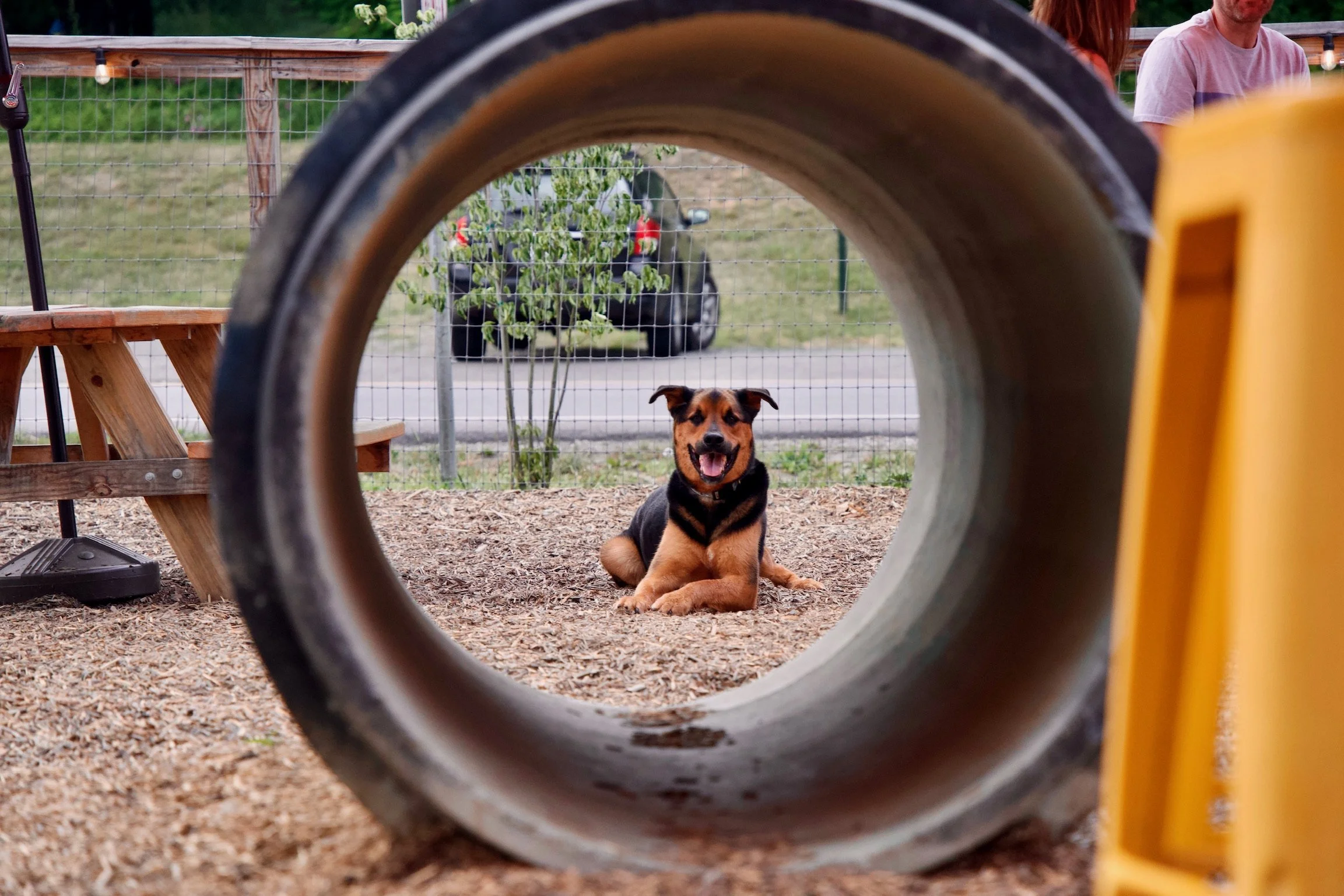
Top TLDR: Bringing a reactive dog to an off-leash dog bar can work if your dog's reactivity is mild, has been worked on consistently, and they can stay below threshold around other dogs at moderate distance. It does not work if your dog has bitten, fought, or shows fear-based aggression. Be honest about which side of that line your dog sits on, and keep working with a trainer if the answer is "wait."
What "Reactive" Actually Means
Reactivity is a behavioral pattern, not a diagnosis. A reactive dog responds to specific triggers (other dogs, strangers, bicycles, skateboards, certain sounds) with intensity that's out of proportion to the trigger itself. Lunging, barking, growling, freezing, spinning at the end of a leash, or shutting down completely all count.
The cause varies. Some reactive dogs are fearful. Some are frustrated barrier-reactive (fine off-leash, lose it on a leash). Some are over-aroused and have trouble coming down. Some have a single bad experience driving the behavior. The starting point isn't to label your dog, it's to figure out what their reactivity looks like and where it shows up.
If you're new to working with a reactive dog, the reactive dog training arc from lunging to calm confidence lays out the full path. This page focuses specifically on whether and when an off-leash dog bar fits into that work.

The Difference Between Reactive and Aggressive
The distinction matters because Wagbar, like most well-run off-leash venues, doesn't accept dogs with a history of aggression. From the Wagbar code of conduct, dogs who exhibit extreme or repeated aggressive behavior are asked to leave and can have their membership revoked. That policy exists to keep every dog in the yard safe.
Reactive and aggressive aren't synonyms. Reactivity is an emotional response that becomes a behavior pattern. Aggression involves intent to harm. Plenty of reactive dogs have never bitten anyone and never will. They bark and lunge from a distance and settle when the trigger goes away. That's reactive.
A dog who has bitten another dog, broken skin, or had repeated escalating incidents is in a different category. That dog needs more focused work with a behaviorist before any group setting, off-leash bar or otherwise. Be honest with yourself about which side your dog is on. The honest assessment protects your dog, other people's dogs, and your own conscience.
When an Off-Leash Dog Bar Can Work for a Reactive Dog
Some reactive dogs do well at an off-leash dog bar. The patterns that fit are specific.
Off-leash reactivity is often different from on-leash reactivity. A dog who lunges and barks at every dog they pass on a sidewalk leash walk often becomes a normal social dog the moment the leash comes off. The leash itself is a frustration trigger. If your dog has played fine with friend's dogs in fenced yards but lights up on the street, your dog might be a barrier-reactive dog who'd be fine off-leash.
Mild general reactivity that's been worked on for months. A dog who used to react hard, has done counter-conditioning work, and now stays under threshold at twenty feet from another dog can sometimes handle a low-traffic off-leash setting. The key word is sometimes. The handler still has to read the dog every minute and pull them out the moment threshold approaches.
Reactivity tied to specific triggers your dog won't encounter at the bar. A dog who reacts to skateboards or men in hats might be perfectly fine in a yard full of dogs. Know your dog's specific triggers and assess whether the venue contains them.
Reactivity that has shown clear improvement over time. If your dog has been on a training plan and you can point to specific progress (longer time below threshold, faster recovery, lower intensity), the off-leash bar can be the next layer of exposure for the right dog. The off-leash dog bar concept gives you a sense of the venue type before deciding whether the fit is there.
When to Wait (and What to Work On First)
Some reactive dogs aren't ready, and being honest about that is the kindest thing you can do for them.
Wait if your dog has bitten any dog or person, even once. A bite history is a serious data point and warrants direct work with a behavior specialist, not a trip to an off-leash venue.
Wait if reactivity is escalating rather than decreasing. Improvement in reactivity training is uneven, but the trend should be downward over months. If it's gotten worse, something in the plan needs to change before you add any high-stimulation environment.
Wait if your dog can't come down from a reactive episode within a few minutes. A dog who stays activated for fifteen or twenty minutes after a single trigger isn't going to handle a yard with constant low-grade stimulation.
Wait if your dog is fear-aggressive specifically. Fear-based aggression is its own training arc and requires careful exposure work with a trainer. Throwing a fear-aggressive dog into a busy off-leash yard is the opposite of helpful.
Wait if you're not yet reading your dog's body language reliably. A reactive dog at an off-leash bar requires the handler to spot pre-threshold signs in real time. If you can't read your dog yet, work on that first. The body language decoder for canine communication signals is the foundation here.
The work to do in the wait period: structured walks with calm dogs at a distance, parallel walks with one trusted dog, controlled meetups in a friend's yard with a single calm dog, and ongoing counter-conditioning at whatever distance keeps your dog under threshold. Most dogs can move forward over weeks to months, not days.
Pre-Visit Prep for a Reactive Dog
If you've decided your dog is ready for a try, the preparation matters more than for an average first visit.
Confirm the medical baseline. Wagbar requires every dog to be at least six months old, spayed or neutered, and current on Rabies, Bordetella, and Distemper. Print or photograph your records before you go. The health and safety standards get checked at every first visit.
Pick the lowest-traffic time you can. Mid-week mornings are usually calmest. Avoid weekend afternoons for the first attempt. Check with the location ahead of time if you want a sense of typical traffic.
Tire your dog out beforehand, but not to exhaustion. A reactive dog with normal energy reserves regulates better than one that's bouncing off walls. A long sniffy walk an hour before the visit takes the edge off without leaving them depleted.
Bring high-value treats, but plan to use them outside the play area. Wagbar policy bans treats inside the off-leash space. Use them in the parking lot before you go in to set a calm baseline, then put them away.
Have an exit plan. Know where your car is, know how you'll get from the yard to the gate calmly, and decide ahead of time what your "we're leaving" trigger is going to be. Reactive dogs benefit from short, successful visits more than long, mixed-success ones.
Tell the staff. When you check in, mention your dog is working through reactivity. Wagbar staff are trained on dog behavior and appreciate the heads-up. They can keep a closer eye on the early minutes and give you support if something starts going sideways.
The First Visit: Setting It Up to Succeed
The first visit with a reactive dog should be designed for success, not for a full social experience.
Walk the perimeter first, on leash, before unclipping. Let your dog see the yard, take in the smell of the dogs already there, and get a read on the energy. Most off-leash venues including Wagbar use a double-gate entry, so you have a moment in the in-between space to assess.
Pick your spot before unclipping. Pick a corner of the yard with a few feet of buffer from any cluster. Sit down. Let your dog get curious on their own terms.
Keep the first visit short. Twenty to thirty minutes is plenty. Leave on a calm note rather than an exhausted or stressed one.
Don't push interaction. If your dog stays close to you and watches the other dogs from a distance, that's a successful first visit. Letting them choose their level of engagement builds confidence faster than forcing them into the middle of the yard.
Watch for the calm signs as much as the warning signs. A reactive dog who lies down, sniffs the ground, or accepts a slow scratch from you is regulating. Those are big wins on visit one. The deeper socialization and behavior fundamentals explain why these tiny calm moments matter and how to stack them.
If the visit is going well at twenty minutes, you can add five or ten more. If it's not, leave. The decision belongs to the dog you actually have, not the one you wish you had.
Reading Your Dog's Threshold in Real Time
Threshold is the line between "your dog is processing the environment" and "your dog has stopped processing and started reacting." A reactive dog at an off-leash bar lives close to that line, and your job is to keep them under it.
Below threshold looks like a dog who notices things, looks at them, looks at you, sniffs around, settles. They might be alert but they're flexible. They take treats if you offer them, they respond to their name, they can disengage from a stimulus when you call them.
Above threshold looks different. Stiff body. Hard stare. Inability to look away from a trigger. Refusal to take treats. Not responding to their name. High whining or low growling. Lip licks combined with whale eye (showing the whites). Once a dog is above threshold, training shuts down. The brain isn't available for new information, only for managing the perceived problem.
The signs that they're approaching threshold are subtler. A slight lean forward. A pause that lasts a beat too long. A shift from soft eyes to harder ones. Faster breathing. The trick is to spot these and create distance before they tip over.
If you notice approach signs, stand up, call your dog, walk to a different part of the yard, and reset for sixty seconds. Most dogs can come back down. If they can't come back down within a minute or two, the visit's done.
The warning signs that precede dog conflicts are written for any dog, but they're especially useful for reactive-dog handlers because the early signs come faster.
When to Cut the Visit Short
Cutting a visit short isn't a failure. It's the right move done well.
Cut the visit if your dog hits threshold and can't come back down within a minute or two. Cut it if they have a vocal blow-up, even a brief one. Cut it if the energy in the yard shifts (a high-arousal dog enters, a play group ramps up to chaos). Cut it if your dog stops engaging with you or stops noticing you exist.
When you cut a visit, do it without drama. Walk to your dog, leash them quietly, walk to the gate. Don't lecture them. Don't apologize loudly to other owners (a quiet "we're heading out" is enough). Don't make it a punishment. Just leave.
Once you're home, give your dog a long settle period. Reactive dogs often need three to six hours after a stressful event to fully come down. Quiet space, water, a chew, and your calm presence are the recipe. Avoid stacking another stressful thing on top (vet visit, grooming, big walk) for the rest of the day.
The next visit attempt comes after at least a few days, ideally a week. Don't try to "make up" for a short visit by going back the next morning. That's how single bad visits become a pattern. Cutting short calmly is part of being a thoughtful park citizen, and the complete dog park etiquette and safety reference covers the broader norms that keep shared off-leash spaces working.
Building Up Tolerance Over Multiple Visits
If the first visit goes well, the path forward is gradual exposure with care.
Visit two should be short and similar. Same time of day, same length, same general approach. Familiarity layers on familiarity. Don't add intensity yet.
Visit three or four can extend the time. If your dog is settling within ten minutes and staying below threshold for the duration, you can stretch toward forty-five minutes. Watch for late-visit fatigue, which often produces threshold drops just before you'd otherwise have wrapped up.
Once your dog is consistently calm at quiet hours, try a slightly busier window. Maybe a Tuesday afternoon instead of a Tuesday morning. Layer up incrementally. Skip the Saturday afternoon test until your dog has built real confidence.
Add interaction gradually, on your dog's terms. A reactive dog who decides to approach another dog on their own is a different animal from one who's pushed into interaction. Let them choose. The first time they walk up to another dog and sniff politely is a milestone.
Track progress. Keep a short note on your phone after each visit. What time, how long, your dog's state at arrival, departure, and any noteworthy moments. Reactive dog work is slow, and tracking helps you see the trend you might otherwise miss. The off-leash readiness checklist gives you the skill milestones to look for as confidence builds.
Some reactive dogs become regular off-leash bar dogs. Some only ever do well at quiet hours. Some realize the off-leash bar isn't their thing and the work moves elsewhere. All three outcomes are fine. The point isn't to force your dog into a specific kind of social life, it's to let them have whichever social life they can handle well.
Frequently Asked Questions
Can I bring my reactive dog to Wagbar without telling staff?
You can, but it's smarter to tell them. Mentioning your dog is working through reactivity gives staff the background they need to be helpful. They can keep a closer eye on the first few minutes, give you space if you need to manage a moment, and help you assess whether the timing fits your dog's current capacity. The information helps; it doesn't get you turned away.
What if my dog has been reactive for years and we've never trained for it?
Start with training, not with a trip to the bar. Reactivity that hasn't been worked on isn't going to resolve in a busy off-leash environment. A few weeks to a few months with a positive-reinforcement trainer who has reactivity experience will move the needle in ways an unstructured visit won't.
Is the off-leash dog bar a good "exposure therapy" for reactivity?
No. Exposure therapy works at controlled distances with controlled triggers and a clear training plan. An off-leash dog bar is the opposite of controlled. Use it when your dog is already managing well at lower-intensity exposures, not as a forcing function.
What if my dog used to be social and recently became reactive?
A change in baseline behavior is worth a vet visit before any training plan. Pain, thyroid issues, vision changes, and other medical factors can produce sudden reactivity. Once medical causes are ruled out, work with a trainer to identify what changed and rebuild from there. The path back is usually faster for a previously social dog than starting from scratch.
Are there breeds that handle off-leash dog bars worse than others when reactive?
Reactivity isn't strictly breed-driven, but high-arousal breeds like herding dogs, terriers, and some sighthounds can have a steeper climb if they're reactive. Slower-paced breeds tend to recover from triggers faster. Read the dog in front of you regardless of breed. The common breeds at Wagbar overview gives a sense of the typical mix you'll encounter.
What if I just want to come without my dog while we're working on reactivity?
That's a great option. Wagbar entry is free for humans 18 and over with or without a dog. Coming solo lets you watch how the yard works, get a feel for the typical traffic, and chat with regulars about how their reactive dogs handled the transition.
Bottom TLDR
Bringing a reactive dog to an off-leash dog bar can be the right next step or the wrong one, depending on the type and severity of the reactivity. Mild, well-worked-on reactivity often does well at quiet hours with careful prep. Bite history, fear aggression, or escalating reactivity all mean wait. Talk to staff, plan a short first visit, and let your dog choose the level of engagement.
