
Nose Boops and Tail Wags: What Dog Greetings Mean at an Off-Leash Dog Bar
Top TLDR
Two dogs touching noses is the opening line of a conversation. Dog greetings happen in three quick stages: approach, sniff, and decision. Loose bodies, curved paths, and soft tails mean things are going well. Stiff stares and frozen posture mean they are not. Watch the first ten seconds of every introduction, then step in early if the shape of the greeting changes.
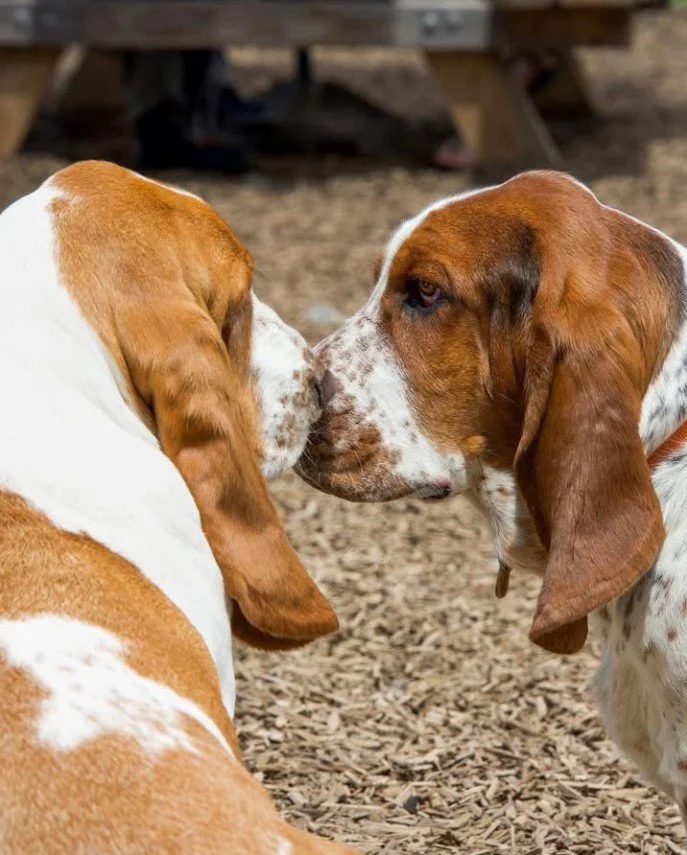
Two basset hounds stood nose to nose in the wood chips last week, ears dragging the ground, one tail sweeping slow and wide behind a very serious face. Nobody taught them that. It took about four seconds, and then both of them wandered off toward the water bowls like the whole thing had been settled.
That four seconds carried more information than most people realize. Dogs open almost every social exchange with their nose, and the shape of that first contact tells you whether the next twenty minutes will be easy or whether you should call your dog over and reset. Regulars at our asheville park get good at reading it fast, mostly because they see a few thousand introductions a month.
The same patterns show up at every one of the Wagbar locations across the country, from mountain air in North Carolina to Phoenix heat. Dogs are consistent about this stuff. Once you know what the stages look like, you stop guessing and start watching.
What a Nose Boop Actually Means
A nose boop is a scent handshake, not a kiss. Dogs lead with the nose because scent carries far more detail than sight does, and the muzzle is the safest part of the body to offer first. It is close range, low commitment, and easy to withdraw from. Two dogs can touch noses and end the exchange in under two seconds with nobody's feelings hurt.
What matters is what happens next. A healthy nose greeting is brief. The dogs touch, one or both shift to the flank or the rear, and then somebody breaks off. Trouble looks different: two dogs locked nose to nose, both stiff, neither one moving, holding position for five or six seconds. That is not affection. That is a standoff, and it usually needs a human to interrupt it before either dog decides how to break the tie. Owners who spend a little time reading canine communication signals catch that difference immediately.
The Three Parts of a Healthy Dog Greeting
Every clean introduction has the same three-part shape, and it usually finishes in under fifteen seconds.
The approach sets the tone. Comfortable dogs walk a curve. They arrive at an angle rather than head-on, which lets both parties keep their options open. A straight-line charge, even from a friendly dog, puts pressure on the other one.
The sniff should be short and mobile. Nose, then flank, then rear, with both dogs moving the whole time. Circling is normal. Stillness is the part to watch.
The decision comes fast. One dog invites play with a bow, a paw slap, or a bouncy retreat. Or both dogs shrug and go looking for something better to smell. Both outcomes are fine.
When a greeting stalls at stage two, something is off. Either one dog is uncomfortable and freezing, or one is guarding space. This is the same sequence covered in Wagbar's material on canine social development, and it holds across breeds, sizes, and ages.
Tail Position Tells You More Than Tail Speed
Most people watch tail speed. Position is the better signal.
Height at the base is the emotional volume knob. A tail carried at spine level or slightly below reads neutral to happy. A tail flagged high and rigid over the back reads aroused, and arousal cuts both ways.
Width of the sweep matters more than tempo. Wide, loose, whole-hip wags belong to relaxed dogs. Fast little vibrations at the tip, with a stiff base, often show up right before a dog snaps at another dog's face.
A tucked tail is a request for space. It is not stubbornness and it is not something to push through. Let that dog choose the next move.
Some tails lie by accident. Curled Husky tails and stubby Corgi tails sit high naturally. Read the rest of the body before you read too much into the back end.
Combine tail data with the mouth and the eyes. A soft open mouth, a little squint, and loose shoulders will tell you more than the tail ever could. Wagbar's rundown on group play and dog park safety walks through how those signals stack up in a crowd.
Why Basset Hounds Greet the Way They Do
Bassets are built for the nose. The American Kennel Club describes the breed as a scent hound whose sense of smell ranks second only to the bloodhound, with long low-hanging ears that sweep ground scent upward toward the muzzle as the dog moves. When a basset takes a slow, thorough run at another dog's face, it is doing the job it was bred for.
That build changes the whole greeting. Bassets sit low, so they approach without towering over anybody, which nervous dogs appreciate. They also move slowly, which gives the other dog time to opt out. The tradeoff is that all that loose skin and heavy bone makes their body harder to read: a basset can be tense and still look like a puddle. Watch the ears and the corners of the mouth instead of the shoulders. Owners of other slow, low, scent-driven breeds run into the same thing, which is part of why the roundup of breeds you'll meet at Wagbar spends time on how build shapes behavior.
How Off-Leash Space Changes Dog Greetings
Leashes wreck greetings. A four-foot tether removes the curved approach, blocks the escape route, and transmits every bit of owner tension straight down the line into the dog's chest. Two dogs meeting nose to nose on tight leashes are having a conversation with the volume stuck on high.
Take the leash off inside a fenced park and the whole exchange changes shape. Dogs can arc in, break away, circle back, and try again a minute later. They can also walk off, which is the single most underrated skill in dog social life. That freedom is the entire point of the off-leash dog bar concept: open ground, clear sight lines, and enough room that no dog gets cornered against a fence while somebody sniffs their face.
Green Flags: Signs the Greeting Is Going Well
Both dogs keep moving. Motion means neither one is stuck.
The greeting breaks off on its own. Short is good. Two seconds is plenty.
Somebody offers a play bow. Elbows down, rear up, tail loose. That is an invitation, and it is the clearest yes in the language.
You see self-interruption during play. Dogs that pause, shake off, and restart are regulating themselves well.
Mouths are open and soft. A relaxed jaw with a little tongue showing is a dog with nothing to prove.
Ears move. Ears that swivel and shift belong to a dog gathering information, not a dog braced for something.
If you want the full version of what good behavior looks like across a busy afternoon, Wagbar's page on dog park etiquette basics covers the human half of the equation too.
Yellow Flags: When to Step In
Freezing. Any dog that goes completely still mid-greeting is telling you something. Interrupt cheerfully and move on.
Hard, unblinking eye contact. Direct staring between two dogs at close range escalates quickly.
A stiff high tail with a tight vibrating tip. Arousal without play signals.
One dog repeatedly pinning or standing over another. Once is play. Four times in a row is pressure.
Lip curling, closed tight mouth, or a wrinkled muzzle. Early warnings, and they deserve respect.
A dog trying to leave with nowhere to go. Cornered dogs make bad decisions. Clear a path.
Stepping in early is not overprotective, it is the whole job. Call your dog, walk twenty feet away, let everybody shake off, and try again in a few minutes. The material on reading warning signs early breaks down the full escalation ladder if you want to get sharper at catching stage one instead of stage four.
Prep Work That Makes Greetings Easier
The greeting starts before you get out of the car. A dog who arrives overstimulated after twenty minutes of whining in a crate is going to meet the first dog badly.
Walk the block outside the fence first. Let your dog empty out, sniff the perimeter, and watch the park through the gate for a minute or two. Come mid-morning or late afternoon on a weekday if your dog does better with fewer bodies around. Make sure recall works when it counts, because the ability to call your dog out of a bad moment is worth more than any correction. The off-leash training checklist is a decent honest measure of whether your dog is ready for a busy park at all.
Bringing a Shy or Reactive Dog
Some dogs need a different plan, and that is completely normal. A dog who barks at other dogs on leash is often fine off leash, because most of that behavior comes from restraint and frustration rather than dislike.
Start with a short visit. Ten minutes at a quiet hour, then leave while things are still going well. Sit near the fence line rather than the middle of the park, so your dog has a wall at their back and a clear view. Do not walk them into the middle of a group. Let them decide when to move. If greetings go sideways more than once, work on the underlying pattern first: Wagbar's piece on reactive dog training at home covers the groundwork that makes park visits realistic later.
Puppies and Their First Real Greetings
Wagbar requires dogs to be at least six months old, and greeting behavior is a big part of why. Young puppies have no brakes and no vocabulary yet. They rush faces, they ignore the signals adult dogs send, and a bad experience during that window can stick for years.
Six months gives a puppy time to build a basic social repertoire in smaller, calmer settings first: one or two known adult dogs, controlled introductions, plenty of breaks. By the time they hit a busy off-leash park they can read a play bow, respect a turned back, and take a correction from an adult dog without falling apart. The puppy socialization timeline maps out what to work on during those early weeks so the first park visit goes smoothly.
What Happens Before Any Dog Says Hello at Wagbar
Screening happens at the gate, every time. Every dog needs current proof of Rabies, Bordetella, and Distemper vaccinations. Dogs must be at least six months old and spayed or neutered. Human entry is free for guests 18 and over, with or without a dog.
Inside, the park is fully fenced and staffed by trained team members whose job includes breaking up roughhousing before it turns into something. There are no toys or treats allowed in the park, which removes two of the most common triggers for scuffles between dogs who otherwise get along fine. There is also a zero-tolerance policy for aggressive behavior from dogs and humans alike, and dogs with a reported history of aggression are not accepted as members. Those rules exist so that a nose boop stays a nose boop, and the details are laid out on the page covering health and safety rules at Wagbar. Wagbar was named to USA Today's 10Best list of dog bars in 2024, and gate screening is a large part of how a park that busy stays calm.
Bottom TLDR
Dog greetings tell you almost everything about how a visit will go. Read the approach, not just the tail. Curved lines, loose muscles, and short sniff sessions signal comfort, while stillness and hard eye contact signal pressure. Give your dog room to walk away, keep the first visit short, and step in during the first ten seconds rather than the tenth minute.
Frequently Asked Questions
Is nose-to-nose contact between dogs safe?
Usually, when it stays brief. A quick touch followed by movement to the flank or rear is normal. Prolonged nose-to-nose contact with both dogs stiff and still is the version to interrupt, because neither dog has an easy way out of the position without escalating.
Does a wagging tail always mean a friendly dog?
No. Tail motion signals arousal, and arousal includes stress and conflict. A loose, wide, hip-swinging wag with a soft body reads friendly. A stiff tail held high with a fast vibrating tip often comes right before a warning snap. Read the whole body.
How long should I let two dogs sniff each other?
A few seconds is plenty. If the greeting passes ten seconds without either dog moving away or shifting position, call your dog and create some distance. Short greetings that end voluntarily are the ones that lead to good play.
Why can't I bring treats or toys into the park?
Food and toys create competition between dogs who would otherwise ignore each other. Removing both takes the most common flashpoints out of the environment. The full park rules and visitor policies are listed on the visitor questions page.
My dog barks at other dogs on walks. Should we skip the park?
Not necessarily. Leash reactivity often disappears once the leash does, because much of it comes from restraint. Start with a short off-peak visit, stay near the fence, and leave early while things are calm. If it does not improve, work on it separately before trying again.
What if my dog just wants to sniff the ground and ignore everyone?
That is a perfectly good visit. Scent hounds in particular treat a park as a smell library rather than a social club. Sniffing is mentally tiring work for a dog, and a quiet afternoon with their nose down counts as a full outing.
Come Say Hello
The two bassets from that afternoon did not become best friends. They touched noses, gathered whatever information bassets gather, and went their separate ways. That is what most dog greetings look like, and it is exactly what a well-run park should produce: hundreds of small, boring, uneventful introductions per day.
Bring your dog, grab a drink, and watch the gate for a while. You will start seeing the three-part pattern within an hour. If you visit often enough that the day passes get old, the membership options also spare you from showing vaccination paperwork on every trip.