
How to Spend Summer With Your Dog. 25 Activities Beyond the Daily Walk
The temperature goes up and suddenly you realize something. Your dog has been doing the same walk, on the same route, at the same time, for the past nine months. And now that summer is here, both of you deserve better than that.
Most dog owners fall into the same pattern. Morning walk. Evening walk. Maybe a trip to the dog park on the weekend. But summer opens up an entire world of activities that most people never think about. And the surprising part is that the one thing your dog probably wants to do most this summer is not what you would expect.
This is your guide to actually spending summer with your dog. Not just surviving it.
The Problem With "Just Walking" in Summer
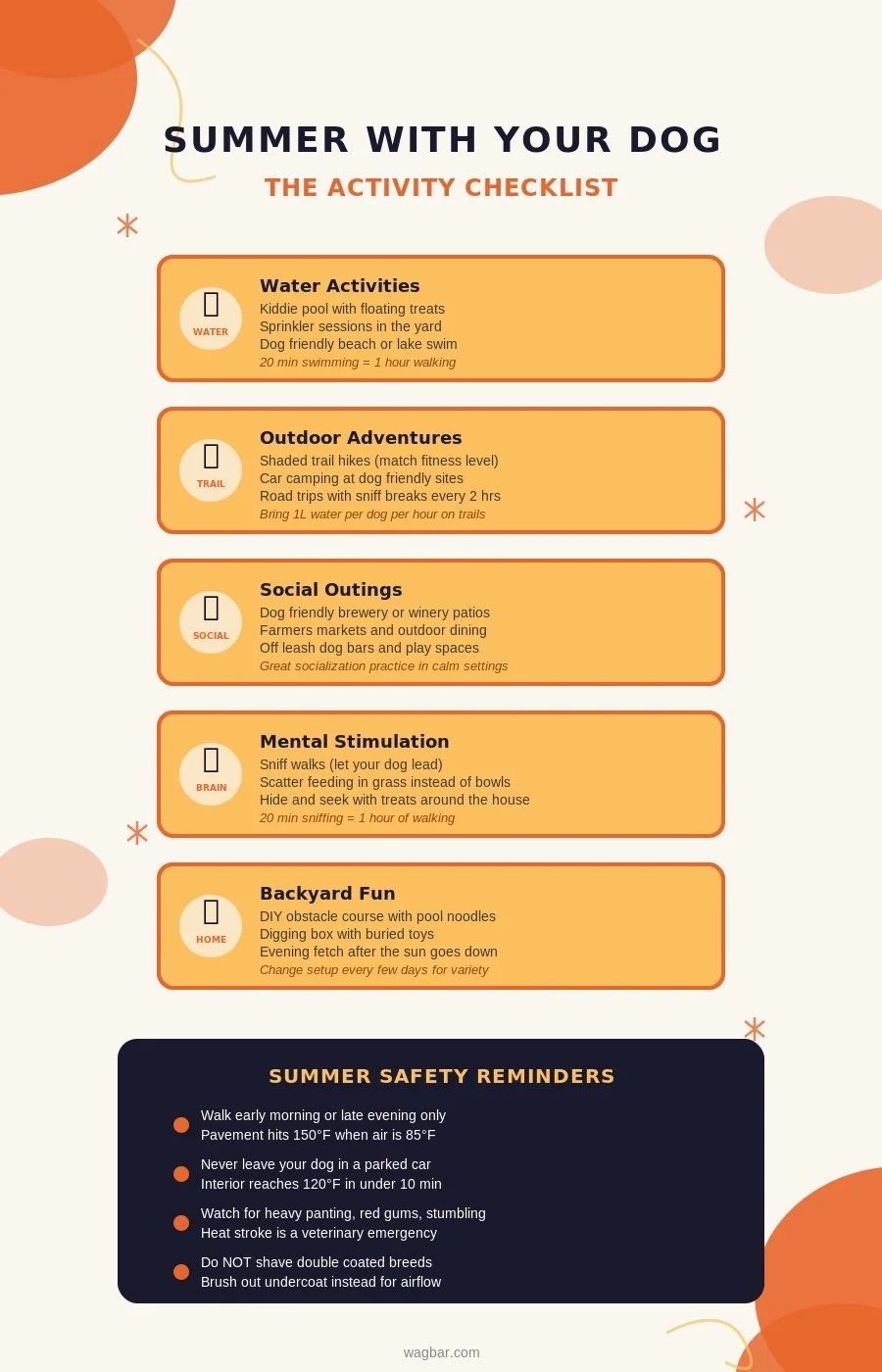
Walking your dog in July is not the same as walking in October. Pavement temperatures can reach 150 degrees Fahrenheit when the air temperature is only 85. That is hot enough to burn paw pads in under a minute. The five second rule is real. If you cannot hold the back of your hand flat on the pavement for five seconds, it is too hot for your dog to walk on.
Beyond the heat risk, summer walks during peak hours are just less enjoyable. Your dog is panting harder, drinking more, and moving slower. That does not mean you stop exercising your dog. It means you shift when and how you do it.
Early morning and late evening are the windows. Everything in between is an opportunity for something different.
Water Activities That Actually Work
Not every dog is a natural swimmer, and that is perfectly fine. But there are water activities that work for every comfort level.
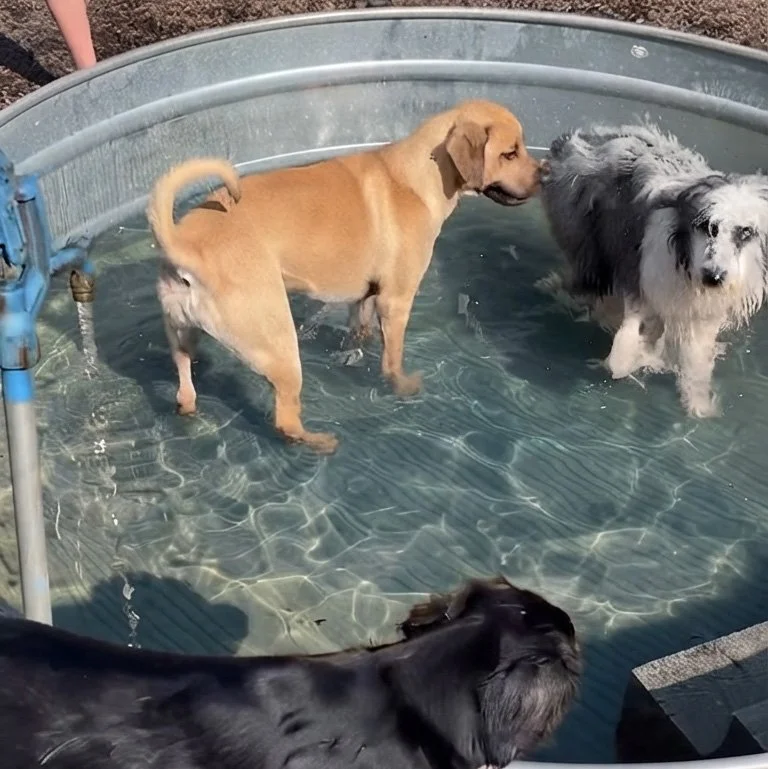
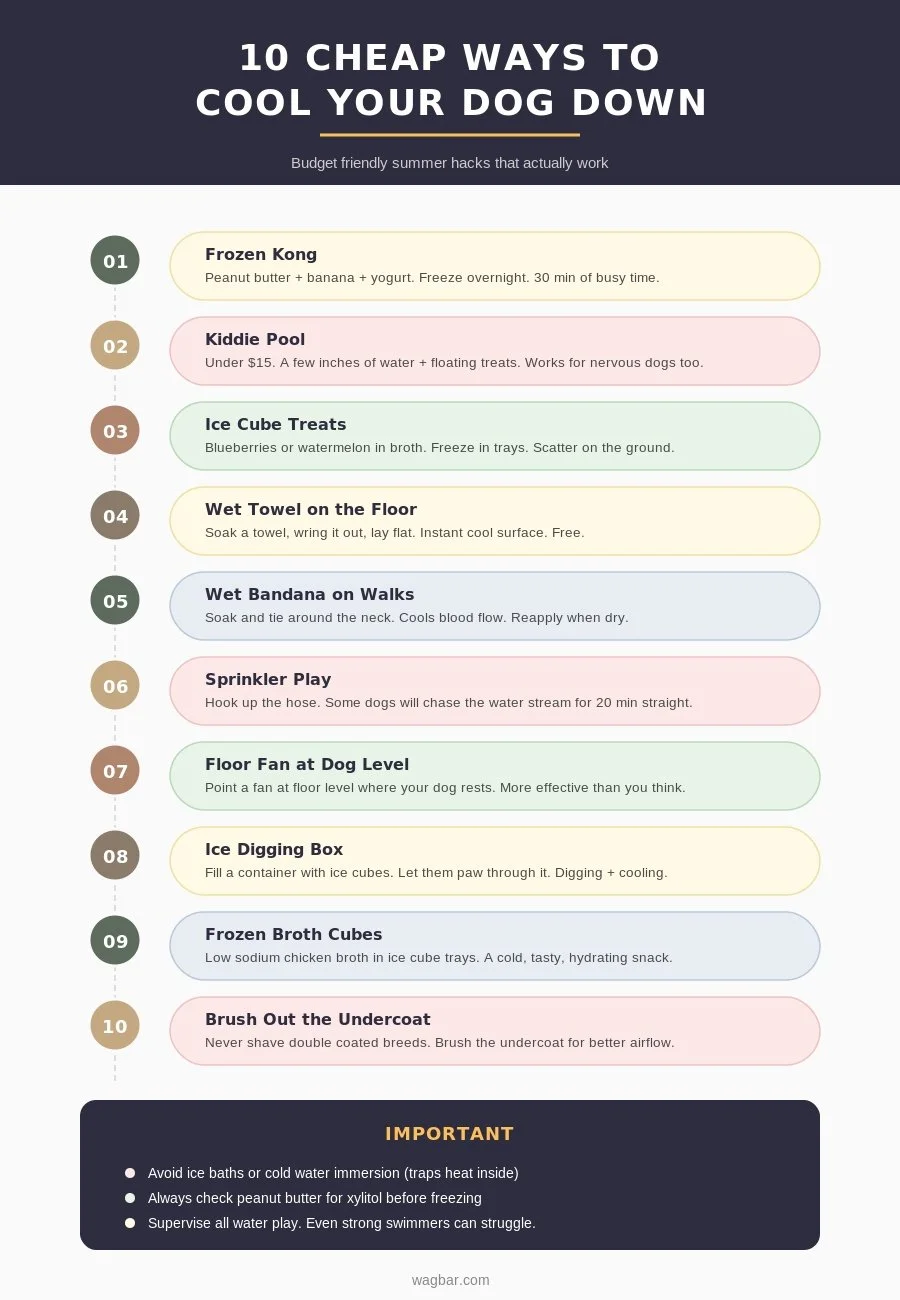
A plastic kiddie pool in the backyard is one of the cheapest and most effective summer hacks for dogs. Fill it with a few inches of water, toss in some floating treats, and most dogs will wade in on their own. You do not need a pool that costs more than fifteen dollars. The shallow depth takes the pressure off dogs who are nervous around water, and it gives confident dogs a place to splash and cool off between play sessions.
For dogs who love to swim, lakes and dog friendly beaches offer a full body workout that is easier on joints than running. Swimming for twenty minutes can tire a dog out as much as an hour long walk. Just make sure you rinse off saltwater or lake water afterward, and always supervise. Even strong swimmers can get caught in currents or swallow too much water.
If you have access to a hose and a sprinkler, set it up in the yard. Some dogs will chase the water stream for twenty minutes straight. It is free, it is physical, and it is hilarious.
Hit the Trail Together
Hiking is one of the best summer activities you can do with your dog, but it requires a little planning. Start with trails that match your dog's fitness level. A dog who only walks around the neighborhood is not ready for a five mile mountain trail.
Bring more water than you think you need. Dogs overheat faster than humans, and they cannot tell you when they are thirsty. A collapsible bowl and at least one liter of water per dog per hour is a good starting point.
Stick to shaded trails during summer months. Exposed ridgelines and open fields are beautiful, but they turn into ovens after 10 AM. Forest trails with tree cover keep temperatures significantly lower and give your dog more interesting things to smell along the way.
Watch for signs of overheating. Heavy panting that does not slow down when you rest, bright red gums, excessive drooling, stumbling, or lying down and refusing to move are all warning signs. If you see any of them, stop immediately, move to shade, offer water, and wet your dog's paws and belly. Heat stroke in dogs is a veterinary emergency and it can escalate in minutes.
The Road Trip Your Dog Has Been Waiting For
Summer road trips do not have to mean leaving your dog behind. More pet friendly accommodations exist now than at any point in the past decade. Dog friendly Airbnbs, cabin rentals, and hotel chains that welcome pets have made it easier than ever to bring your dog along.
The key to a good road trip with a dog is planning your stops. Every two to three hours, pull over somewhere with grass and shade. State parks, rest stops with green space, and dog friendly downtowns along your route all work. Your dog needs to stretch, sniff, and move after sitting in a car. These breaks are not optional.
Pack a travel kit before you leave. Water, a portable bowl, waste bags, their regular food, a leash, any medications, a familiar blanket or bed, and copies of vaccination records. Some accommodations and dog friendly venues will ask for proof of rabies vaccination.
Use a seatbelt harness or a secured crate in the car. A loose dog in a moving vehicle is a safety risk for everyone. And it goes without saying, but never leave your dog in a parked car during summer. Interior temperatures can reach 120 degrees in less than ten minutes, even with the windows cracked.
The best road trip destinations for dogs include places where you can actually do things together when you arrive. Towns with dog friendly patios, trails, beaches, and off leash spaces give you and your dog a shared experience instead of one of you sitting in the hotel room.
Farmers Markets, Breweries, and Patios
One of the biggest shifts in dog culture over the past few years is how many social spaces now welcome dogs. Farmers markets, brewery taprooms, winery patios, and outdoor restaurant seating have become some of the best places to spend a Saturday morning with your dog.
These outings work for dogs because they involve moderate stimulation without the chaos of a dog park. Your dog gets to see new people, smell new things, hear new sounds, and practice being calm in a social environment. That kind of exposure is valuable for building confidence and social skills that carry over into every other setting.
Before you go, make sure the venue actually allows dogs. Most outdoor spaces do, but policies vary. Bring water, a portable bowl, and a mat or towel for your dog to lie on. Keep your dog on a leash, close to you, and out of the path of foot traffic. And read the room. If your dog is stressed, panting hard, or pulling to leave, it is time to go.
These outings also double as low key socialization practice. A dog who can lie calmly under a patio table while people walk by and other dogs pass nearby is a dog who is building real world skills.
Frozen Treats and Cooling Hacks
You do not need to spend a lot of money to keep your dog cool this summer. Some of the best solutions cost almost nothing.
Frozen Kongs are a staple. Fill a Kong toy with peanut butter, mashed banana, plain yogurt, or a mix of all three. Freeze it overnight. Your dog gets a puzzle, a treat, and a cooling snack all in one. It can keep them busy for thirty minutes or more.
Ice cube treats are even simpler. Drop a few blueberries or small pieces of watermelon into an ice cube tray, fill with water or low sodium chicken broth, and freeze. Scatter them on the ground and watch your dog hunt for each one.
A damp towel laid on the floor gives your dog a cool surface to lie on. Wet bandanas around the neck work well for walks. A fan pointed at floor level helps more than you might think.
If your dog likes to dig, fill a small container with ice cubes and let them paw through it. The digging instinct meets the cooling need, and most dogs find it genuinely entertaining.
Avoid shaving double coated breeds. Their coat actually insulates against heat and protects against sunburn. A good brush out to remove the undercoat is more effective than a trim.
The Activity Your Dog Wants Most (And You Probably Skip)
Here is the part most owners get wrong. When summer hits, the instinct is to find physical activities. More running. More swimming. More fetch. But research from canine cognition studies shows that the activity most dogs find deeply satisfying is not physical at all.
It is sniffing.
A dog's nose contains up to 300 million olfactory receptors compared to about 6 million in humans. The part of their brain dedicated to processing smell is proportionally 40 times larger than ours. When your dog sniffs a fire hydrant or a patch of grass, they are not wasting time. They are reading a detailed information log about every animal that has been there, what they ate, how they felt, and when they passed by.
Studies show that 20 minutes of dedicated sniffing can tire a dog out as much as an hour of walking. Sniffing activates the brain's reward centers, releases endorphins, and lowers cortisol. It is mental exercise in its purest form.
A "sniff walk" is exactly what it sounds like. You go for a walk, but instead of setting the pace and pulling your dog along, you let them lead. When they stop to smell something, you wait. When they want to investigate a bush for three minutes, you let them. The walk might only cover two blocks, but your dog comes home more satisfied than after a three mile jog.
In summer, sniff walks are especially valuable because they are low intensity. No risk of overheating. No paw pad burns. No heavy panting. Just a dog doing the thing their brain was literally built to do.
Try combining sniff walks with scent games at home. Hide treats around the house or yard and let your dog find them using their nose. Scatter kibble in the grass instead of feeding from a bowl. These activities tap into the same behavioral science that professional trainers use when building focus and impulse control.
Camping With Your Dog
Camping is one of those activities that sounds more complicated with a dog than it actually is. The truth is that most dogs are naturals at it. They get to be outside, explore new territory, sleep near you, and experience a level of sensory stimulation that no backyard can match.
Start with car camping at an established campground before you attempt backcountry trips. Make sure the campground allows dogs and check their leash policies. Bring a long line or a tie out stake so your dog has room to move around the campsite without running off.
Pack their regular food, extra water, a sleeping pad or blanket, waste bags, and a basic first aid kit that includes tweezers for ticks, antiseptic wipes, and a bandage wrap. Check your dog's tick and flea prevention is current before you leave.
The biggest risk during summer camping is wildlife encounters and heat. Keep food stored securely to avoid attracting animals. Set up camp in a shaded area when possible. And follow the same heat safety rules you would at home. If it is too hot for you to sit in the sun comfortably, it is too hot for your dog.
Make Your Backyard the Destination
Not every summer adventure requires a road trip or a trailhead. Your own backyard can become the best part of your dog's summer with a few simple additions.
A kiddie pool, a sprinkler, a shaded rest area, and some scattered treats turn any yard into a dog friendly summer camp. Set up an obstacle course with pool noodles, hula hoops, and low jumps. Practice recall games with treats hidden in different corners. Set up a digging box filled with sand and buried toys.
The goal is variety. Dogs get bored with the same environment the same way people do. Changing the setup every few days keeps things interesting without spending any money.
If you have a secure fence, evening play sessions after the sun goes down are some of the best times for high energy games. The temperature drops, the ground cools off, and your dog has been inside all afternoon storing up energy. Fetch, tug, and chase games all work better when neither of you is fighting the heat.
The Social Side of Summer
Summer is also the season when dogs get the most social opportunities. Dog friendly events, outdoor meetups, patio hangs, and visits to supervised play spaces all increase during warmer months. This matters because dogs are social animals who benefit from regular positive interactions with other dogs and people.
A dog who spends the entire summer in the backyard with no social contact is missing one of the most important parts of the season. Even a weekly visit to a place where they can interact with other dogs in a safe, structured way makes a measurable difference in their confidence and behavior.
The key is matching the environment to your dog's comfort level. A shy dog does not need a chaotic off leash free for all. They need a calm, controlled introduction to new dogs in a space where staff are paying attention and the energy stays low. An outgoing dog who loves every person and every dog they meet needs a place that can match their energy without letting things get out of hand.
That is the difference between a good summer experience and a stressful one. The environment matters as much as the activity.
Heat Safety Is Not Optional
Every summer, veterinary emergency rooms see a spike in heat related cases. Most of them are preventable.
The breeds most at risk for heat stroke include brachycephalic dogs like Bulldogs, Pugs, French Bulldogs, and Boston Terriers. Their shortened airways make panting less efficient, which means their bodies cannot cool down as quickly. But any dog can overheat, regardless of breed.
Signs of heat stroke include heavy panting that does not stop, excessive drooling, bright red or very pale gums, vomiting, diarrhea, stumbling, and collapse. A body temperature above 104 degrees Fahrenheit is an emergency.
If you suspect heat stroke, move your dog to a cool area immediately. Apply cool (not cold) water to their paws, belly, and ears. Offer small amounts of water. Do not use ice or submerge them in cold water, as this can cause blood vessels to constrict and actually trap heat inside the body. Get to a vet as fast as possible.
Prevention is straightforward. Walk during cool hours. Provide constant access to fresh water and shade. Never leave your dog in a car. Limit intense exercise on hot days. And pay attention. Your dog will tell you when they have had enough if you are watching.
FAQs
How hot is too hot to walk my dog outside?
If the air temperature is above 85 degrees Fahrenheit, pavement can reach 150 degrees or higher. Use the five second rule. Place the back of your hand flat on the pavement. If you cannot hold it there for five seconds, it is too hot for your dog's paws. Walk during early morning or late evening instead.
Can all dogs swim?
No. Some breeds are natural swimmers, but many are not. Brachycephalic breeds, dogs with short legs, and dogs with heavy chests often struggle in water. Never throw a dog into water or assume they can swim. Introduce water gradually and always supervise. A kiddie pool with a few inches of water is a safe starting point for any dog.
What are the signs of heat stroke in dogs?
Heavy panting that does not slow down with rest, bright red or pale gums, excessive drooling, vomiting, diarrhea, stumbling, and collapse. Heat stroke is a medical emergency. Move your dog to shade, apply cool water to paws and belly, offer small sips of water, and get to a veterinarian immediately.
How do I keep my dog cool without air conditioning?
Use frozen Kongs, ice cube treats, damp towels on the floor, a fan at floor level, and a kiddie pool with shallow water. Wet bandanas around the neck help on walks. Never shave a double coated breed. Brush out the undercoat instead, which improves airflow without removing sun protection.
Is a sniff walk really better than a regular walk?
For mental stimulation, yes. Research shows that 20 minutes of dedicated sniffing can tire a dog out as much as an hour of walking. Sniffing activates the brain's reward centers and lowers stress hormones. In summer, sniff walks are especially useful because they are low intensity and carry almost no risk of overheating.
How often should I stop on a road trip with my dog?
Every two to three hours. Your dog needs to stretch, relieve themselves, drink water, and move around. Look for rest stops with grassy areas, state parks, or dog friendly towns along your route. Always bring water, a portable bowl, and waste bags for each stop.
What frozen treats are safe for dogs?
Peanut butter (make sure it does not contain xylitol), plain yogurt, mashed banana, watermelon (seedless), blueberries, and low sodium chicken broth are all safe options. Freeze them in Kong toys, ice cube trays, or silicone molds. Avoid anything with chocolate, xylitol, grapes, raisins, or added sugar.
This Summer, Your Dog Wants More Than a Walk. Give Them a Season Worth Remembering.
The best summers with a dog are not about doing one big thing. They are about showing up differently every day. A sniff walk on Monday. A frozen Kong on Tuesday. A brewery patio on Saturday. A trail on Sunday. These are the kinds of summers dogs remember, not because of the activity itself, but because they got to do it with you.
Find a Wagbar near you and add a cool, supervised play session to your dog's summer lineup. Or explore the franchise opportunity.