

Best Cities for Dogs in Tennessee: Complete Rankings 2026
Top TLDR: Best cities for dogs in Tennessee ranked by eight criteria including dog parks, veterinary care, housing costs, and outdoor access. Knoxville scores highest (87/100) with affordable housing, mountain proximity, and October 2025 Wagbar opening providing supervised off-leash play. Nashville ranks second (84/100) with extensive services but premium costs and crowding. Chattanooga excels in outdoor recreation while Memphis offers advanced veterinary care but faces climate challenges. Choose cities matching your budget, breed needs, and lifestyle priorities.
Tennessee's cities vary dramatically in what they offer dog owners. Some provide extensive off-leash spaces, professional veterinary networks, and thriving pet communities. Others lack basic infrastructure, making dog ownership unnecessarily difficult. Understanding these differences helps you choose the right Tennessee city for your dog's needs.
This ranking examines Tennessee's major cities through eight criteria that matter to dog owners: park access and quality, veterinary care availability, housing options, cost of living, outdoor recreation proximity, pet business infrastructure, community culture, and climate considerations. Each city receives scores across these categories, creating data-driven rankings rather than subjective opinions.
According to the American Pet Products Association, 67% of U.S. households own pets, with dogs being the most popular choice. Tennessee dog owners deserve cities that support this lifestyle through thoughtful infrastructure, reasonable costs, and genuine community support.
How We Rank Tennessee's Best Cities for Dogs
Effective city rankings require clear criteria and consistent evaluation methods. This analysis examines eight factors affecting daily life with dogs.
Evaluation Criteria Explained
Dog park access and quality (20% of score): Number of dedicated dog parks per 100,000 residents, park size, maintenance standards, separate areas for different dog sizes, amenities like water fountains and shade structures.
Veterinary care (15% of score): General practice veterinarians per 100,000 residents, emergency vet availability, specialty care options, average cost of routine services.
Pet-friendly housing (15% of score): Rental availability accepting pets, typical pet deposits and monthly fees, home prices relative to median income, yard sizes in single-family homes.
Cost of living (15% of score): Housing costs, veterinary fees, grooming and boarding prices, overall expenses affecting pet ownership budgets.
Outdoor recreation access (10% of score): Hiking trails within 30 minutes, off-leash hiking areas, parks with trails allowing leashed dogs, variety of terrain and difficulty levels.
Pet business infrastructure (10% of score): Dog daycares, boarding facilities, grooming services, training classes, pet supply stores, dog-friendly restaurants and breweries.
Community and culture (10% of score): Pet-focused events, adoption programs, rescue organizations, social groups for dog owners, general pet-friendliness of businesses.
Climate considerations (5% of score): Temperature extremes, humidity levels, seasonal limitations on outdoor activity, tick and pest prevalence.
Tennessee's Best Cities for Dogs: The Complete Rankings
#1: Knoxville (Score: 87/100)
Knoxville claims the top spot through strong performance across most criteria and exceptional value for money. The city balances affordability with growing pet infrastructure.
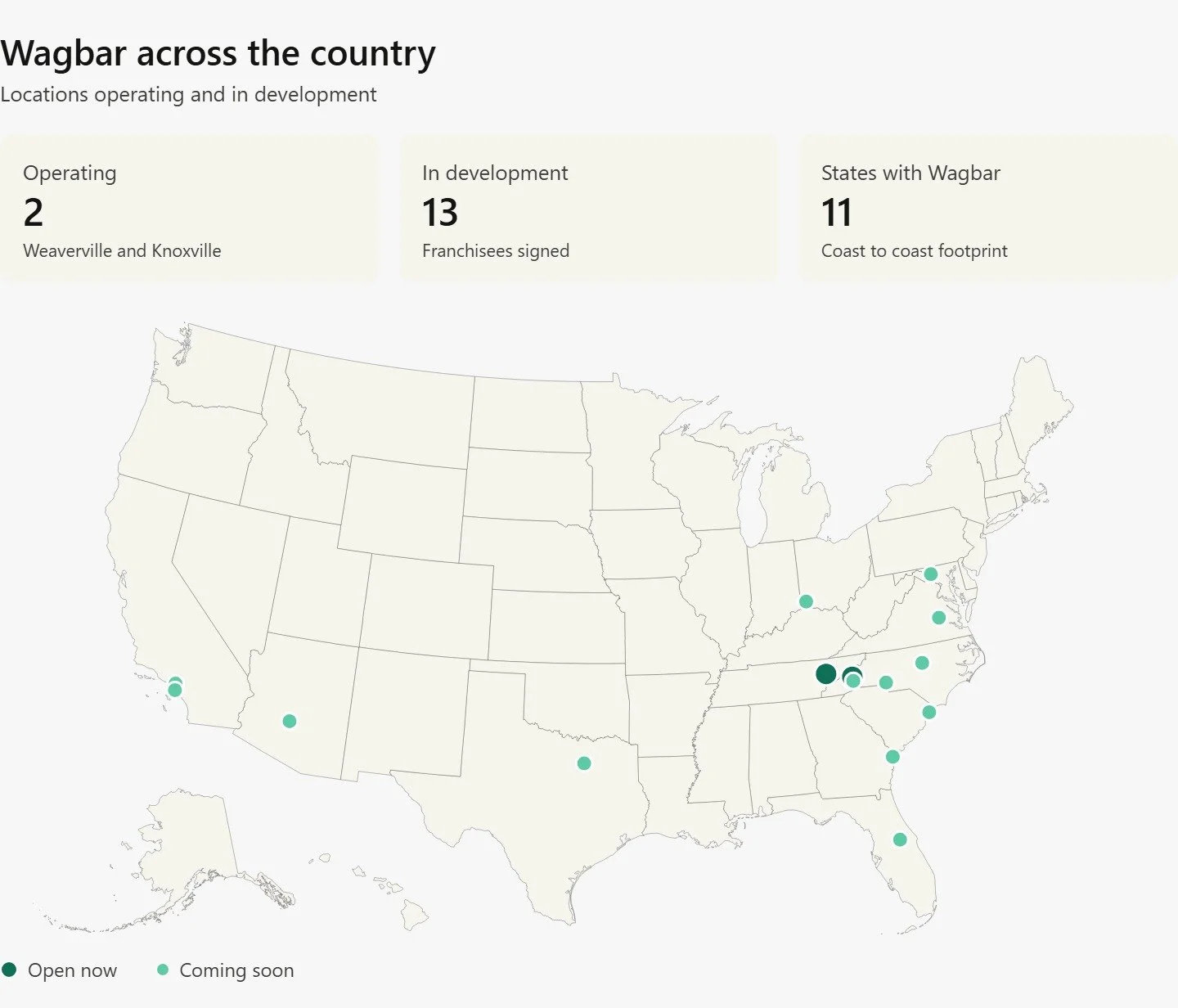
What makes Knoxville excel: Lower cost of living than Nashville means more budget for quality pet care. Quick access to Great Smoky Mountains provides unmatched outdoor recreation. Wagbar Knoxville now offers supervised off-leash play with professional staff oversight—something municipal parks can't match.
Dog park access: Victor Ashe Park and New Harvest Park provide dedicated off-leash spaces with separate areas by dog size. Parks are less crowded than Nashville equivalents, allowing better socialization experiences.
Veterinary care: Multiple full-service practices including West Knoxville Animal Hospital and Turkey Creek Animal Hospital. University of Tennessee Veterinary Medical Center offers specialty care and emergency services.
Housing: Median home price around $310,000 allows substantial yards. Rentals average $900-$1,200 monthly for pet-friendly one-bedrooms. Pet deposits typically $200-$400.
Cost impact: 25-30% lower living costs compared to Nashville mean $500-$800 more monthly for pet care, training, and activities. Veterinary services run 15-20% less expensive.
Outdoor recreation: Ijams Nature Center, House Mountain State Natural Area, and Great Smoky Mountains access within 30-45 minutes. Significantly better than any other Tennessee city for hiking variety and proximity.
Community culture: Growing pet community with increasing dog-friendly businesses. University influence creates younger, outdoor-focused demographic naturally aligned with dog ownership.
Weaknesses: Fewer total dog parks than Nashville. Less specialized veterinary services than Memphis's research institutions.
#2: Nashville (Score: 84/100)
Nashville's extensive infrastructure and business options nearly offset high costs and crowding. The city invested heavily in pet amenities during its growth period.
Dog park strengths: Centennial Park, Shelby Park, Warner Parks, and multiple neighborhood facilities provide numerous options. Quality varies but quantity exceeds other Tennessee cities.
Veterinary excellence: Dozens of general practices, multiple emergency hospitals, and specialty centers covering cardiology, oncology, and orthopedics. Competition drives service quality up.
Housing challenges: Median home price near $450,000 makes yards expensive. Pet-friendly rentals average $1,600-$1,800 for one-bedrooms plus $50 monthly pet rent. Competition for pet-friendly housing is fierce.
Professional services: Extensive daycare options, training facilities, boutique grooming, and premium boarding. You'll find services here unavailable in smaller cities.
Outdoor access limitations: Warner Parks and Percy Warner offer good hiking but require driving and fighting traffic. Genuine mountain access requires 1.5-2+ hours each way. Urban dog exercise becomes necessary with limited nature proximity.
Community: Large, active dog owner community. Multiple breed-specific clubs, training groups, and social organizations. Easy to find like-minded owners but harder to form deep connections in transient population.
Cost reality: Budget $2,000-$2,500 monthly for housing plus $200-$300 for routine pet expenses. High costs force trade-offs between housing quality and pet care budget.
Crowding problems: Popular dog parks see 100+ dogs on weekend afternoons. Traffic congestion affects ability to actually use available amenities. Parking alone can take 20+ minutes at peak times.
#3: Chattanooga (Score: 79/100)
Chattanooga offers outdoor recreation advantages and reasonable costs but lags in pet infrastructure development.
Outdoor recreation excellence: Riverwalk provides miles of waterfront paths. Proximity to mountains rivals Knoxville. Rock climbing culture means outdoorsy population appreciating active dogs.
Infrastructure gaps: Fewer dedicated dog parks than Nashville or Knoxville. Limited professional dog services. Finding quality boarding or daycare requires research and often waitlists.
Housing value: Median home prices around $280,000 provide good value. Rental market less developed but improving. Pet-friendly options more limited than larger cities.
Veterinary care: Adequate general practice options but limited specialty care. Serious cases require driving to Knoxville or Nashville.
Community development: Smaller size means tighter community but fewer organized activities. Dog owner groups exist but are less formal than in larger cities.
Climate benefits: Cooler than Memphis, less humid than Nashville. Better year-round outdoor activity conditions.
Best for: Active owners prioritizing hiking and outdoor adventures over urban amenities. High-energy breeds needing substantial exercise.
#4: Memphis (Score: 74/100)
Memphis provides solid infrastructure and services but struggles with heat, humidity, and inconsistent maintenance.
Veterinary strengths: St. Francis Veterinary Specialty Hospital and Memphis Veterinary Specialists provide advanced care. Research institutions support cutting-edge treatment options.
Dog park network: Shelby Farms Dog Park offers extensive space. Multiple neighborhood parks provide options across the city. Quality varies significantly by location and funding.
Housing affordability: Lower median home prices than Nashville ($340,000) but crime concerns affect desirable neighborhoods. Pet-friendly rentals plentiful but research safety first.
Summer challenges: Extreme heat and humidity June-September limit midday outdoor activity. Urban dogs require early morning and evening exercise schedules.
Maintenance inconsistency: Some parks well-maintained while others suffer from neglect, creating health hazards and safety concerns.
Community factors: Strong animal welfare community with multiple rescue organizations. Memphis Animal Services active in adoption promotion.
Outdoor access: Limited mountain proximity. Flat terrain means less varied hiking. Shelby Farms park system provides some nature access.
Best for: Dog owners needing advanced veterinary specialization, those adapting schedules around heat, and people finding value in lower costs despite infrastructure gaps.

#5: Franklin (Score: 77/100)
Franklin combines Nashville proximity with suburban advantages but expensive costs offset benefits.
Suburban benefits: Larger lots standard in subdivisions. Quieter neighborhoods reduce stress for noise-sensitive dogs. Well-maintained public spaces including dog parks.
Cost barrier: Median home prices exceed $650,000. Rental costs rival downtown Nashville. Premium pricing for everything including veterinary care.
Veterinary access: Excellent local practices plus easy access to Nashville specialty centers. Both convenience and advanced options available.
Community culture: Affluent population supports pet businesses. Multiple high-end grooming salons, boutique pet stores, and training facilities.
Outdoor limitations: Limited direct nature access. Requires driving to Percy Warner or further for substantial hiking.
Best for: Families with high household income wanting space, safety, and proximity to Nashville amenities while maintaining suburban lifestyle.
#6: Murfreesboro (Score: 72/100)
Murfreesboro provides value and growing infrastructure but remains limited compared to nearby Nashville.
Value proposition: Lower costs than Nashville with reasonable access to Nashville services when needed. Median home prices around $350,000.
University influence: Middle Tennessee State University creates younger demographic. College towns typically develop pet-friendly culture over time.
Infrastructure development: Growing dog park network. New pet businesses opening regularly. Trajectory is positive but current state lags behind top cities.
Veterinary care: Adequate general practice options. Emergency care improved with recent facility additions. Specialty care still requires Nashville trips.
Traffic considerations: I-24 corridor congestion affects Nashville access during rush hours. Plan accordingly when needing Nashville specialists.
Best for: Budget-conscious owners willing to accept developing infrastructure in exchange for lower costs and future potential.
#7: Clarksville (Score: 68/100)
Clarksville offers affordability and military community structure but limited pet amenities.
Military community: Fort Campbell influence creates transient population. Pet ownership rates high among military families but less community continuity.
Affordability advantage: Median home prices near $270,000. Rental market serves military families with reasonable pet policies.
Limited infrastructure: Fewer dog parks than comparable-sized cities. Limited professional pet services. Growing slowly but behind peer cities.
Veterinary adequacy: Basic care available. Emergency services and specialty care require driving to Nashville (60+ minutes).
Community character: Military culture means structured, rule-following population. Dog parks typically well-behaved but less social mixing.
Best for: Military families adapting to temporary assignments, budget-focused owners accepting limited amenities.
#8: Johnson City (Score: 65/100)
Johnson City provides small-city benefits and outdoor access but very limited pet infrastructure.
Outdoor advantages: Appalachian Trail access and mountain proximity exceed most Tennessee cities. Hiking culture strong.
Infrastructure scarcity: Minimal dedicated dog parks. Few professional pet services. Very limited daycare and boarding options.
Veterinary care: East Tennessee State University veterinary programs exist but clinical services limited. Basic care available, specialty care requires Knoxville trips.
Housing value: Low costs (median $240,000) but limited rental market. Most housing owner-occupied.
Community size limitations: Smaller population means finding specific breed communities or training programs difficult.
Best for: Outdoor enthusiasts wanting mountain access, self-sufficient owners not needing extensive pet services.
Critical Factors That Make or Break Dog-Friendly Cities
Beyond rankings, certain elements determine whether a city actually works for your specific dog and lifestyle.
Supervised vs. Unsupervised Dog Parks
Municipal dog parks operate without professional oversight. Owners bear complete responsibility for managing interactions, preventing fights, and ensuring safety. This works fine for well-socialized dogs with attentive owners but creates risks for everyone.
Supervised facilities like Wagbar fundamentally change the equation. Trained staff monitor dog behavior continuously, intervening before problems escalate. Vaccination verification and behavioral screening exclude aggressive dogs, protecting the community.
The difference matters enormously for young dogs in critical socialization periods, reactive dogs working on behavior modification, and smaller breeds vulnerable to rough play.
Veterinary Access in Emergencies
Your dog will eventually need emergency care. Cities with 24/7 emergency veterinary hospitals save lives. Nashville and Knoxville provide multiple options. Chattanooga has emergency services but limited competition means higher prices. Smaller cities require 45-60 minute drives to emergency care.
This isn't theoretical. When your dog ingests something toxic at 2 AM or gets injured during a weekend hike, immediate access to emergency care determines outcomes.
Housing Reality Check
Pet-friendly housing claims mean nothing if deposits and monthly fees make it unaffordable or breed restrictions eliminate your dog. Nashville's "pet-friendly" apartments often restrict dogs over 50 pounds and ban specific breeds entirely.
Cities with more owner-occupied housing (Chattanooga, Johnson City, Clarksville) offer more flexibility since individual landlords negotiate terms. Corporate-managed Nashville complexes rarely waive breed or size restrictions regardless of your specific dog's temperament.
Climate Impact on Daily Life
Tennessee summers affect all cities but intensity varies. Memphis's combination of heat and humidity creates truly dangerous conditions for dogs June through September. Knoxville's elevation moderates temperature slightly. Chattanooga benefits from mountain proximity.
Family dog breeds with heavy coats (Golden Retrievers, Huskies) struggle more in Memphis heat than Knoxville's slightly cooler climate.
True Cost of Dog Ownership by City
Monthly pet ownership costs vary significantly across Tennessee cities.
Nashville typical monthly costs:
Housing (pet-friendly 2BR apartment): $2,200
Pet rent: $50
Utilities: $180
Vet budget: $100
Food: $75
Activities/misc: $95
Total: $2,700
Knoxville typical monthly costs:
Housing (pet-friendly 2BR apartment): $1,300
Pet rent: $35
Utilities: $150
Vet budget: $85
Food: $75
Activities/misc: $75
Total: $1,720
Monthly savings: $980 living in Knoxville versus Nashville. Over a dog's 12-year lifespan, that's $141,120 in savings—enough to fund multiple emergency surgeries, premium food for life, and extensive training.
Breed-Specific Considerations for Tennessee Cities
Different breeds thrive in different environments. Matching your dog's needs to city characteristics improves quality of life for everyone.
High-Energy Working Breeds
Border Collies, Australian Shepherds, Belgian Malinois, and similar breeds need substantial daily exercise beyond neighborhood walks.
Best Tennessee cities: Knoxville (#1) provides quick mountain access for weekend adventure plus growing infrastructure for weekday exercise. Chattanooga (#2) offers river walks and mountain trails. Johnson City (#3) excels at outdoor access despite infrastructure limitations.
Worst Tennessee cities: Memphis heat limits summer activity. Nashville traffic makes accessing adequate exercise spaces frustrating and time-consuming.
Large Breeds Needing Space
Great Danes, Mastiffs, Saint Bernards, and other giant breeds need physical space and yards.
Best Tennessee cities: Knoxville, Murfreesboro, and Clarksville provide affordable housing with substantial yards. Franklin offers space if budget allows.
Worst Tennessee cities: Nashville's premium housing costs make appropriate space unaffordable for many. Memphis heat affects large breeds disproportionately.
Small and Toy Breeds
Small dog breeds adapt more easily to apartment living and limited space but face different challenges.
Best Tennessee cities: Nashville provides extensive indoor activities, climate-controlled facilities, and social opportunities year-round. Franklin offers safety and calm neighborhoods.
Worst Tennessee cities: Smaller cities lack small-breed-specific socialization opportunities. Municipal dog parks mix all sizes, creating safety risks for tiny dogs.
Reactive or Anxious Dogs
Dogs with reactivity issues require quieter environments and controlled socialization.
Best Tennessee cities: Knoxville and Chattanooga offer quieter neighborhoods and less density than Nashville. Professional supervised facilities provide controlled exposure.
Worst Tennessee cities: Nashville's density and crowding overwhelm reactive dogs. Memphis's inconsistent park maintenance creates unpredictable environments.
The Wagbar Difference: Transforming Tennessee's Dog Park Landscape
Municipal dog parks serve a purpose but operate with fundamental limitations: no supervision, no behavioral screening, and minimal maintenance budgets. These constraints create unnecessary risks and suboptimal experiences.
Wagbar Knoxville introduced professional standards to Tennessee dog parks in late 2025. Trained staff monitor interactions continuously, vaccination requirements protect community health, and membership models fund proper maintenance and improvements.
The supervised model prevents problems before they escalate. Municipal parks rely entirely on owner intervention after situations develop. Professional oversight catches warning signs in canine body language and intervenes appropriately.
Owner amenities matter too. When people have comfortable seating, beverage options, and social spaces, they stay longer. Longer visits mean better exercise and socialization for dogs. Municipal parks offer benches and limited shade. Professional facilities create destinations rather than quick stops.
Making Your Tennessee City Decision
Choose cities based on your specific priorities, not general rankings. The "best" city depends entirely on what matters most to you and your dog.
Choose Knoxville if: You want the best overall value, quick mountain access, growing infrastructure, and reasonable costs. Works for most dog owners and most breeds.
Choose Nashville if: You need extensive specialized services, don't mind paying premium prices, and can handle crowding. Best for small breeds and owners prioritizing urban amenities.
Choose Chattanooga if: Outdoor recreation trumps all other factors and you're willing to accept infrastructure gaps. Best for very active owners and high-energy dogs.
Choose Memphis if: You need advanced veterinary specialization, can adapt to heat limitations, and value lower costs despite maintenance concerns.
Choose Franklin if: Budget allows premium pricing for suburban space, safety, and Nashville proximity while maintaining family-oriented lifestyle.
Choose smaller cities if: You prioritize affordability over amenities and don't require extensive pet services. Best for self-sufficient owners with adaptable dogs.
The Future of Dog-Friendly Cities in Tennessee
Tennessee cities continue investing in pet infrastructure as competition for residents intensifies. Cities recognizing pet owners as a demographic worth attracting see continued improvement.

Knoxville's Wagbar, which opened in late 2025, represents this trend. As private sector fills gaps municipal budgets can't address, cities become more genuinely dog-friendly rather than just adding basic dog parks. The facility's early success has already prompted other Tennessee cities to explore similar supervised options.
Nashville's challenge is managing growth without sacrificing quality. Crowding already undermines extensive infrastructure. Solutions require creative approaches beyond simply adding more municipal parks.
Chattanooga's opportunity lies in infrastructure development. The city has outdoor recreation and reasonable costs. Adding professional pet services would jump the city higher in rankings.
Memphis needs consistent maintenance and investment in existing parks before adding new ones. Neglected parks harm the community even if the city has many parks on paper.
Practical Moving Considerations
If you're moving between Tennessee cities with your dog, plan the transition carefully.
Before moving:
Research veterinarians and schedule first appointment before the move
Update ID tags with new address and phone number
Visit new city's dog parks without your dog to assess suitability
Connect with local dog owner groups on social media
Identify emergency veterinary hospitals and program addresses
During transition:
Maintain feeding and exercise routines as consistently as possible
Give your dog time to adjust before introducing new activities
Start with quiet walks around the new neighborhood before visiting busy parks
Be patient with setbacks in house training or behavior
Consider anti-anxiety medication from your vet if needed
After settling in:
Join training classes or dog sports to build community
Attend local dog events to meet other owners
Establish regular routines quickly
Give the transition 3-6 months before judging whether the city works
Seasonal Considerations for Tennessee Dog Owners
Tennessee's four distinct seasons affect dog ownership differently across cities. Understanding seasonal patterns helps you choose cities matching your tolerance for weather-related limitations.
Spring: Peak Season Across Tennessee
March through May offers ideal weather statewide. Temperatures in the 60s and 70s, moderate humidity, and blooming landscapes create perfect conditions for outdoor activities.
Best spring cities: Knoxville and Chattanooga leverage mountain access during this prime season. Wildflower blooms and waterfall flows make hiking spectacular. Nashville's parks see heavy use but weather makes crowding tolerable.
Spring challenges: Pollen counts spike March-April, affecting dogs with allergies. Tick season begins in earnest. Sudden spring storms can flood low-lying dog parks.
Summer: Heat and Humidity Dominate
June through August separate resilient dog owners from those needing year-round comfortable conditions.
Memphis summer reality: Regularly exceeds 95°F with 70%+ humidity. Heat index often reaches 105-110°F. Outdoor dog activities limited to early morning (before 8 AM) and late evening (after 8 PM). Asphalt temperatures can burn paw pads even on 85°F days.
Nashville summer challenges: Slightly better than Memphis but still uncomfortable. Urban heat island effect intensifies temperatures. Crowded parks during cooler morning hours mean arriving before 7 AM for reasonable experience.
Knoxville summer advantages: Elevation moderates heat slightly. Mountain escapes provide 10-15 degree cooler temperatures 30 minutes away. Still hot but more manageable than Memphis or Nashville.
Summer dog care requirements: Increased veterinary costs for heartworm and flea/tick prevention. Higher grooming frequency for shedding breeds. Risk of heat exhaustion requires constant vigilance.
Fall: Second Prime Season
September through November provides excellent weather before winter arrives.
All cities benefit: Comfortable temperatures, lower humidity, beautiful foliage. Dog park attendance increases as weather improves. Trail conditions optimal after summer rain but before winter ice.
Best fall experiences: Chattanooga and Knoxville excel with mountain fall color. Nashville's parks provide beautiful urban foliage. Memphis finally becomes comfortable for midday activities.
Fall preparations: Owners need to prepare dogs for upcoming winter. Longer coat growth for outdoor-focused dogs. Building cold weather tolerance gradually.
Winter: Mild by National Standards, Still Limiting
December through February bring Tennessee's winter conditions.
Temperature patterns: Nashville averages 40°F in January. Knoxville slightly colder at 38°F. Memphis warmer at 43°F. Chattanooga similar to Knoxville. Occasional cold snaps bring single-digit temperatures.
Snow and ice: Most years see 4-8 inches of snow in Nashville and Knoxville. Memphis gets 2-4 inches. Snow typically melts within days but ice can linger. Dog park etiquette requires extra caution on frozen ground.
Winter advantages: Fewer people at parks and trails. Comfortable temperatures for high-energy dogs needing serious exercise. Ticks dormant. No heat restrictions.
Winter challenges: Some municipal parks reduce hours or close during weather events. Fewer outdoor dining options for dog-friendly restaurants. Mud season makes parks messy.
Cold-sensitive breeds: Small dogs, short-coated breeds, and senior dogs struggle with Tennessee winters. Cities with indoor dog activities (Nashville, Knoxville) better serve these populations.

Dog-Friendly Business Culture by City
The number and quality of dog-welcoming businesses reveals genuine pet-friendly culture beyond official dog parks.
Nashville Dog Business Scene
Downtown Nashville (Broadway, Gulch, East Nashville) features dozens of dog-friendly patios. Yazoo Brewing, Jackalope Brewing, and most local breweries welcome dogs. Multiple dog boutiques offer premium supplies and services.
Dog-focused events happen weekly: Yappy Hours, adoption events, dog yoga classes, and breed meetups. Easy to find community but commercial focus means expenses add up quickly.
Knoxville Growing Infrastructure
Market Square, Gay Street, and Old City welcome dogs to outdoor patios. Knoxville's dog business scene has grown substantially over the past five years. Local coffee shops and breweries increasingly add dog-friendly spaces.
Wagbar's arrival in late 2025 represented the biggest single addition to Knoxville's dog infrastructure in recent history. Combining off-leash play with professional supervision fills a critical gap that has quickly made it a community hub.
Chattanooga Outdoor Focus
Breweries along the Southside and Northshore welcome dogs. Outdoor culture means most businesses with patios accept well-behaved dogs without formal policies.
Limited specialized dog businesses but general outdoor culture more naturally dog-inclusive than Nashville's commercial approach.
Memphis Neighborhood Variations
Cooper-Young, Overton Square, and Midtown areas offer dog-friendly options. Business culture less uniformly pet-welcoming than Nashville or Knoxville.
Finding dog-friendly spaces requires more research and planning. Rewards exist for owners willing to seek them out.
Building Dog Owner Community in Tennessee Cities
Where you find other dog owners determines your social experience and your dog's socialization quality.
Formal Organizations and Groups
Nashville leads in organized activities: Multiple breed clubs, training organizations, and social groups. Tennessee Dog Club hosts regular events. Meetup groups for specific breeds active year-round.
Knoxville growing rapidly: University of Tennessee Veterinary School connection supports educational events. Growing number of training clubs and breed-specific groups.
Smaller cities require initiative: Clarksville, Murfreesboro, and Johnson City have fewer organized groups. Owners must create community rather than joining existing structures.
Online Community Building
Facebook groups, Nextdoor posts, and Instagram accounts connect dog owners in all Tennessee cities. Larger cities have multiple overlapping groups. Smaller cities may have single primary groups.
Search "{City Name} Dog Owners" or "{City Name} Dog Park" on Facebook to find local groups. Ask for recommendations, share experiences, and organize meetups.
Training Classes as Social Hubs
Group training classes serve dual purposes: improving dog behavior and meeting other owners. Nashville offers most variety (basic obedience, agility, nosework, rally). Knoxville provides solid options with less variety. Smaller cities offer basic classes only.
Consider traveling to larger cities for specialized classes if your smaller city lacks options.
Healthcare Infrastructure Beyond Basic Veterinary Care
Routine veterinary care exists everywhere. Specialized services and emergency care create major differences between cities.
Emergency Care Availability

Nashville: Multiple 24/7 emergency hospitals (BluePearl, Animal Emergency Center, Nashville Veterinary Specialists). Competition keeps services accessible.
Knoxville: UT Veterinary Medical Center provides 24/7 emergency plus PetVet365 locations. Good coverage but less competition than Nashville.
Memphis: Memphis Veterinary Specialists and Animal Emergency Center. Adequate but limited compared to Nashville.
Chattanooga: Single emergency facility. Serious cases sometimes transferred to Knoxville or Nashville.
Smaller cities: No 24/7 emergency care. Late night emergencies require 45-90 minute drives.
Specialty Services
Internal medicine, cardiology, oncology: Available in Nashville and Memphis through specialty hospitals. Limited in Knoxville. Nonexistent in smaller cities requiring referrals elsewhere.
Orthopedic surgery: All major cities offer orthopedic services through specialty practices or university programs. Advanced procedures may still require Nashville or university referral.
Rehabilitation and physical therapy: Growing field available in Nashville and expanding to Knoxville. Limited elsewhere.
Holistic and alternative care: Acupuncture, chiropractic, and alternative therapies available in Nashville and Knoxville. Rare in smaller cities.
Pet Insurance Considerations
Veterinary costs vary by city but pet insurance premiums don't adjust for Tennessee regional pricing. Insurance makes equal financial sense regardless of city but provides more value in Nashville where costs run highest.
Budget $40-$80 monthly for comprehensive pet insurance depending on breed, age, and coverage level.
Final Rankings Summary
Knoxville (87/100): Best overall value, excellent outdoor access, growing infrastructure, Wagbar facility now operational
Nashville (84/100): Most extensive services, highest costs, crowding challenges
Chattanooga (79/100): Outstanding outdoor recreation, infrastructure gaps
Memphis (74/100): Advanced veterinary care, climate challenges, maintenance inconsistency
Franklin (77/100): Premium suburban experience, very high costs
Murfreesboro (72/100): Good value, developing infrastructure
Clarksville (68/100): Affordable, military community, limited amenities
Johnson City (65/100): Mountain access, minimal infrastructure
These rankings reflect current conditions in 2026. Cities investing in pet infrastructure will improve their positions. Cities neglecting maintenance and development will decline. Use these rankings as a starting point for researching cities matching your specific needs rather than as absolute declarations of best options.
Your dog's happiness depends less on city rankings than on your commitment to providing exercise, socialization, veterinary care, and training regardless of location. A engaged owner in Clarksville creates better outcomes than a neglectful owner in Knoxville. Choose cities that make your job easier, then do the work required for your dog to thrive.
Bottom TLDR: Best cities for dogs in Tennessee vary dramatically in infrastructure, costs, and outdoor access. Knoxville leads rankings with balanced affordability and growing pet amenities including supervised Wagbar facility. Nashville provides most services at highest costs, while Chattanooga prioritizes outdoor recreation over infrastructure. Match city selection to your specific dog's energy level, size, and health needs rather than following generic rankings. Visit potential cities before committing to assess dog parks, veterinary access, and community culture firsthand.