Bar Operations Inside a Dog Park: Licensing, Staffing, and What Franchisees Need to Know

Top TLDR: Running bar operations inside a dog park requires navigating liquor licensing by state, building two distinct staff teams (park monitors and bar staff), and managing both disciplines simultaneously during peak hours. Wagbar franchisees receive structured training through the Opener app and a hands-on week in Asheville that covers bar management and dog behavior side by side. Visit the Wagbar franchising page to learn how the system is designed to make this manageable from day one.
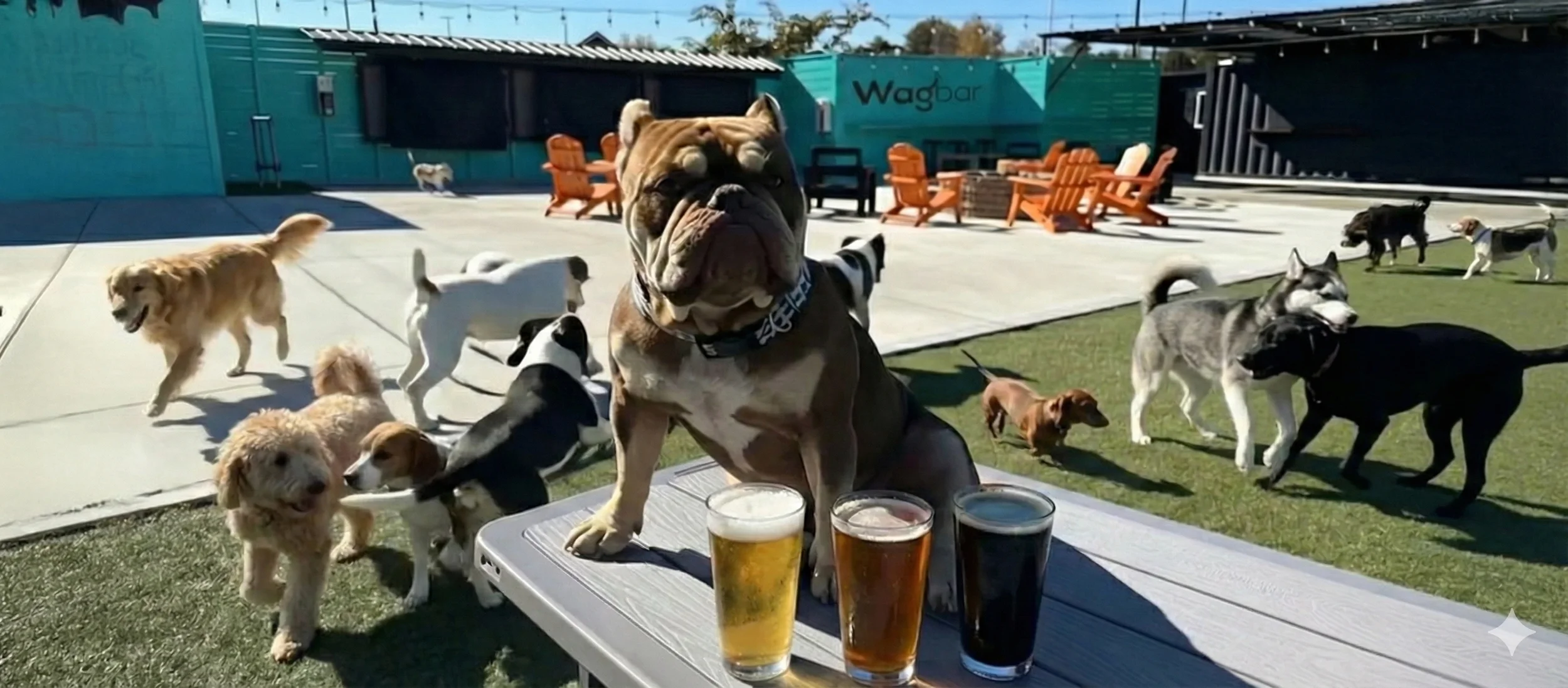
Most bar operators have never had to think about vaccination records. Most dog park managers have never worried about responsible alcohol service. Running bar operations inside a dog park means you have to care about both — and do it simultaneously, on a busy Saturday afternoon, with a full house.
This is the operational reality of an off-leash dog bar franchise. It's not impossible, but it requires more intentional planning than either business alone. Franchisees who go into it with clear expectations about licensing, staffing, and day-to-day operations are far better positioned than those who assume one skill set transfers cleanly to the other.
Here's what prospective Wagbar franchisees actually need to understand before they open.
Liquor Licensing in a Venue with Animals: The Basics
Alcohol licensing is regulated at the state level in the U.S., which means there's no single playbook that works everywhere. What makes dog bar licensing interesting is that most state alcohol control boards wrote their regulations without any concept of supervised animal play spaces in mind. That creates some ambiguity — but it's manageable ambiguity, not a hard wall.
The Core Regulatory Challenge
Health departments and alcohol control boards generally have concerns about two things in animal-adjacent venues: sanitation and liability. The way most successful dog bars address these concerns is through physical separation — the bar service area has a defined perimeter that is distinct from the dog play area.
In practice, this means dogs are in the play space, and bar service happens from a designated counter, container, or enclosed structure nearby. Customers can watch their dogs while holding a drink, but the bar itself isn't in the middle of an open dog run. That spatial logic tends to satisfy the concerns regulators raise most frequently.

Beer and Wine vs. Full Liquor Licenses
The type of license you pursue matters strategically. Beer and wine licenses are typically easier to obtain and have fewer associated requirements than full spirits licenses. Wagbar's Knoxville location, for example, serves draft beer, craft brews, cocktails without hard liquor, seltzers, wine, and non-alcoholic options — a deliberate choice that reflects both customer preferences and the regulatory realities of that market.
In some states, starting with a beer and wine license is the right path, with the option to expand later. In others, pursuing a full license from the start is straightforward. Your specific path depends on your state's regulations and your municipality's local requirements, which can add another layer on top of state law.
Why a Franchise System Helps Here
Going through this licensing process independently, without any prior experience in the industry or the specific market, is genuinely difficult. A franchise system that has opened locations in multiple states brings institutional knowledge of what regulators ask for and how to respond. Wagbar's training and support system includes guidance on the regulatory environment in each market — one of the most concrete advantages of franchising over building this concept from scratch.
The pet business legal guide on Wagbar's site provides a useful overview of the compliance landscape for pet-related businesses, and it's worth reading before you start conversations with local licensing authorities.
The Two Staff Teams You're Actually Managing
The staffing challenge in a dog bar is real, and it's different from what most hospitality operators expect. You're not just hiring more people — you're hiring for two fundamentally different skill sets and then figuring out how to schedule, train, and manage both teams as part of one operation.
Park Monitors: What the Role Actually Requires
A park monitor isn't just someone who likes dogs. The job involves watching a group of dogs in active play and reading what's happening before situations escalate. That requires knowledge of dog body language — the subtle signals that a dog is getting overstimulated, that a play session between two dogs is tipping from mutual to one-sided, or that a new arrival is creating tension in the group.
Wagbar staff are trained to intervene when a dog isn't playing nicely. That intervention requires confidence, timing, and the ability to de-escalate without making the situation worse. Someone who freezes when two dogs get into a scuffle isn't equipped for this role regardless of how much they love animals.
Park monitors also handle customer-facing responsibilities at the gate: checking vaccination records for day pass visitors, reviewing membership status, explaining the code of conduct to first-time visitors, and answering questions about their dog's behavior or the park's rules. It's a combination of animal behavior knowledge and customer service — and it's harder to find than either alone.
Understanding dog body language is core to this role. Wagbar's training covers it directly, and franchisees need to make sure it's part of how they onboard every park staff member.
Bar Staff: Familiar Skills, Unfamiliar Setting
Bar staff at a dog bar need the same competencies as bar staff anywhere: responsible alcohol service, POS proficiency, inventory awareness, and the ability to stay friendly and efficient with a full house. The unusual context — a bar where dogs are playing nearby and the customers are largely dog people who want to talk about their dogs — doesn't change the fundamental requirements of the job.
What it does add is a slightly different social dynamic. A good bar team at a dog bar is genuinely comfortable with dogs and can engage authentically with customers about their animals. That's not a hard requirement, but it shows in the customer experience.
Scheduling bar staff also involves thinking about your busiest windows. Weekend afternoons and early evenings tend to be peak periods at both the bar and the park simultaneously, which means you need full coverage on both sides of the operation at the same time. Underestimating weekend bar staffing is one of the more common early mistakes.
The Shift Manager Problem
The hardest staffing challenge isn't finding good park monitors or bar staff — it's developing shift managers who can hold both sides of the operation together at once.
A shift manager at a dog bar needs to know whether the park is getting too crowded and whether to slow intake. They also need to know when they're running low on a draft and whether a vendor delivery is coming in the morning. Managing across both disciplines in real time, under pressure, is a skill that develops with experience. It doesn't come automatically from either a bar background or a dog industry background.
This is one of the strongest arguments for the intensive training week Wagbar provides at the Asheville headquarters. Spending a full week operating inside a functioning location — not just reading about it — gives franchisees and their core managers the cross-disciplinary fluency they need to run a shift effectively. The staffing and operations guide goes deeper on building that management layer.
Daily Operations: What Running Both Sides Looks Like
Opening a shift at a dog bar involves prep work on two fronts before the first customer arrives.
The bar side needs the standard setup: tap lines checked, POS system running, coolers stocked, ice available, glassware clean. If food trucks are scheduled, coordinate arrival times and setup. Check that the outdoor seating areas are clean and that any weather-related adjustments (heaters on, fans running, covers lowered) are handled.
The park side needs its own prep: perimeter check on the fence line, dog water stations filled, any waste from the previous day cleared, entry gate functional, and vaccination check system ready to go. If it's a member-heavy morning, run through any new member approvals that came in overnight.
Managing Entry Flow
Entry management is one of the more overlooked operational skills in this format. On a busy afternoon, you may have multiple groups arriving at the gate simultaneously — some with day passes who need vaccination records checked, some who are annual members you recognize, and some who are first-time visitors who need a full orientation.
Moving that flow efficiently without cutting corners on the vaccination check (which matters for the health and safety of every dog in the park) requires a clear process and enough staffing at the gate during peak windows. Getting this right is something that takes a few weeks to calibrate at a new location.
Handling Incidents on Both Sides
Every dog bar will eventually have a dog altercation. It's not a failure of the concept — it's a reality of putting multiple dogs in a shared space. What matters is how you handle it.
Staff need clear protocols: who intervenes, how to separate dogs safely, when to ask an owner to leave, and how to document the incident. Wagbar's zero-tolerance policy for repeated aggressive behavior means memberships can be revoked when a dog consistently creates problems. Having that policy written, communicated to customers, and enforced consistently protects the experience for everyone else.
On the bar side, incidents typically involve the standard hospitality situations: intoxicated guests, disputes, or occasionally someone who brings a dog that isn't fit for the park environment. The responsible alcohol service training your bar staff receives is directly applicable here.
The Wagbar Training System: How Franchisees Learn Both Sides
Wagbar's training is structured to address the dual-discipline challenge directly rather than assuming franchisees will figure it out on their own.
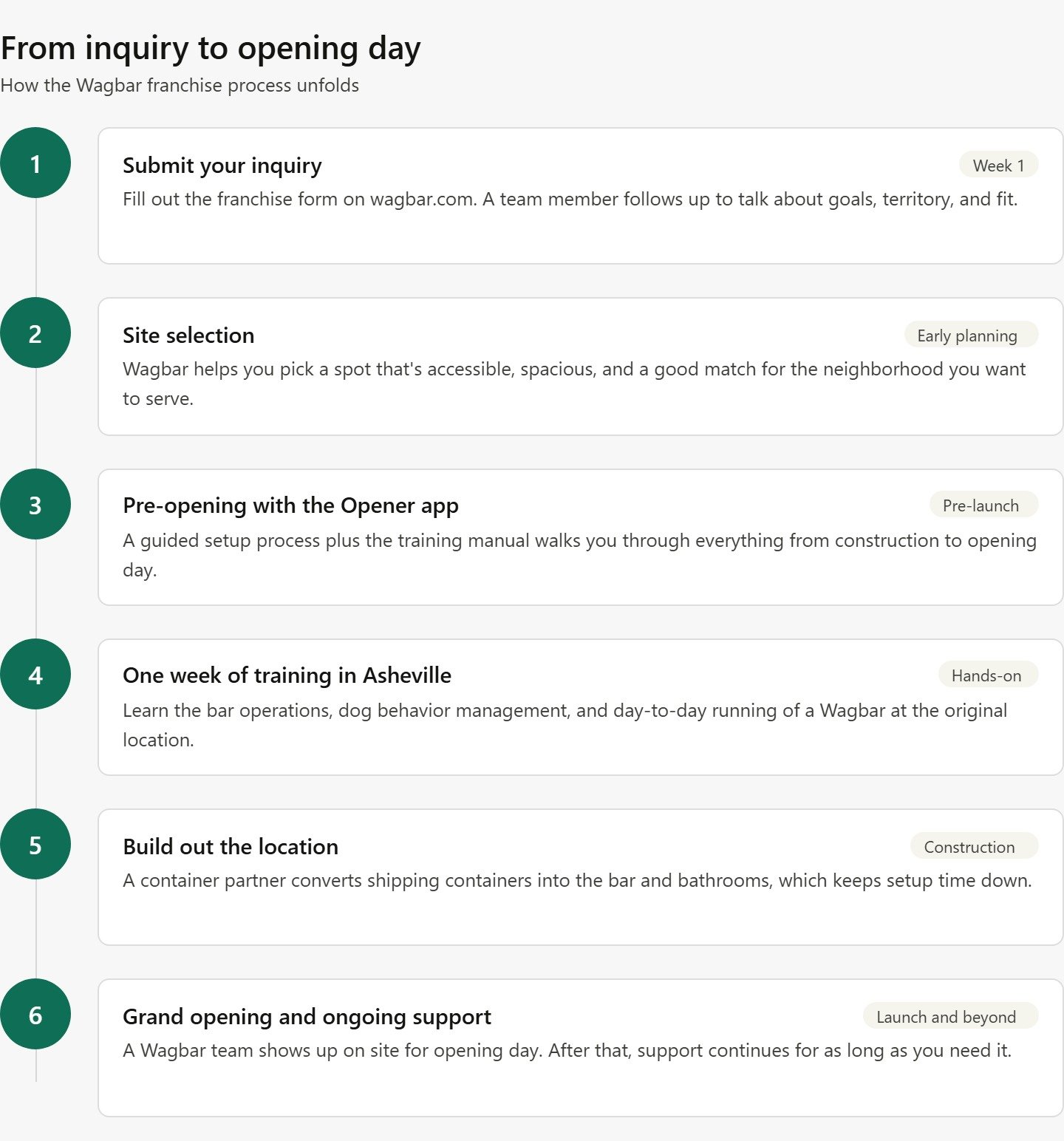
The Opener App
Before franchisees ever set foot in Asheville, they work through the Opener app — a guided digital system that walks through the entire pre-opening process. Site selection criteria, build-out planning, hiring timelines, regulatory paperwork, and equipment procurement all have structured guidance in the app. This reduces the time from signing to opening and removes a lot of the uncertainty that plagues independent operators trying to build from scratch.
The Training Week in Asheville
One week, in person, at a functioning Wagbar location. The training week covers dog behavior management, bar operations, staff training protocols, customer service standards, and marketing basics. Franchisees experience what a real shift looks like — handling the park and the bar simultaneously — before they try to replicate it in their own market.
This isn't classroom training. It's operational immersion, which is a meaningfully different kind of learning. People leave the training week with a visceral understanding of what busy looks like, what the common friction points are, and how to make decisions under pressure.
Grand Opening Support and Beyond
A Wagbar team member is present for each franchisee's grand opening — a critical advantage at a moment when everything is new, staff are untested at full capacity, and the community is seeing the location for the first time. That support extends beyond the opening through quarterly business reviews, marketing resources, and access to the franchisee network.
The off-leash dog bar investment guide covers what to look for in a franchise system's support structure — the training and post-opening support are among the most important factors to evaluate.
What Franchisees With Bar Backgrounds Need to Add
If you've run a bar or restaurant, the beverage side will feel immediately familiar. What requires attention is the park operation — specifically, understanding dog behavior well enough to manage a team of park monitors, recognize when something in the park is developing into a problem, and build a hiring profile for people who can do that work well.
Investing time in dog behavior education before your training week will make the Asheville immersion more productive. Wagbar's dog park behavior guide and dog body language resources are a good starting point.
What Franchisees Without Bar Backgrounds Need to Add
If you're coming from outside hospitality, the bar operation is the steeper learning curve. Responsible alcohol service certification is required in most states and can be completed before your training week. Spending time in a bar or restaurant environment before your opening — even just shadowing a bar manager friend for a few shifts — gives you practical context that makes the operational concepts click faster.
Frequently Asked Questions
Do I need a liquor license before I can open?
Yes, and the timeline for obtaining one varies significantly by state and municipality. Some markets process applications in a few weeks; others take several months. This is one reason site selection and the regulatory process need to start early in your pre-opening timeline, not after you've signed a lease.
Can I hire someone with only bar experience to run my park operations?
Not effectively, no. Bar experience doesn't transfer to supervising off-leash dog play. The two skill sets are genuinely different. Your park staff need some form of dog behavior training, whether that comes from prior professional experience (vet tech, trainer, boarding facility work) or structured onboarding through Wagbar's training materials.
What happens if a dog fight breaks out?
You'll have a written protocol from Wagbar's training. Designated staff intervene using safe separation techniques, the incident is documented, and if the dog's behavior was serious or repeated, the membership or access can be revoked. Having the protocol in place, communicated to staff, and practiced before it's needed is the key.
How much bar experience do I need before opening a Wagbar?
None is required, though some hospitality background is helpful. Wagbar's training week covers bar operations directly. The more useful prerequisite is basic business management experience — understanding how to manage a P&L, hire and supervise staff, and run a customer-facing operation. The specific bar skills are teachable; the management foundation is harder to develop from scratch.
What's the biggest operational mistake new franchisees make?

Understaffing peak periods. Weekend afternoons hit both the park and the bar at the same time, and cutting staff to save labor cost creates cascading problems — slower service at the bar, less attentive monitoring in the park, longer wait times at the gate. Getting the staffing model right for your specific location's demand pattern is one of the most important first-month priorities.
Running bar operations inside a dog park is genuinely different from running either business alone. But it's a learnable operation with a proven system behind it, and franchisees who invest the time to understand both sides before opening are set up to build something their community will show up for week after week.
The Wagbar franchising page is the right starting point if you're ready to understand what the full system looks like.
Bottom TLDR: Bar operations inside a dog park require managing liquor licensing by state, training two distinct staff teams (park monitors and bar staff), and handling both disciplines simultaneously during busy periods. Wagbar franchisees work through the Opener app before completing a hands-on training week in Asheville that covers dog behavior and bar management together. Start by visiting the Wagbar franchising page to see how the operational system works before committing to a market.