
Top TLDR: Dog-friendly restaurants typically mean patio-only, leash-required, owner-supervised dining. Your dog lies under the table while you eat. The experience works well for calm, socialized dogs if you prepare properly: call ahead, exercise your dog first, visit during off-peak hours and sit at an edge table. The rules vary by state and by restaurant — most health codes restrict dogs to outdoor areas only. Not every “dog-friendly” patio is genuinely welcoming, and the gap between a restaurant that tolerates dogs and a venue built for dogs (like a dog bar) is significant. Wagbar’s no-feeding policy inside the play yard exists because food near dogs creates the resource guarding and allergy risks that restaurants can’t control.
- Dog-friendly restaurant = patio only, leash required, owner-supervised.
- Call ahead. Policies change. A phone call saves a wasted trip with your dog in the car.
- Exercise your dog first. A tired dog is a calm dog under the table.
- A restaurant lets your dog in. A dog bar was built for your dog. Different experiences, different outcomes.
Finding a dog-friendly place to eat is easier than it was five years ago, but “dog-friendly restaurant” still means something narrower than most owners expect. It almost always means outdoor patio seating, your dog on a leash, and the restaurant’s goodwill lasting exactly as long as your dog stays quiet under the table. That’s fine for the right dog and the right situation. Here’s how to make it work — and how to tell when a patio isn’t worth the trouble.
What “Dog-Friendly Restaurant” Actually Means
In most US states, health codes prohibit animals inside food preparation and dining areas. A dog-friendly restaurant is one that allows leashed dogs on its outdoor patio. Some states require that the patio has a separate entrance from the indoor dining room. Others require that the restaurant post signage indicating that animals are present. A few states — California was the first in 2015 — have passed specific legislation permitting dogs on restaurant patios with conditions.
What this means in practice: your dog sits or lies beside your table on its leash. The restaurant provides the table and (hopefully) a water bowl. Everything else — the leash, waste bags, your dog’s behavior — is your responsibility. There’s no staff watching your dog. There’s no vaccine check at the gate. There’s no protocol for what happens if your dog reacts to the dog at the next table. The full weight of the experience rests on you.
Before You Go: The 6-Point Checklist
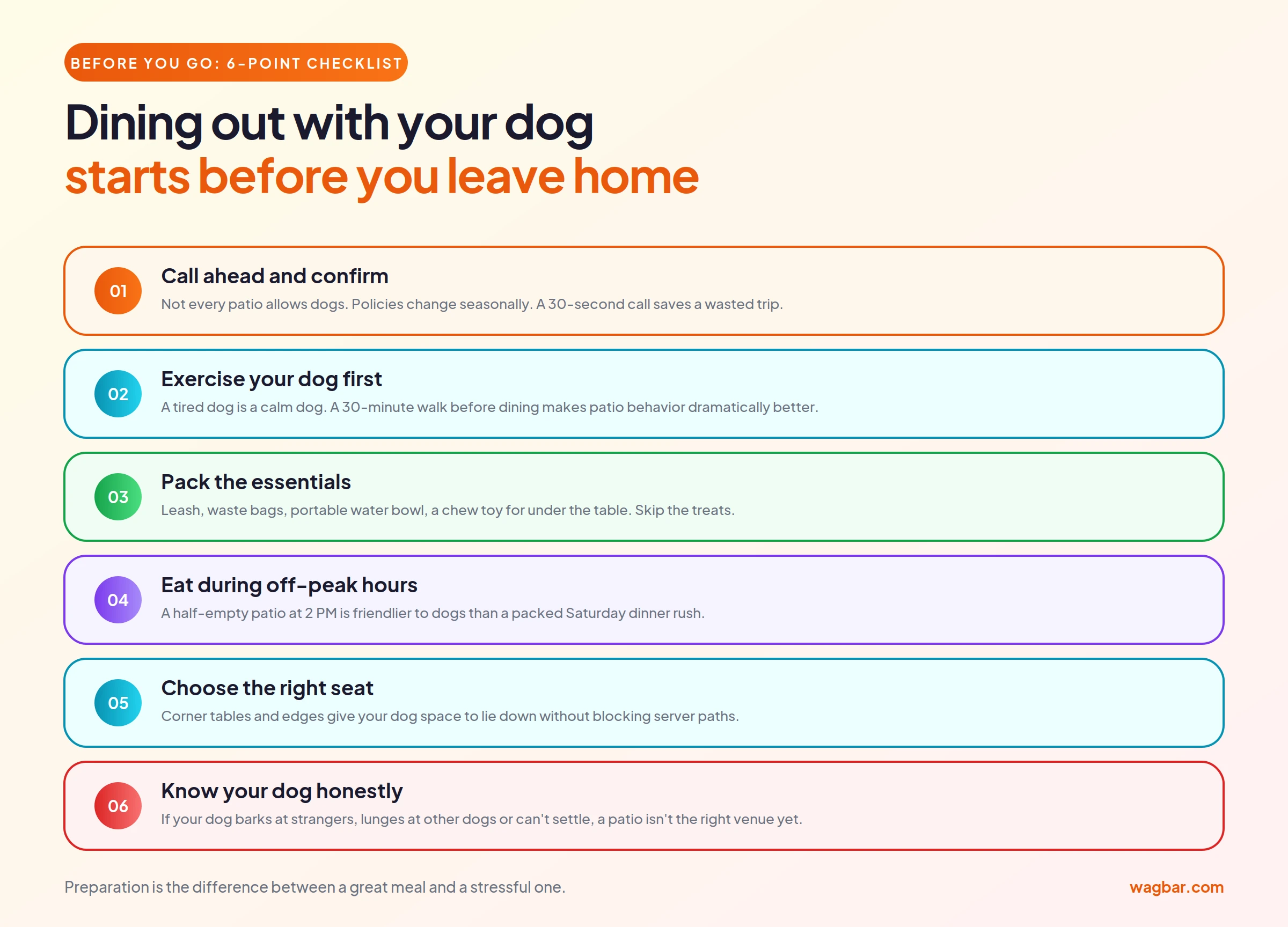
Preparation determines whether patio dining with your dog is relaxing or stressful. Six things to handle before you leave the house.
First, call the restaurant and confirm their current policy. “Dog-friendly” on Yelp might mean they allowed dogs two years ago. Policies change seasonally, management changes, landlords change their minds. A 30-second phone call prevents arriving with your dog and being turned away.
Second, exercise your dog before you go. A 30-minute walk or a play session burns the energy that would otherwise surface as pacing, whining or pulling at the leash during your meal. The single best predictor of good patio behavior is a tired dog.
Third, pack what you need: a leash (short, not retractable), waste bags, a portable water bowl and a chew toy or stuffed Kong to keep your dog occupied under the table. Skip the treats — food near your dog near other dogs near other people’s food is a recipe for problems.
Fourth, time your visit. A dog-friendly brunch on a quiet weekday is dramatically easier than a packed Saturday dinner patio. Fewer people, fewer dogs, more space, less stimulation and servers who have time to accommodate you.
Fifth, pick the right seat. Edge tables and corners give your dog space to settle without blocking server paths or putting your dog in the walking lane where every guest brushes past.
Sixth, be honest about your dog. If your dog barks at strangers, lunges at other dogs, resource-guards food or can’t settle in stimulating environments, a restaurant patio isn’t the right venue yet. Signs a “dog-friendly” patio isn’t really dog-friendly can help you evaluate both the venue and your own dog’s readiness.
Patio Dining Etiquette With Dogs
Good patio dining etiquette with dogs is what keeps restaurants willing to allow dogs in the first place. Every bad experience from one owner makes the policy harder for everyone.
- Keep your dog on a short leash, tucked under or beside your table. Retractable leashes create trip hazards for servers carrying food.
- Don’t let your dog approach other diners or their dogs without explicit invitation. Not everyone at a dog-friendly patio wants a dog in their space.
- Clean up immediately. Accidents happen. Having waste bags ready and handling them instantly is non-negotiable.
- Don’t feed your dog from the table. Dropped food, begging behavior and resource guarding around human meals create problems for you and for neighboring tables.
- If your dog starts barking, whining or showing stress, take a break. Walk your dog away from the patio, let it reset, and return when it’s calm — or leave if it can’t settle.
- Tip generously. The server cleaned around your dog, accommodated your seating request and probably brought a water bowl without being asked.
What Your Dog Gets: Restaurant vs. Dog Bar
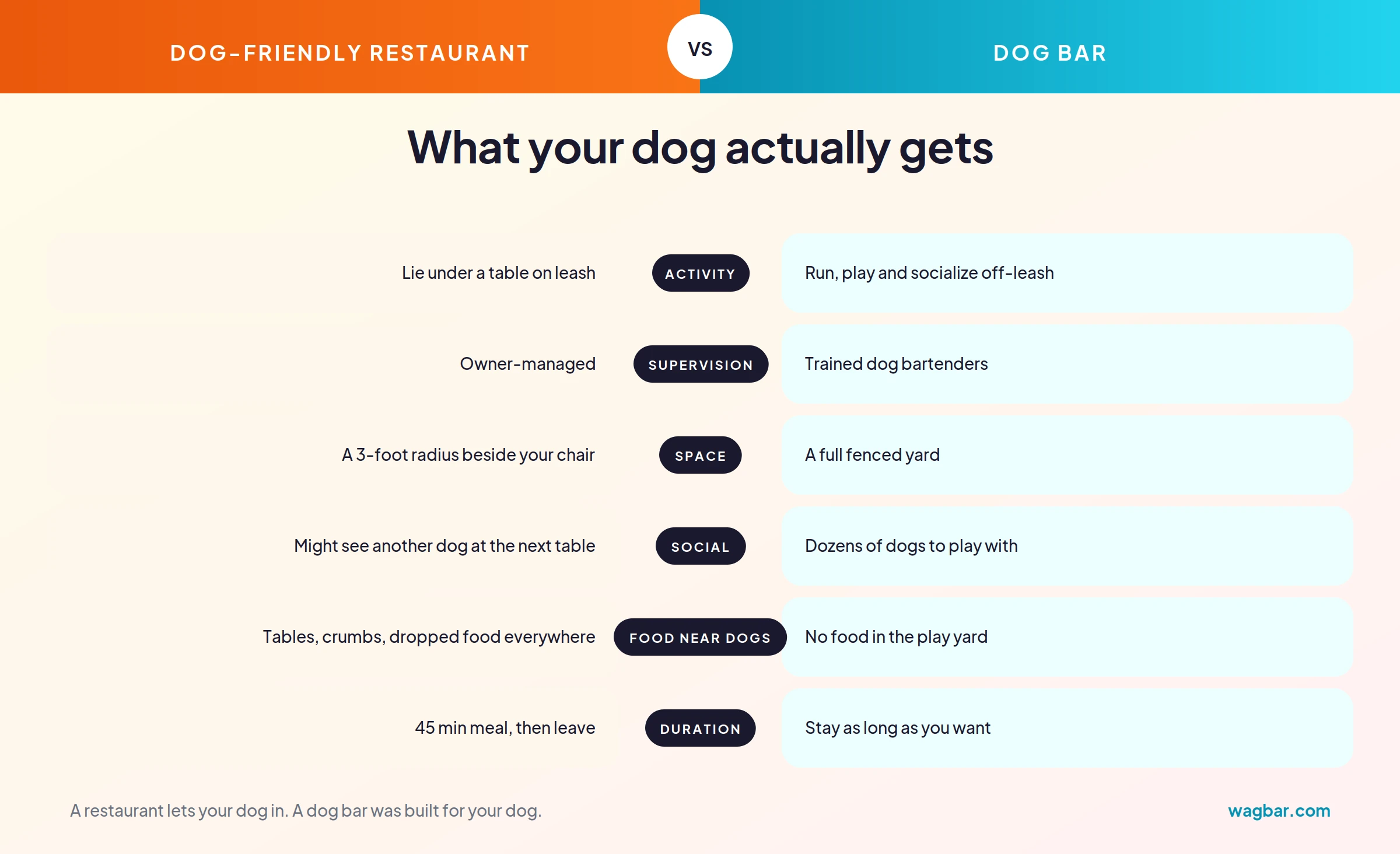
A pet-friendly restaurant and a dog bar both welcome dogs, but the experience your dog gets is completely different. At a restaurant, your dog lies under a table on a leash in a 3-foot radius beside your chair, possibly seeing another dog at the next table, surrounded by food on every surface, for a 45-minute meal. At a dog bar like Wagbar, your dog runs off-leash in a fenced yard supervised by trained staff, socializes with dozens of dogs, in a food-free play zone, for as long as you want to stay.
Neither is wrong — they serve different purposes. A restaurant patio is for when you want to eat out and bring your dog along. A dog bar is for when you want your dog to have the experience and you happen to get a drink while it plays. Wagbar’s no-feeding policy inside the play yard is part of what makes the difference: no food near the dogs means no resource guarding, no allergy risks from other people’s scraps, and a surface that stays clean instead of accumulating crumbs and spills throughout the day.

Dog-Friendly Restaurant FAQs
Are dogs allowed inside restaurants?
In most US states, health codes restrict dogs to outdoor patio areas only. A few states have passed legislation permitting dogs on restaurant patios with conditions. Service animals are the exception — they’re allowed inside under federal ADA rules regardless of state health codes.
How do I find pet-friendly restaurants near me?
BringFido, Yelp’s “dog-friendly” filter and Google Maps reviews are the most reliable sources. Always confirm by calling the restaurant directly — online listings can be outdated.
What should I bring when dining out with my dog?
A short leash (not retractable), waste bags, a portable water bowl and a chew toy to keep your dog occupied under the table. Skip treats and food — they create more problems than they solve.
Can I bring my dog to brunch?
Dog-friendly brunch is one of the best options because weekend brunch crowds tend to be relaxed, patios are often sunny and warm, and the atmosphere is lower-key than dinner service. Call ahead to confirm the patio is open and dogs are welcome.
What if my dog doesn’t behave on a patio?
Remove your dog from the situation. Walk away from the patio, let it decompress and try again. If it can’t settle, leave — the restaurant staff and other diners shouldn’t bear the consequences of a dog that isn’t ready for the environment. Work on socialization and settle training before trying again.
Find a Venue Built for Dogs
Restaurant patios are great for calm dogs and quiet meals. For off-leash play, supervised socialization and a venue designed around your dog’s experience, Wagbar is a different category entirely. See how Wagbar builds venues where dogs come first.

Wagbar does not represent what a franchise owner will earn. Verified performance data is available only in Item 19 of the FDD, provided to qualified candidates during formal disclosure. Published cost figures are FTC-required regulatory estimates and are not profitability guarantees.
Your Dog Can Join You — If You Plan Ahead
The right restaurant, the right prep and a dog that can settle make patio dining a genuinely good experience. For a different kind of outing — one where your dog runs free and trained eyes watch the yard — bring your pup’s vaccine records and try the nearest Wagbar.
Bottom TLDR: Dog-friendly restaurants mean patio-only, leash-required, owner-supervised dining in most US states. The 6-point checklist: call ahead, exercise your dog first, pack essentials, visit off-peak, choose edge seating, know your dog’s limits. Etiquette: short leash, don’t approach other diners, clean up instantly, no table feeding, leave if your dog can’t settle, tip well. A restaurant lets your dog sit beside your table. A dog bar gives your dog supervised off-leash play in a food-free yard. Wagbar’s no-feeding policy eliminates the resource guarding and allergy risks that restaurant patios can’t control.