
Top TLDR: Wagbar’s Bark Rangers go through a four-phase training program before they work the yard solo: classroom work on canine body language (weeks 1–2), shadow shifts with a senior Bark Ranger (weeks 3–4), supervised solo work with feedback (weeks 5–6), then ongoing recert every six months. The industry calls this role a Bark Ranger. Our training is built around one principle: owners watch their dog, Bark Rangers watch the yard.
Reading dogs well isn’t a vibe. It’s a skill, and like any skill it’s teachable — if the training is built right. At Wagbar, our Bark Rangers (what the industry calls Bark Rangers) go through a structured four-phase program before they’re trusted to work the yard on their own. Here’s the whole curriculum, start to finish.
- Four training phases: classroom → shadowing → supervised practice → solo certification. Eight weeks total.
- Seven signals in 2–3 seconds. That’s the recognition speed target for certified Bark Rangers.
- Training doesn’t stop at certification. Monthly refreshers, video case reviews and real-time coaching continue indefinitely.
- The no-feeding policy is taught in week one — food in the yard creates conflicts that even the best-trained staff can’t always prevent.
The title Bark Ranger sounds informal, but the training behind it isn’t. At a professionally managed dog bar, the staff member watching the yard has completed weeks of structured instruction in canine behavior, practiced under supervision during live shifts, and passed a certification evaluation before they’re trusted to run the yard alone. Here’s what that training program looks like from the inside.
The Four-Phase Training Curriculum

Phase 1: Classroom — body language fundamentals (weeks 1–2)
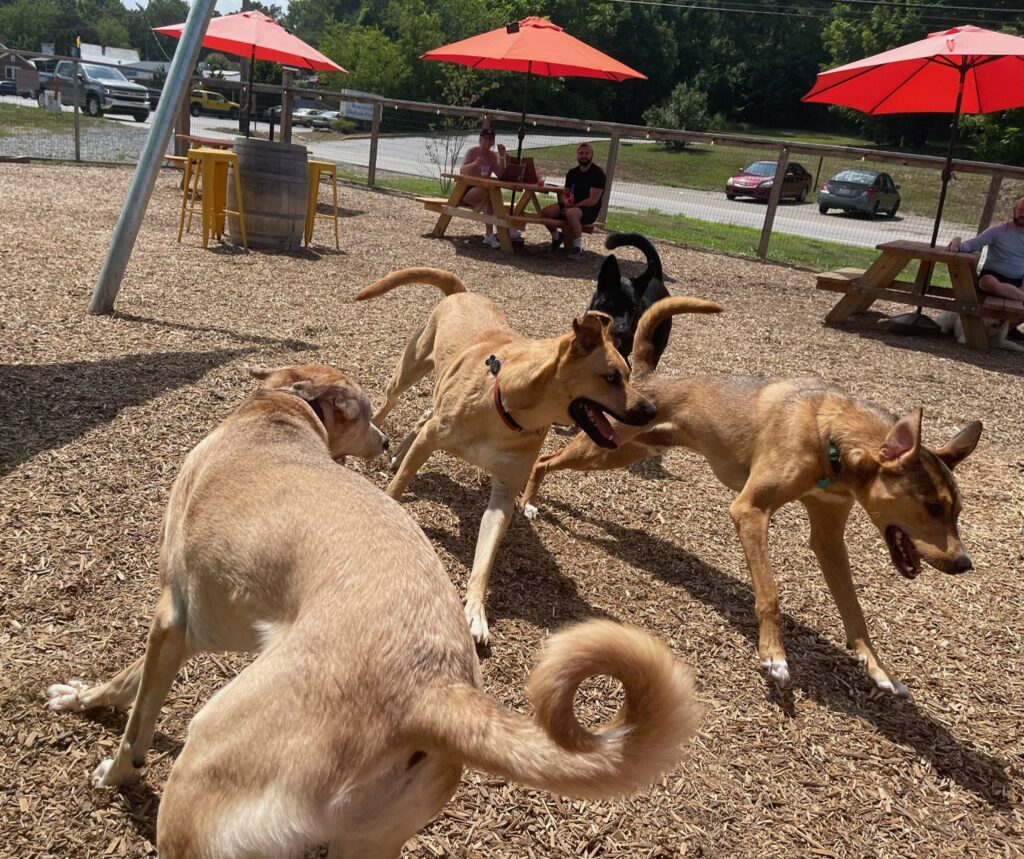
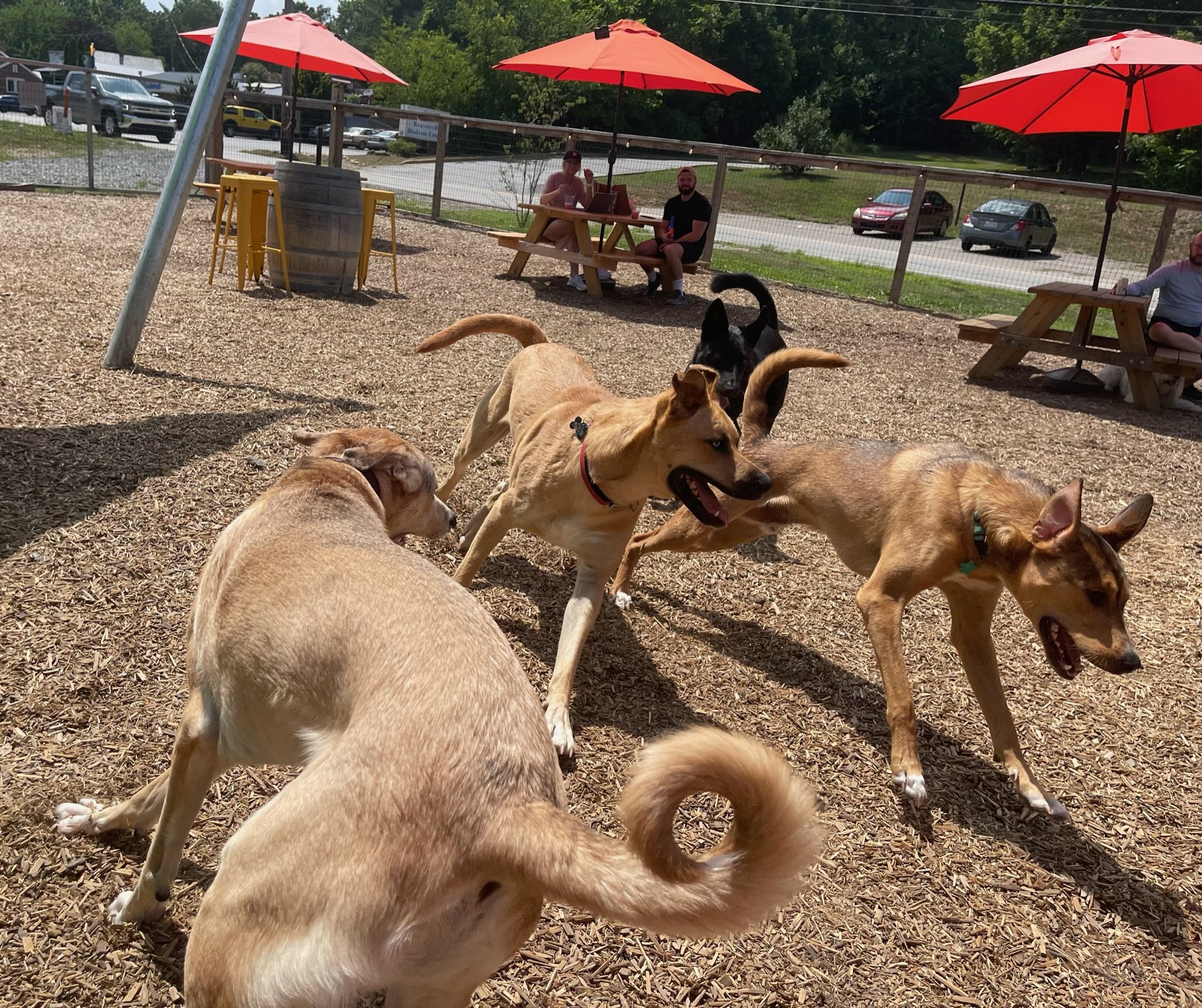
Every new hire starts with the science of canine communication. The classroom phase covers the seven key body language signals that predict 90% of yard behavior: play bows (invitation to play), loose bouncy movement (healthy engagement), stiff body with locked joints (pre-conflict), hard stare (fixation), whale eye with whites showing (stress), mounting or persistent chasing (over-arousal), and displacement behaviors like yawning, lip licking and turning away (discomfort). Trainees study breed-specific tendencies — a bulldog’s play style looks different from a border collie’s, and mistaking breed-typical behavior for aggression leads to unnecessary interventions. Video case studies of real yard incidents are analyzed frame by frame so trainees learn to read escalation sequences, not just isolated signals.
Phase 2: Shadowing — observation during live shifts (weeks 3–4)
Reading body language in a quiet classroom is one thing. Reading it in a yard with 30 dogs barking, running and wrestling is another. During the shadowing phase, new hires walk alongside experienced Bark Rangers during live shifts. They observe the full pace of a working yard and practice calling out signals before the senior staffer acts on them. The trainee doesn’t intervene — they narrate what they see, and the experienced staffer confirms or corrects in real time. This phase builds pattern recognition under real conditions where noise, movement and multiple simultaneous interactions make clean reads harder.
Phase 3: Supervised practice — running a section (weeks 5–6)
The trainee takes responsibility for a section of the yard while a senior staffer watches. The critical shift: the senior staffer is now watching the trainee, not the dogs. They evaluate how the trainee moves through the space (continuous patrol vs. standing still), how quickly they spot signals (the two-to-three-second target), whether they intervene at the right moment (too early disrupts healthy play, too late allows escalation), and how they handle their first real gate screenings. Feedback comes after every shift — specific, behavioral and actionable.
Phase 4: Solo certification (weeks 7–8)
The trainee runs full shifts independently. A certifying evaluator assesses four areas: signal recognition speed (can they identify tension signals within three seconds?), intervention technique (do they use body positioning rather than collar grabs?), gate screening accuracy (do they catch the warning signs before a dog enters?), and incident documentation (do they log conflicts completely and accurately?). Pass all four and the trainee is certified as a Bark Ranger. Fail any one and they cycle back through supervised practice for that specific skill.
The Skills Matrix: What They Learn and When They Use It

Dog bartender training covers six skill areas, each with a different frequency of real-world use.
Body language reading is the foundation — used every minute of every shift. It’s the skill that makes everything else possible. De-escalation technique — stepping between dogs, redirecting attention without physical contact — fires multiple times daily in a busy yard. Gate screening happens with every dog at every visit: vaccine verification, vaccine verification, managing the entry flow so new arrivals don’t overwhelm the pack.
Canine first aid (CPR, wound care, heatstroke response, choking protocol) is used rarely but is non-negotiable when it’s needed — a Bark Ranger who can’t respond to a medical emergency isn’t certified. Incident documentation follows every conflict: what happened, which dogs were involved, what signals preceded it, what action was taken. These logs build a behavioral history that improves future gate screening decisions. Owner communication is continuous — explaining yard rules, briefing on conflicts, coaching first-time visitors on what to expect.
Signal Recognition: Trained Staff vs. Average Owners
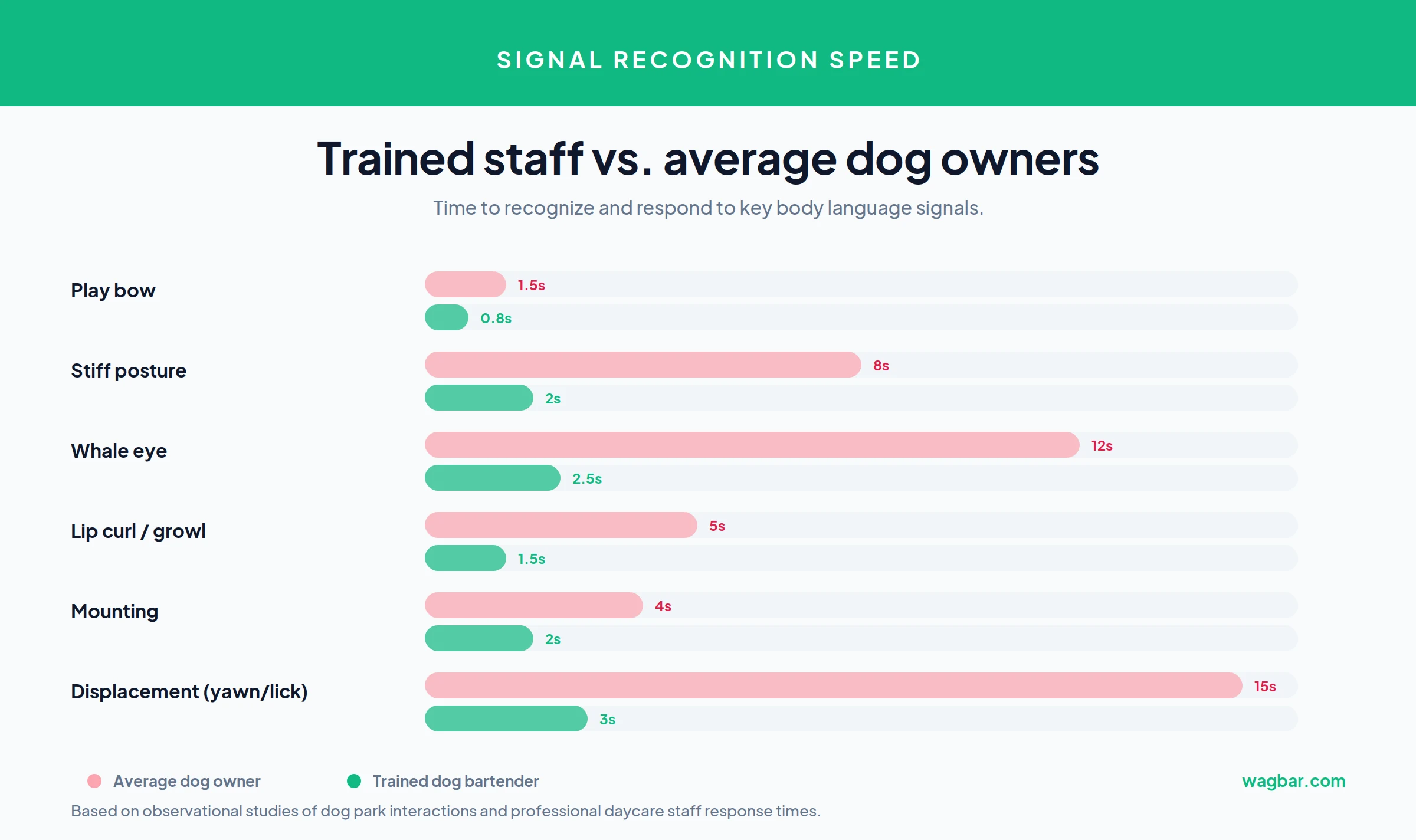
The difference in recognition speed between trained Bark Rangers and average dog owners is significant. A trained staffer spots a stiff posture in about two seconds and begins responding. An average owner takes eight seconds or more to notice the same signal — by which point the interaction has often already escalated. Displacement behaviors (yawning, lip licking, turning away) are the widest gap: most owners don’t recognize these as stress signals at all, while trained staff catch them in under three seconds and use them as early warning cues to prevent the tension from building further.
This speed gap is the entire argument for professional supervision. It’s not that owners don’t care about their dogs — it’s that recognizing canine body language under chaotic conditions is a trained skill, not an intuition.
Why the No-Feeding Policy Is Taught in Week One
Before trainees learn intervention techniques or gate protocols, they learn the no-feeding rule and the reasoning behind it. Wagbar prohibits all food, treats and edible items inside the play yard because food creates resource guarding flashpoints that are harder to manage than any other trigger. A treat in one dog’s mouth triggers competition from every dog within smelling distance, and the resulting tension can escalate from zero to contact in under two seconds — faster than even a certified Bark Ranger can cross a yard. Removing food removes the trigger entirely. Trainees learn this first because it frames everything that follows: the job is easier, the yard is calmer and the dogs are safer when the hardest variable is eliminated by policy rather than managed by skill.
Ongoing Training After Certification
Certification isn’t the end. Dog bartenders at Wagbar participate in monthly refresher sessions that cover new case studies from across all locations, seasonal challenges (hot weather heatstroke risk, holiday schedule crowd management), breed-specific updates as the yard population shifts, and peer coaching where experienced staff mentor newer hires. Video review remains a core tool — real incidents are anonymized and broken down as a team so the entire staff learns from every conflict, not just the staffer who handled it.

Bark Ranger Training FAQs
How long does it take to become a certified Bark Ranger?
The full training program runs eight weeks: two weeks of classroom instruction, two weeks of shadowing, two weeks of supervised practice and two weeks of solo certification evaluation.
Do Bark Rangers need prior experience with dogs?
Prior experience with dog daycare, veterinary clinics or animal shelters is helpful but not required. The training program is designed to build every necessary skill from the ground up. What matters most is the ability to stay focused in a high-stimulus environment and a genuine interest in canine behavior.
What’s the hardest part of the training?
Reading multiple interactions simultaneously. A yard with 20+ dogs has dozens of micro-interactions happening at once. Learning to scan the full space, prioritize the highest-risk interaction and respond within seconds is the skill that takes the most practice to develop.
How are Bark Rangers evaluated after certification?
Monthly refreshers, peer review sessions and ongoing performance observation by senior staff. Incident logs are reviewed for response quality. Certified Bark Rangers who miss signals consistently are cycled back through supervised practice for retraining.
Can Bark Rangers work at other venues after training?
The canine behavior skills are transferable to any dog-related role. The operational protocols (gate procedures, incident documentation, yard management systems) are specific to Wagbar, so those would need to be relearned at a different venue.
Build a Team Trained to Read Every Dog in the Yard
The four-phase curriculum, the skills matrix and the ongoing training program are built into every Wagbar franchise. Your staff start certified and stay sharp. See how Wagbar’s training program works for franchise operators.

Wagbar does not represent what a franchise owner will earn. Verified performance data is available only in Item 19 of the FDD, provided to qualified candidates during formal disclosure. Published cost figures are FTC-required regulatory estimates and are not profitability guarantees.
Eight Weeks of Training. Every Shift of Watching.
Your dog doesn’t know the staff member watching it spent two months learning to read every signal it sends. It just knows the yard feels safe. Bring your pup’s vaccine records and see trained supervision in action at the nearest Wagbar.
Bottom TLDR: Bark Rangers train for eight weeks across four phases: classroom body language instruction, live-shift shadowing, supervised yard practice, and solo certification evaluated on signal speed, intervention technique, gate accuracy and documentation. Six core skills: body language reading (every minute), de-escalation (daily), gate screening (every dog), first aid (rare but critical), incident logging (every conflict), owner communication (continuous). Trained staff spot tension 3–6× faster than owners. The no-feeding policy is taught first because food creates the hardest-to-manage trigger. Monthly refreshers and video case reviews continue after certification.