
The Asheville and Weaverville area sits inside one of the most trail-rich corners of the eastern United States, and dogs are welcome on a large share of those paths. Whether you want a short loop that fits into a Saturday morning or a longer ridge walk with views, you and your dog have real options within a short drive.
Why This Region Is So Good for Hiking with Dogs
Western North Carolina’s trail network spans national forests, state parks, and urban greenways. The Blue Ridge Parkway corridor, Pisgah National Forest, and the Black Mountain range all sit close to Asheville, which means you can be on a forest trail within twenty minutes of downtown without much planning at all.
The variety works in your favor too. Flat riverside paths are easy on older dogs or short-legged breeds. Steep, rocky climbs up peaks like Black Balsam Knob challenge high-energy dogs who need a real workout. Most dog owners in the area rotate between a handful of reliable trails depending on the season and how much energy their dog brought to the car that morning.
Well-Known Trails That Welcome Dogs
These are established, publicly accessible trails that are widely recognized as dog-friendly in the Asheville region. Conditions and rules do change, so always confirm with the managing agency before you go.
- Bearwallow Mountain Trail (Henderson County) – A moderate climb through open meadows with long-range views. The trail is part of the Hickory Nut Gorge Wilderness, managed by conservation trust land. Dogs are permitted and the meadows give them space to stretch. Leashes are generally expected on the upper sections.
- Black Balsam Knob (Pisgah National Forest) – A bald summit on the Art Loeb Trail with sweeping 360-degree views. Dogs are allowed in Pisgah National Forest, though leash rules apply in certain designated areas. The rocky approach rewards dogs who are sure-footed.
- Lover’s Leap Trail at Hot Springs – Loops above the Nolichucky and Spring Creek drainages with river access at the bottom. Dogs do well here, especially in cooler months when the river makes a natural reward at the end of the descent.
- Shut-In Trail (Blue Ridge Parkway corridor) – A long, point-to-point trail that follows the historic route of George Vanderbilt’s private path. Dogs are allowed on national forest sections. Parkway land itself has a leash requirement of six feet or less.
- Lake Powhatan Recreation Area (Pisgah National Forest) – Close to Asheville with gentle trails and lake access. A good choice for dogs who enjoy water without the exposure of a high-elevation hike.
- Bent Creek Experimental Forest – A network of wide, gravel trails just south of Asheville. Dogs are permitted and the flat terrain is excellent for puppies, senior dogs, or mixed-size groups hiking together.
Leash Rules You Need to Know
Leash rules in Western North Carolina depend entirely on who manages the land, and the rules are not consistent across different trail systems.
On the Blue Ridge Parkway, dogs must be on a leash no longer than six feet at all times. That rule applies on overlooks, picnic areas, and any trail that crosses Parkway land.
In Pisgah and Nantahala National Forests, dogs do not have a universal leash requirement, but individual trailheads and recreation areas sometimes post their own rules. When a sign says leash required, that supersedes the general forest policy.
State parks in North Carolina require dogs to be on a leash of six feet or less on all trails, in picnic areas, and in campgrounds.
Regardless of what signs say, keeping your dog under voice control and responsive to recall is the baseline expectation on any shared trail. Other hikers, horses, and wildlife deserve a predictable encounter.
Heat, Water, and Paw Safety on the Trail
Summer heat in the mountains is gentler than in the piedmont or coastal regions, but it still catches dogs off guard. Air temperature at elevation drops several degrees compared to Asheville’s valley floor, but full sun exposure on a bald summit or south-facing slope can overheat a dog quickly.
Carry more water than you think you need. A general starting point is one extra liter per hour of hiking for your dog on top of your own supply, though larger breeds and heavy coats need more. Collapsible bowls weigh almost nothing and make a real difference on longer trails where natural water sources are scarce or too risky to drink from untreated.
Rocky summits like Black Balsam Knob and the balds along the Art Loeb Trail have exposed stone that absorbs and holds heat. Check the surface with the back of your hand. If it feels hot to you, it will be painful on bare paw pads. Early morning starts avoid both the heat and the midday crowds.
Watch for signs of overheating: heavy, frantic panting, slowing down suddenly, excessive salivation, or stumbling. If any of those appear, move your dog to shade, offer water in small amounts, and wet the paws and belly to begin cooling.
Trail Etiquette with Your Dog
Good trail manners protect your dog’s welcome on public land. A few habits make the difference between a smooth outing and a difficult one.
- Yield to uphill hikers and step to the side of the trail when horses pass. Move your dog to the downhill side and keep it calm until the horse is well clear.
- Pick up waste even when you’re deep in the woods. Pack-it-out expectations apply everywhere, and waste left on trails is the single fastest way for land managers to start restricting dog access.
- Introduce your dog to other trail dogs only when both handlers agree. Not every dog wants a greeting mid-hike, and a rocky, narrow trail is not a good place to manage an unexpected conflict.
- Keep your dog out of fragile vegetation, especially on balds where native grasses and wildflowers recover slowly from repeated trampling.
After the Hike: Where to Go Next
Trail fatigue hits dogs and their people differently. After a long morning on the ridge, most dogs are ready for something social and low-key rather than another physically demanding outing. That’s a good moment to let them decompress in a space designed for exactly that kind of loose, unstructured play.
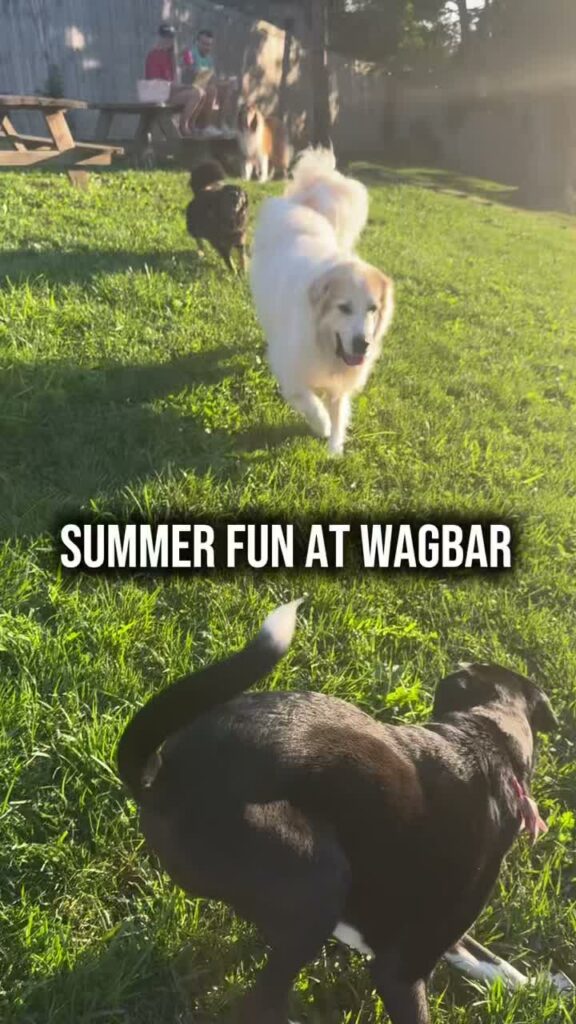
Wagbar Asheville, located at 320 Merrimon Ave in Weaverville just north of Asheville, gives post-hike dogs a fenced off-leash yard to roam while their owners settle in with a cold drink. The self-serve dog wash stations on-site take care of the trail mud before you head home, which removes the biggest objection most people have to letting a dirty dog back into the car. It is a natural last stop after a morning on the trails, especially when you want to extend the outing without asking tired legs to do more climbing.
If you want to see what is on the menu for humans and dogs alike, the full menu at Wagbar covers craft beer, coffee, wine slushies, and dog-safe treats that make the wind-down genuinely enjoyable for everyone in the group.
Frequently Asked Questions
Are there dog-friendly trails close to downtown Asheville that don’t require a long drive?
Yes. The Bent Creek Experimental Forest is roughly twenty minutes from downtown and offers several miles of wide, flat trails suitable for dogs of all fitness levels. The French Broad River Greenway also provides paved and unpaved riverside paths within the city that many dog owners use for weekday walks without leaving town at all.
Do dogs need to be vaccinated to hike on public trails near Asheville?
Public trails in Pisgah National Forest and along the Blue Ridge Parkway do not check vaccination records at the trailhead. However, keeping your dog current on core vaccines including rabies is strongly advised because wildlife contact on mountain trails, particularly with raccoons, foxes, and groundhogs, carries real risk. Heartworm prevention and tick treatment are equally important given the dense vegetation at lower elevations.
What should I do if my dog gets into a confrontation with another dog on the trail?
Stay calm and avoid reaching between the dogs with your hands. Use your body, a walking stick, or a firm verbal command to create distance. Once separated, check both dogs for wounds and leash yours immediately. Narrow trails make it worth stepping fully off the path and asking the other party to pass before you continue. If the encounter escalates to injury, exchange contact information and follow up with your veterinarian even when wounds look minor, since punctures from dog bites carry infection risk that surface appearance can underestimate.